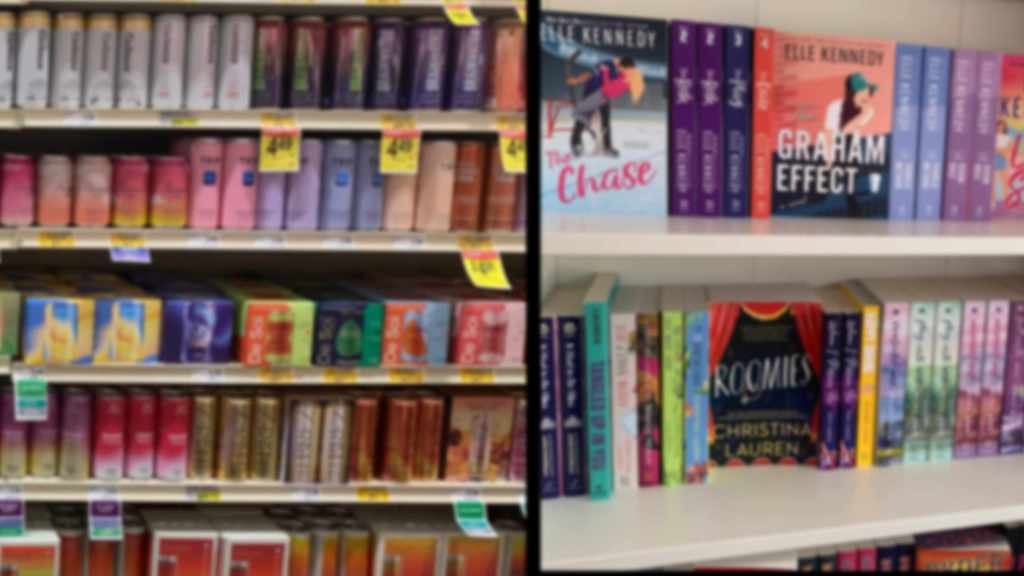
Last time we looked at the visual language that energy drinks and book covers share. This time I wanted to talk about blurbs and promises they make, based on the blurbs from two of the cans from those shelves I was looking at: one can marketing to women, the other primarily to men. I’ve quoted them below, preserving the punctuation as it is on the cans.
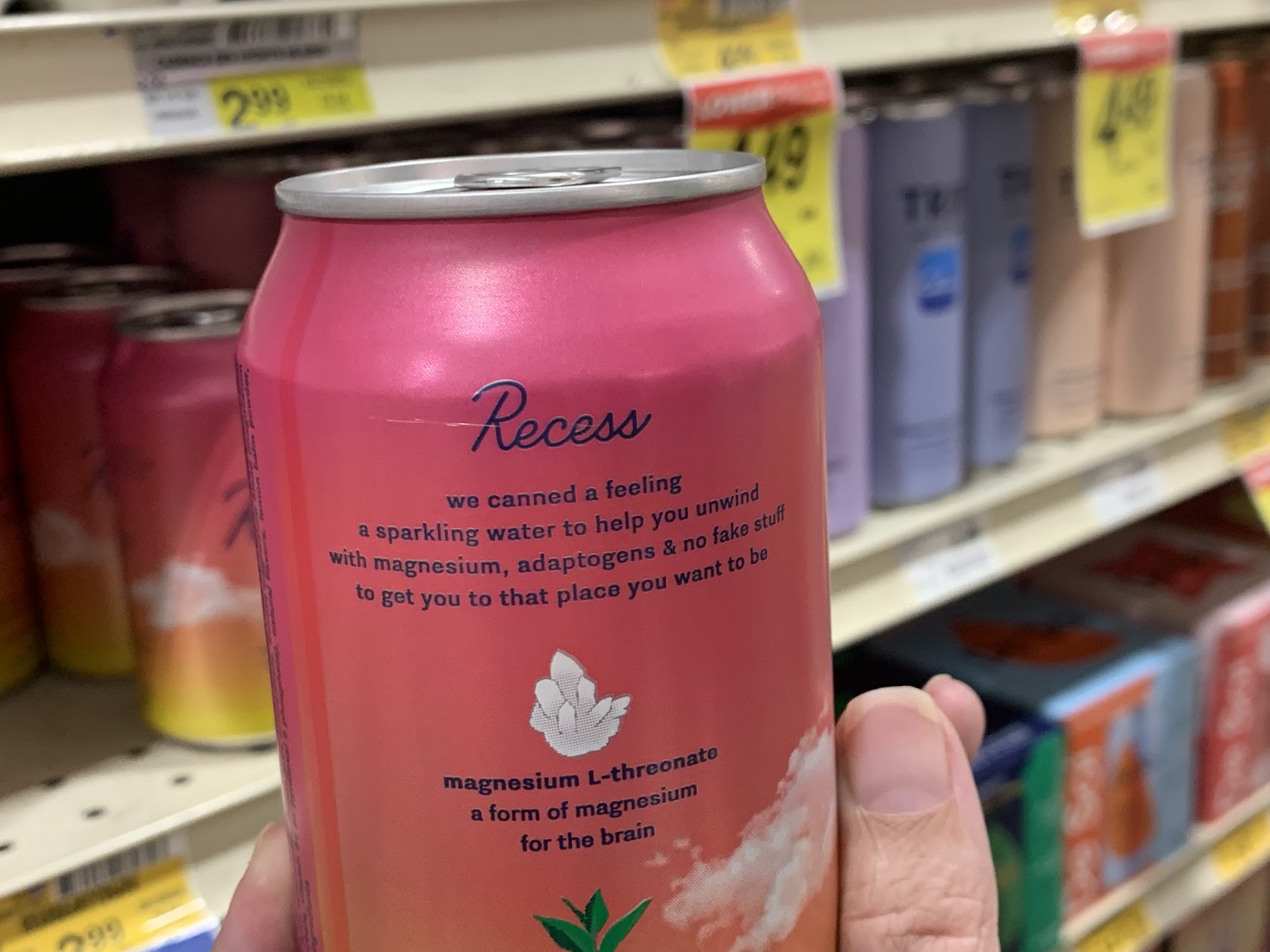
The blurb from one can:
Recess
we canned a feeling
a sparkling water to help you unwind
with magnesium, adaptogens & no fake stuff
to get you to that place where you want to be
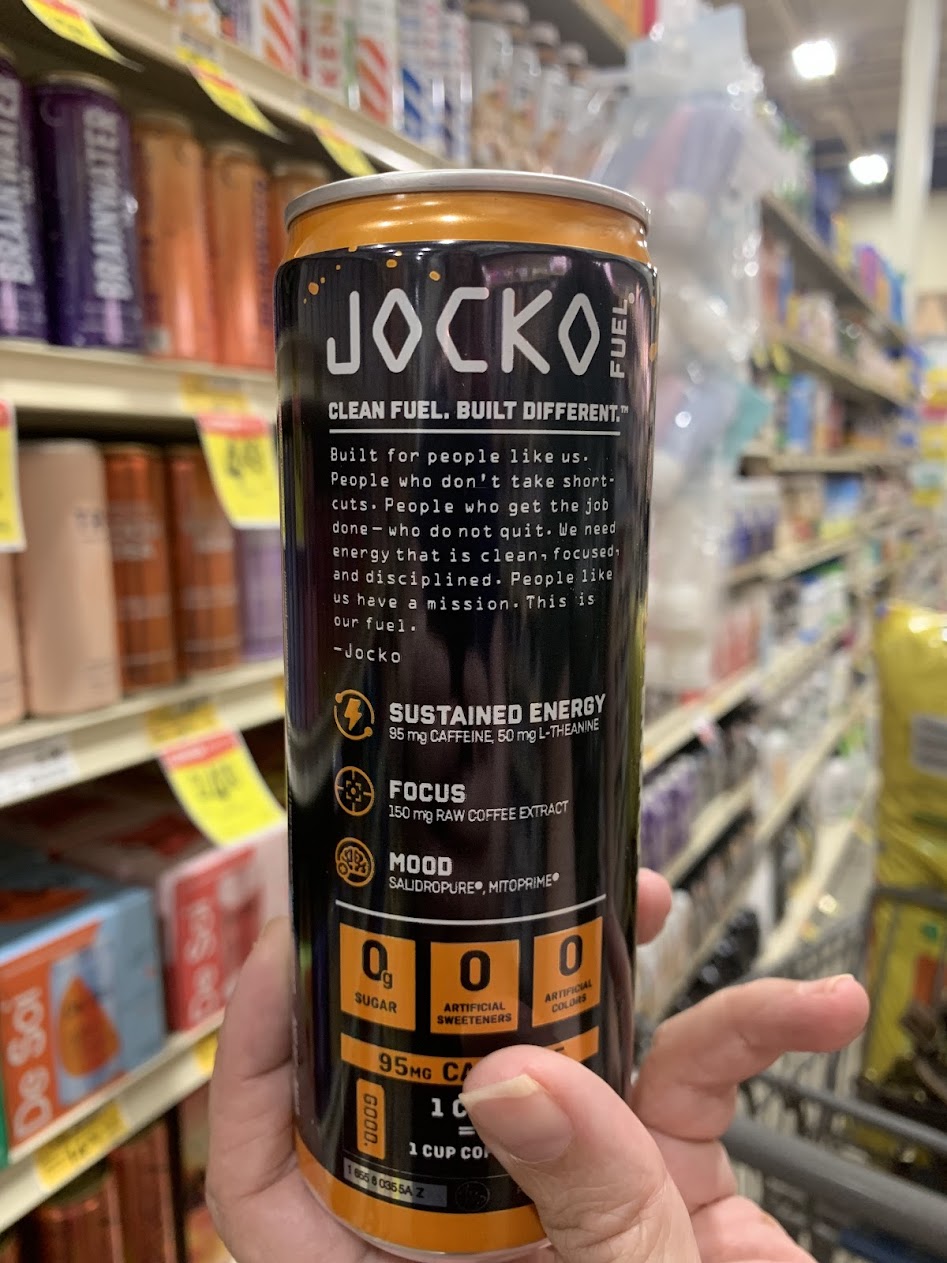
The blurb from the other:
Jocko
Clean fuel. Built Different.
Built for people like us. People who don’t take short-cuts. People who get the job done – who do not quit. We need energy that is clean, focused, and disciplined. People like us have a mission. This is our fuel.
–Jocko
Based on everything from the verbiage to the punctuation (or lack thereof) these blurbs are selling us something. A book blurb is not only a summary of what you might expect inside it (please, never a full plot summary in a blurb!) but selling you on the goal of the book and the feels you can expect to have while reading. The contents of the drinks parallel the content of the book, in a way when looked at from a marketing standpoint.
Let’s look at what we see with these two blurbs.
Recess
- Tone: Soft, gentle, nurturing.
- Key words: unwind, sparkling, magnesium, adaptogens, no fake stuff, “that place where you want to be.”
- Punctuation: Lowercase, flowing, almost poetic. No hard stops.
- Promise: Escape, restoration, gentle self-care. It’s selling relief and permission to relax.
Jocko
- Tone: Hard, declarative, tribal.
- Key words: Clean fuel, Built Different, don’t take short-cuts, do not quit, mission, disciplined.
- Punctuation: Short. Punchy. Periods. No commas in places where you’d expect them so it feels like barked orders.
- Promise: Strength, identity, belonging to an elite group of grinders. It’s selling purpose and superiority.
These are masterclasses in matching voice to audience which is exactly what good book blurbs do.
So? what would these look like reimagined as books?
“Recess” style (romance, cozy mystery, women’s fiction):
Example: “In a quiet coastal town, a burned-out executive finds herself renovating a crumbling cottage — and her entire life — with the help of a grumpy but surprisingly tender local. Warm, hopeful, and gently humorous, this story is a love letter to second chances and the healing power of slowing down.”
“Jocko” style (military thriller, gritty urban fantasy, motivational fiction):
Example: “They told him the mission was impossible. He didn’t listen. When a black-ops team is betrayed behind enemy lines, only one man refuses to quit. No shortcuts. No surrender. This is what victory feels like.”
A great blurb sells the emotional payoff of the book, appeals to the identity the reader wants to take on through the borrowed experience of a fiction story. The blurb answers the question the readers are subconsciously asking: how will this book make me feel?
When writing the blurb, take care to match the tone and rhythm to the readers who will enjoy your book, setting up their expectations of what they will find in the story through your punctuation as well as word choices. Make a promise of what the reader is going to find, tease them with the sensations the book is going to bring to mind while they are reading, never use plot regurgitation in the blurb. That’s as bad for marketing a book as that word sounds. Reading the blurb out loud will help a lot with nailing the sound you want it to have in the reader’s head when they are looking at your book’s description or back cover.
Paying attention to what these cans are really selling, not the ingredients, but the feeling and the identity they promise, has sharpened the way I look at book blurbs. A good blurb never just summarizes the plot. It makes a promise: this is how you’ll feel, this is who you’ll become for a little while, this is the emotional ride waiting for you once you crack the cover. Whether it’s soft permission to unwind or a hard call to discipline and mission, the best blurbs speak directly to the reader’s desired self.
Next time you’re standing in the grocery aisle (or any store), read the drink cans with new eyes. Then go home and look at your own blurb with the same honesty. Does it whisper the right promise in the right voice? Because in the end, the visual story on the cover and the verbal story on the back have one job: to make the right reader stop, feel seen, and reach for your book instead of the one beside it.


7 responses to “The Hidden Art of the Blurb: Lessons from the Grocery Aisle”
only related to the drinks-
I have a sensitivity to Stevia. I looked at that Jocko and saw “A blend of Monk Fruit Extract, Reb-M, and Allulose.” okay, what’s Reb-m and Alluse? Monk Fruit doesn’t seem to affect me . . . and another “Poison in a can” drink. Why so many names for Stevia/Stevia Extract (Reb-M)? What needs hiding under various name changes for the same product?
I’d rather HFCS than food poisoning, tyvm, and I avoid HFCS if possible. /rant
Rebaudioside M has a different name because it is a specific chemical – and note that it can be extracted from stevia or fermented sugar cane or fermented rice. Generally when you see it, they’ll list the source like “stevia reb-m”, “fermented sugar cane (reb-m)” or “fermented rice (reb-m)”You know, like sugar can be from sugar cane or from sugar beets, only in this case, one step up in chemical processing to try to avoid our sugar and still have the sweetness, too….I hope that helps, given sensitivity.
this is great stuff
I haven’t written a blurb in far too many months. This is a great reminder, thanks!
The FanFiction site only allows 384 characters for blurbs. Whatever you want to say has to be packed into 384 characters.
That limitation will either force extreme creativity or laziness. 😁 I did my best to be creative:
“AU. It was a crater, and a woman with long purple hair stood in the middle. She didn’t know who she was. She couldn’t remember where she came from, or how she got there. The police didn’t know what to make of her, and when they tried to arrest her she flew off with breathtaking speed, leaving only a kiss. All Daniel Evans knew was that the world would never be the same again.”
“Keiichi Morisato was an unlucky guy. He seemed to work twice as hard to get half as much as everybody else. He always thought there had to be something wrong, but could never have imagined the cause until he had a vision of meeting a goddess in the sky. Then she told him it wasn’t a vision, and she would grant him one wish. What could he wish for, that might improve his luck?”
Short. Short is important. I see indies who write pages of blurb.
[…] Also at Mad Genius Club: Blurbing your world […]