I suppose there’s a camp of authors and editors who would have it that chapter titles are passe and they only want the horribly humdrum and boring schema of ‘chapter 1, chapter 2,’ and so forth. Fortunately, being an independent writer with an editorial team who understand my quirks, I prefer to title my chapters and am left unmolested to do so. For one thing, if the story cooperates, the titles give another layer of meaning to the reader paying attention. For another, they amuse me, and making my work fun is part of why I do this to begin with.
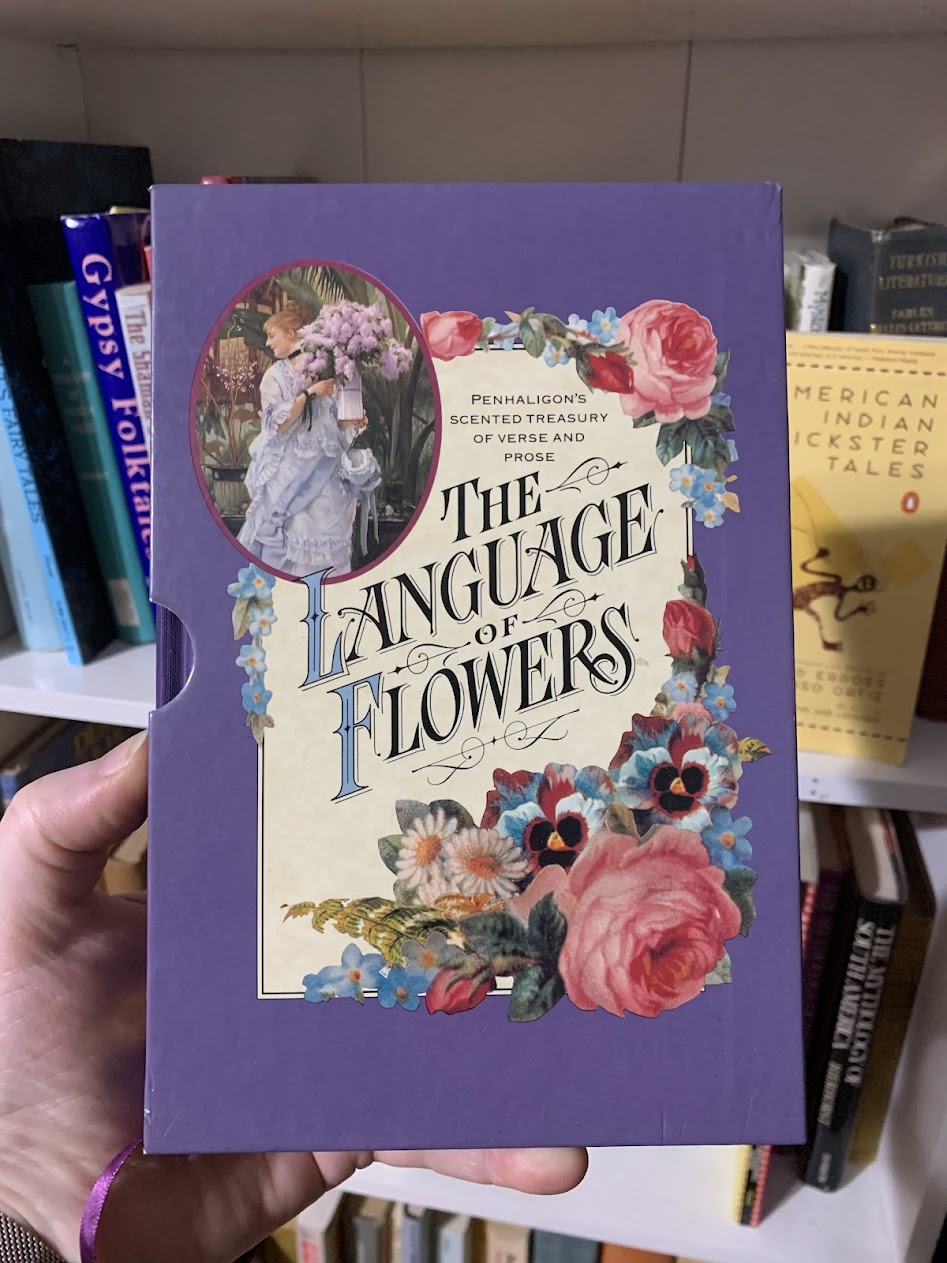
This comes up because I’m about halfway into the novel in progress, and I’m titling each chapter from the books I have on the meaning of flowers. Not necessarily the Victorian Language of Flowers… I should explain.
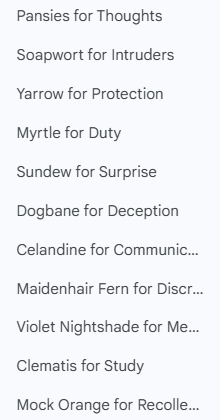
When I started writing this novel, I thought up that first chapter title, it’s something that runs through my head every time I see pansies, which is often as I love them and plant them carefully where they will thrive far longer into the Texas summer than most would think (North side of the house, as much shade as you can give them, and water them regularly). By the time I realized I wanted to do floral meanings for every chapter, I pulled my copy of The Language of Flowers off the shelf and was disappointed to realize that it is… limited. Not nearly all the subtleties of meaning I was looking for. However, I have a slim volume, and you don’t have to suggest twice to me that perhaps book shopping is in order for the day. Surely there are fatter books with more flowers out there? Yes. Yes there are!
I hopped on Amazon, as I do, because in searching for these things, I tend to start there and then look elsewhere if I’m buying used. There are a lot of books on floral and plant meanings. I was a little surprised, then started to look outside of the book buying sites for reviews, to see if there were books that might be better than others. Now, keep in mind that I’m looking for something fun for pairing with the meaning of a chapter’s events, not historically accurate. I have no idea if either of these is that. I wound up getting a raft of books through Kindle Unlimited to sample, and I bought two that fitted my needs, returning the others to the lending library. I suspect I’ll come up with future uses for the books I bought, as well, because it’s been a lot of fun browsing through to see what’s in them.
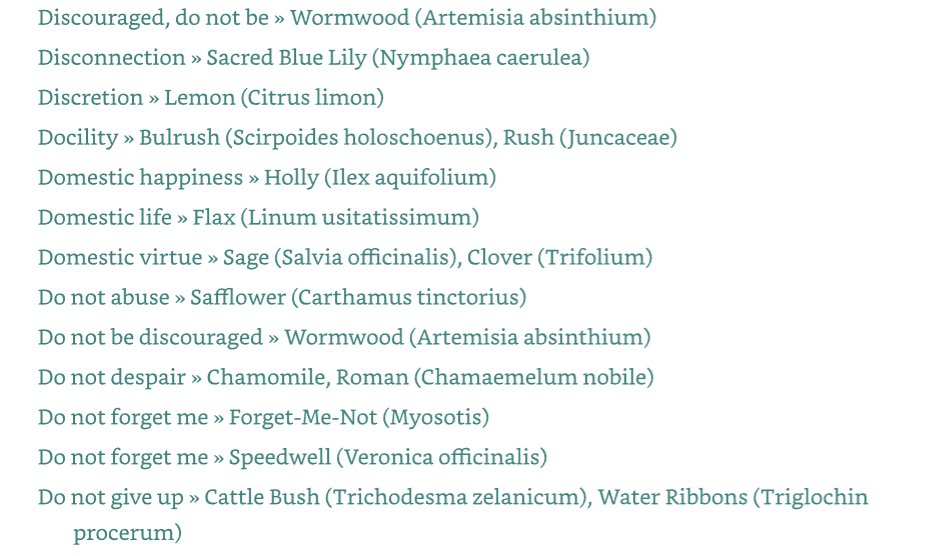
Flowerpaedia by Cheralyn Darcey contains 1000 flowers and their meanings. It is not illustrated, which I prefer since I am mostly very familiar with the plants, and can look it up if I am not. For the chapter titles I’m trying to stick with plants that are going to be more generally known, so my readers can clearly see my intent. I will likely add an illustration for each plant used in the book I’m writing, because I can.
Flowerpaedia is organized first with a meaning, connected to the various plants that convey such, then there is a list of the plants with meanings attached to each. The final section of the book, Resources, tells you flowers that are associated with days of the week, nations, states, anniversaries, and so forth, which would be useful in building floral arrangements in fiction and in life, as well as coded messages… Using the book in a Kindle reader means I can easily search for a word and find it to look up what I want. There is an index but it will only be useful for a print edition.
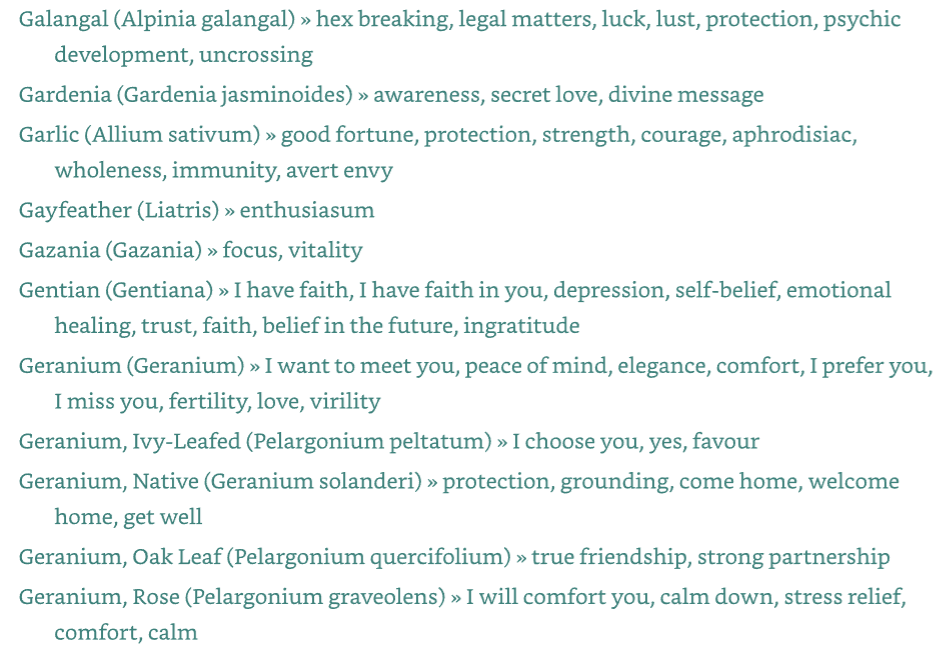
The other book I bought and am referring to while writing is The Complete Language of Flowers by Theresa Dietz, and it lays claim to 1001 plants with their meanings. This book is organized by the flower’s name, and each entry is far more detailed that the brief Flowerpaedia listing. It is illustrated, although the illustrations vary wildly in quality, and in looking for art credits, I see that they are almost all from Shutterstock. I haven’t seen any yet that are not what they are labeled, so far as plants paired with images, but given they are stock photos that’s entirely possible so double-check if you are in doubt.
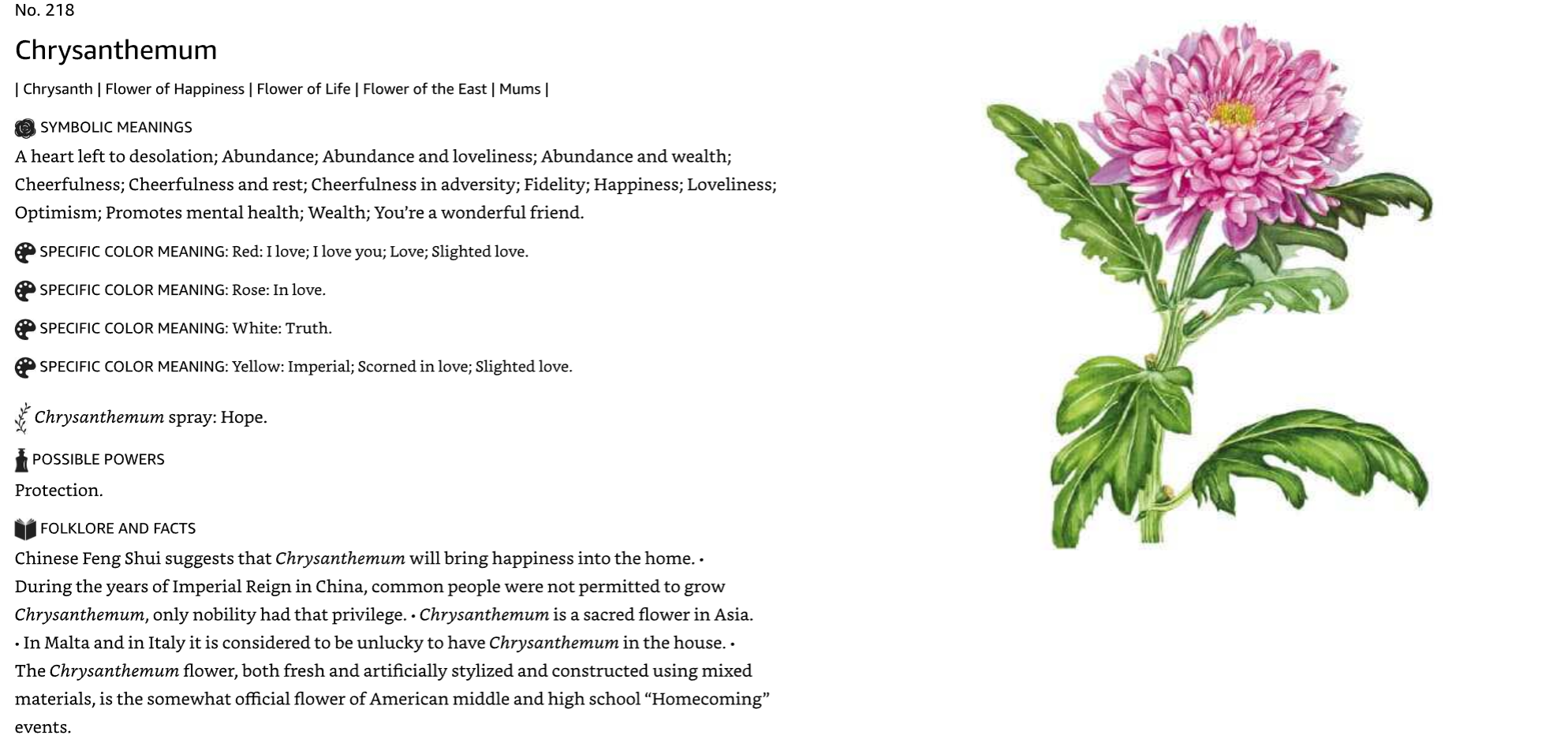
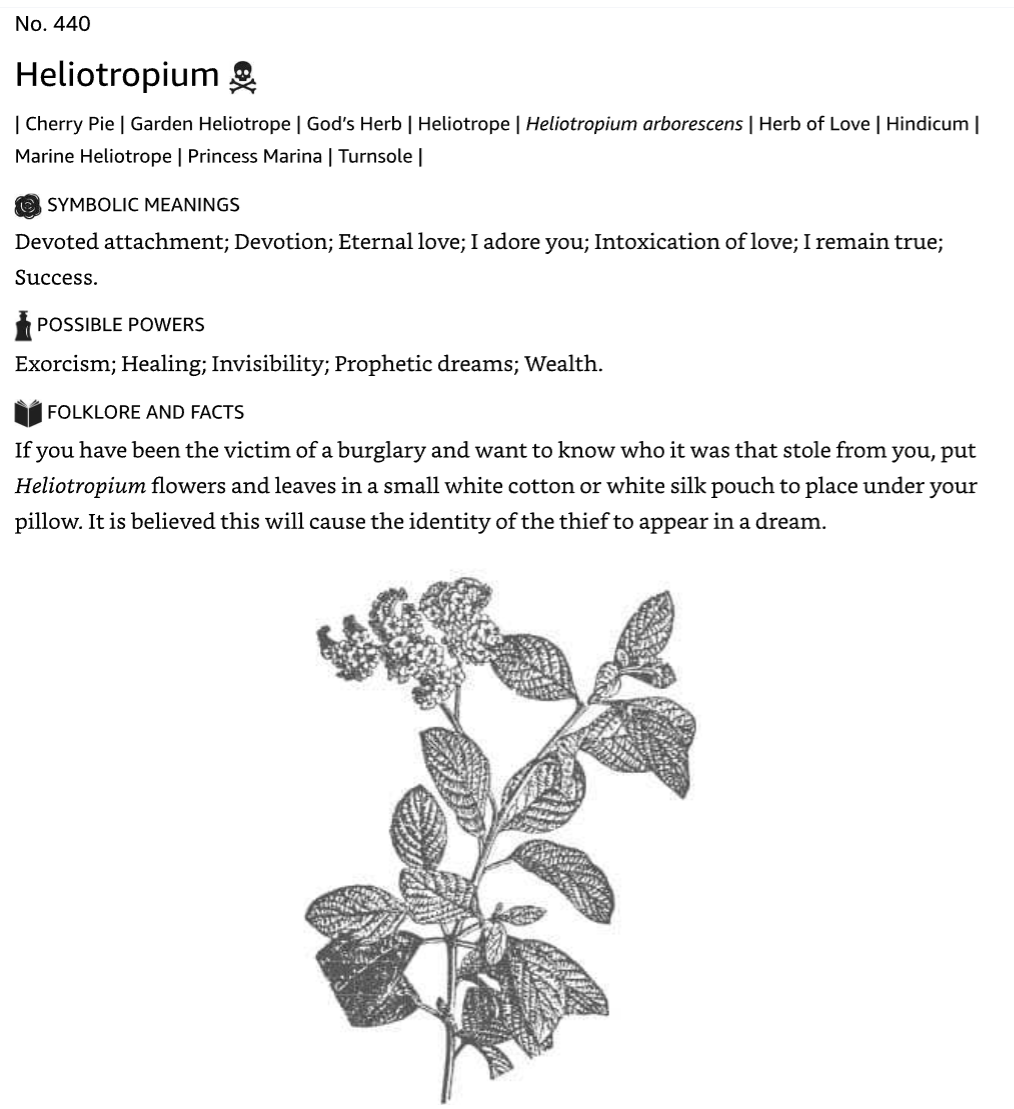
Now, this may not be useful to most of you, but the language of flowers is interesting, has possibilities for secret messages sent as it did in Victorian times, and the Dietz book included the folklore which I enjoyed finding. I would not use either book for anything that requires historical accuracy.
My specific madness of chapter titling aside, what about you? Do you enjoy seeing a title when you are reading a book and begin a new chapter? Or do you simply turn pages paying no attention to those arbitrary breaks the author has so casually dotted the book with, as you read the story ignoring such interruptions?


17 responses to “Chapter Titles and Other Strange Writing Tricks”
I don’t pay a lot of attention to chapter titles, even the very memorable ones by Tolkien and so on. I do title my scenes in scrivener, and alot of times that’s utilitarian, but if I think of something funny or injokey I will use it.
If you want to see the work of an absolute master, check out the Babylon 5 episode titles. Some of ’em will give you chills. A few examples:
Midnight On The Firing Line
The War Prayer
Signs And Portents
The Quality Of Mercy
And The Sky Full Of Stars
There All The Honor Lies
A Race Through Dark Places
The Coming Of Shadows
Voices Of Authority
Ceremonies Of Light And Dark
A Late Delivery From Avalon
The Illusion Of Truth
Meditations On The Abyss
Falling Toward Apotheosis
It’s a poem!
“The Geometry of Shadows” was always my favorite.
I think it depends on the genre. For a fast-paced military thriller it would feel out of place. For a cozy murder mystery, perfect.
Perfect chapter title for a military thriller:
No Shit, There I Was… 😁
Current WIP, working title is “The Retreat of Death, a Romance.”
Some of the chapter titles are:
Meeting Death at a Fork in the Road.
The Hound of Niflheiim
Death Stops By For a Drink
The Wisdom of Sandwiches
War of the Willows
The Head Cheerleader of Death
Meeting Death in the Park
Pool Party of Death
Death at the Pearly Gates of Tír na nÓg
As you can see, I’m mixing up the pantheons a bit, with Irish and Norse goddesses of Death wandering around, getting into mischief, and having romantic nonsense with my other characters. There are unicorns involved, keeping the hotness down to maybe one out of five hot-peppers.
Anybody want to take a stab (ha, I kill me!) at who the head cheerleader of Death is in the Norse pantheon? ~:D
I’ll start with a shameless plug. Years ago, we published our daughter’s flower and gem dictionary. https://www.amazon.com/Dictionary-Flowers-Gems-Skye-Kingsbury/dp/1950347052 It’s got over 2,000 plants of all kinds, plus 600 gems and is cross-referenced six ways to Sunday AND comes with bonus, specialty lists because if you want flowers for refusal or gems that allow you to access angels on the astral plane, you need to be correct.
As for chapter titles, I LOVE them! It’s not just because it adds flavor and flair and more meaning and makes it easier to locate a chapter in the print edition.
It’s that the Zon shows the chapter listing at the book landing page.
Which is more interesting to a potential new reader?
Chapter One, Chapter Two, Chapter Three and so on.
Or,
1] “I have a confession to make” 2] “It’s not like you can trust those people” and 3] “Bad Coppertail! Bad Coppertail!” and so on.
I began with one or two word phrases to illustrate the chapter.
With current books, I chose a line of dialog from that chapter that grabs me.
Chapter titles add hugely to a book. Having a table of contents listing them means the print book is easier to navigate. I don’t know why publishers don’t include them as standard practice.
Titles can help ensure that your chapter is a unit and not an arbitrary division.
Beware of patterns. If you carry through — a flower and meaning for every chapter, or a Noun of Noun — that works. If you vary them, that works. But you don’t want half to fit a pattern and the others not, particular if the pattern is set before you break it.
Mine tend to be comments about the stuff in the chapter, or hints about what’s coming. “Of Mysteries,” “The Return of Monday” or “Song in the Night,” [ a nod to the folk hymn that runs through the chapter and gives it its theme]
With Possum Creek Massacre every chapter title was a hymn, mostly obscure ones. It gave me an excuse to buy a couple of old hymnals.
of course, for some, Song In the Night will call back to Job.
Err… The point of the original “language of flowers” concept is to communicate in silent visual code (if the girl of interest displays pansies, it means…..). The explicit code spoken out loud “Pansies for remembrance” is a… translation of a visual idiom. It makes explicit something which is intended to be subtly suggestive and somewhat hidden.
Maybe I’m too literal in my approach, but I would find those quotes as chapter headings to be overkill translations of the code. Doesn’t mean the characters can’t make reference to the unspoken language in the text so that the readers can get the connection, but that’s different from a chapter title, unless that is the sole important thing in the chapter (every chapter?) to justify the focus.
Yes, yes, I’m no doubt on “the spectrum”… why do you ask? 🙂
Normally I’d agree with you, except most reader aren’t familiar with the language, or more than the very basics (red rose for love, forex) so I can get away with it for the audience I’m writing for.
In some of my novels I have had fun with chapter titles – and in the notes at the end, have made mention of why they are significant to the story: In the WWII novel, My Dear Cousin – all the chapter titles are the titles of pop songs of that time, and have a relevance to the plot; There’ll Be Bluebirds is the chapter where one of the heroines is finally reunited with her husband, who has been a POW of the Japanese in Malaysia for three long years.
I did a variant of this in my other war novel, That Fateful Lightning – set partly in the American Civil War – all the chapter titles are various lyrics from songs popular before and during that war. For me, it’s a way of tying in the plot to the contemporary culture of that time.
I am generally in favor of chapter titles. They can set the tone or give a hint of what’s to come. “In which …” is a favorite subtitle of mine for humorous tales or Stories Of A Certain Age.
In which our hero attempts to make breakfast without setting the house aflame.
In which many things happen, few of which stay happened.
In which Lord Darcy fails to make his intentions clear.
In which our heroine rediscovers the fountain of forgetfulness. Again.
I started out just numbering, then added something, hoping to catch a potential reader’s interest if they looked inside.
Then, writing series, I started dating them. I found it very useful, for me, to refer back to “When did that character . . .” or “What was going on elsewhere at the same time?”
Much better than an uninformative “Chapter Five.”