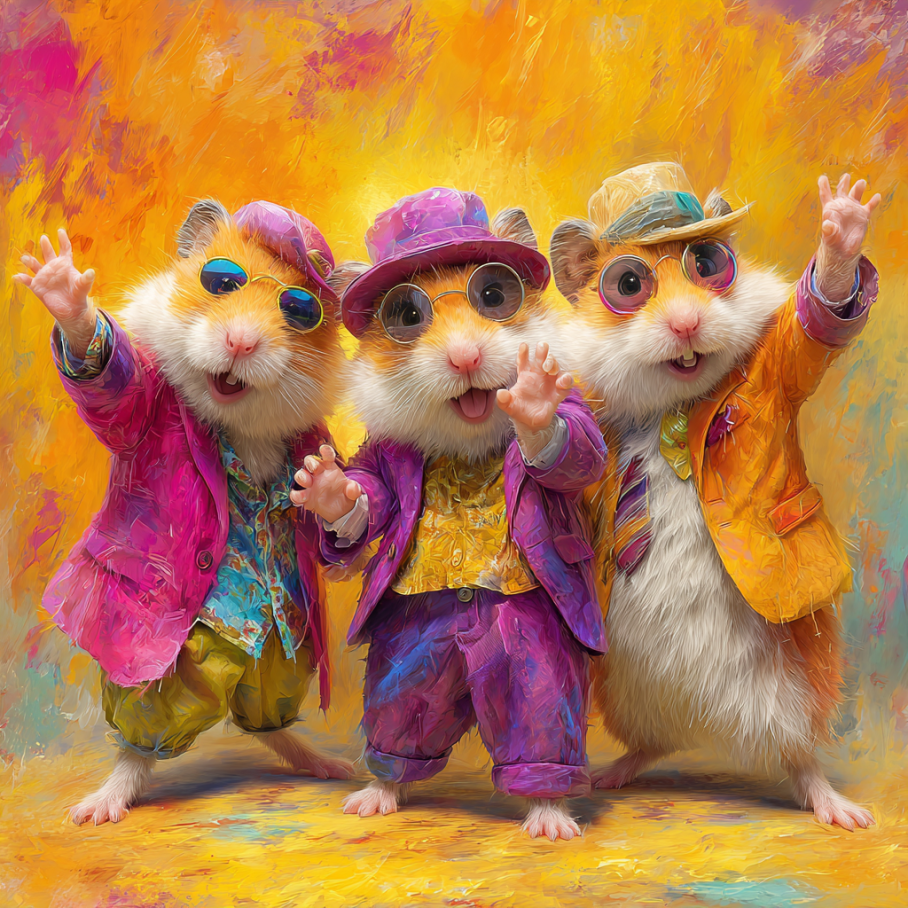
Ah, those scamster/hamsters — have they got a deal for you, bubala!
(If you’re fool enough to be taken in.)
Now, I’ll admit, when a stranger with a plausible name drops me an email out of the blue and tells me how much he admires some book of mine, with words that resonate surprisingly well, — not gonna lie — there’s a moment of pleasure. He wants to help me bring my books to the attention of other readers, to spread the word, etc., etc., and for a moment…
Well, only for a split second, really. Then I realize why the words resonate — they’re taken from my own blurbs, not absolutely identical, but synonyms or rephrases, to try and hide the source better from me. Or (another clue) the book being admired is a nothing — the mid-book in a series, a short story, whatever — not the main books or first in a series, as one might expect from an actual fan, or even a genuine business man, interested in helping me make money (well, I’m sure he is a business man, just not in the business he claims). Who would think I wanted to market a series beginning with a middle volume?
So, the (now obvious to me) falseness tempers my evanescent deluded pleasure, and now (in my irritation at my fading gullibillity) I want to know how the scam is structured as a business. I mean, they’re really lazy, after all. They’ll give you an email address line which doesn’t actually exist, if you search for it or try to reply — they supply a link instead as the way of you connecting with their offer (“Danger, Will Robinson”). You’d think they’d at least bother with a dummy website for nominal verisimilitude for their “business services” rather than the simple link as a bypass.
Obviously the server farm that employs these folks has distributed a list of my titles in their hands, the blurbs are available for all to see, and the email address is probably easy to come by (I make no effort to suppress it). There must be hundreds of authors in their feeds — they only need to get lucky and batten onto a sucker a small percentage of the time.
So: how can a scamster work the come-on efficiently? I’m sure it’s straight-forward: lists of books, emails, etc. But what about that enticing “I sure loved…” extended set of words, professing interest, that makes me potentially drop my guard in pleasure and treat it as genuine, at first glance?
I bet that’s AI. I bet that they take a blurb off Amazon and use AI to source it as slightly modified vocabulary for the email, as suggestive as an expression of genuine interest and compatibility as my theoretical reader (for whom the blurb is intended) might be, in the hope that I won’t recognize the original source but will bond with them when they feed a masqueraded version of my own blurb back at me — weaponizing my own marketing, as it were.
Gotta say, I have to admire the psychology of that wrinkle in their method, while despising the attempts.
I tell ya, I can’t even get crooks to treat me seriously. Sigh…
What are some of your scam encounters like? What irritates you the most?




4 responses to “Scamsters”
I get reviews on my fan-fiction that turn out to be pitches from digital artists. Or maybe people (or bots or LDMs) pretending to be digital artists. I’ve never been interested enough to respond.
Oh, I got one of those emails just last week, apparently from someone who works at a legitimate, smaller publisher with a very elevated and supposedly best-selling stable of writers and their books. Email addy looked legit at first glance, publisher totally legit.
Very complimentary about the one contemporary romance novel that I have out out there, and wanting to know if I had other books in progress which might interest them…
The scam is, apparently – putting you in touch with an editor (for pay, of course) who will graciously assist you in polishing your MS to a point where the publishing house will graciously deign to consider it – as I found out when I checked it out. Yep, other writers had gotten the same email with the exact same phrasing and pitch. I had absolutely no interest in submitting anything of mine to them in the first place, but still – I was intrigued enough to do a bit of research.
The initial clue for me was looking closely at the original email address – yes, reflecting the legitimate publisher’s company name, but with an additional letter on the very end. (something-something-publishings … not something-something-publishing.)
I agree. The email address is the first place to look. Common robotic scammers just create absurdly long and random email addresses (gmail seems to be the choice at the moment because it’s free to create an email address). More clever scammers like the one you encountered use slightly modified email addresses that look legitimate if you don’t look closely.
I’ve gotten three of those. One is a person, and one of the book club style scams. The second one was clearly AI, and had my name wrong, as well as stitching together reviews from a mid-series book. The third one was a real person, but “carefully curated readers list” set of alarms and I declined the service.
If it sounds too good to be true …