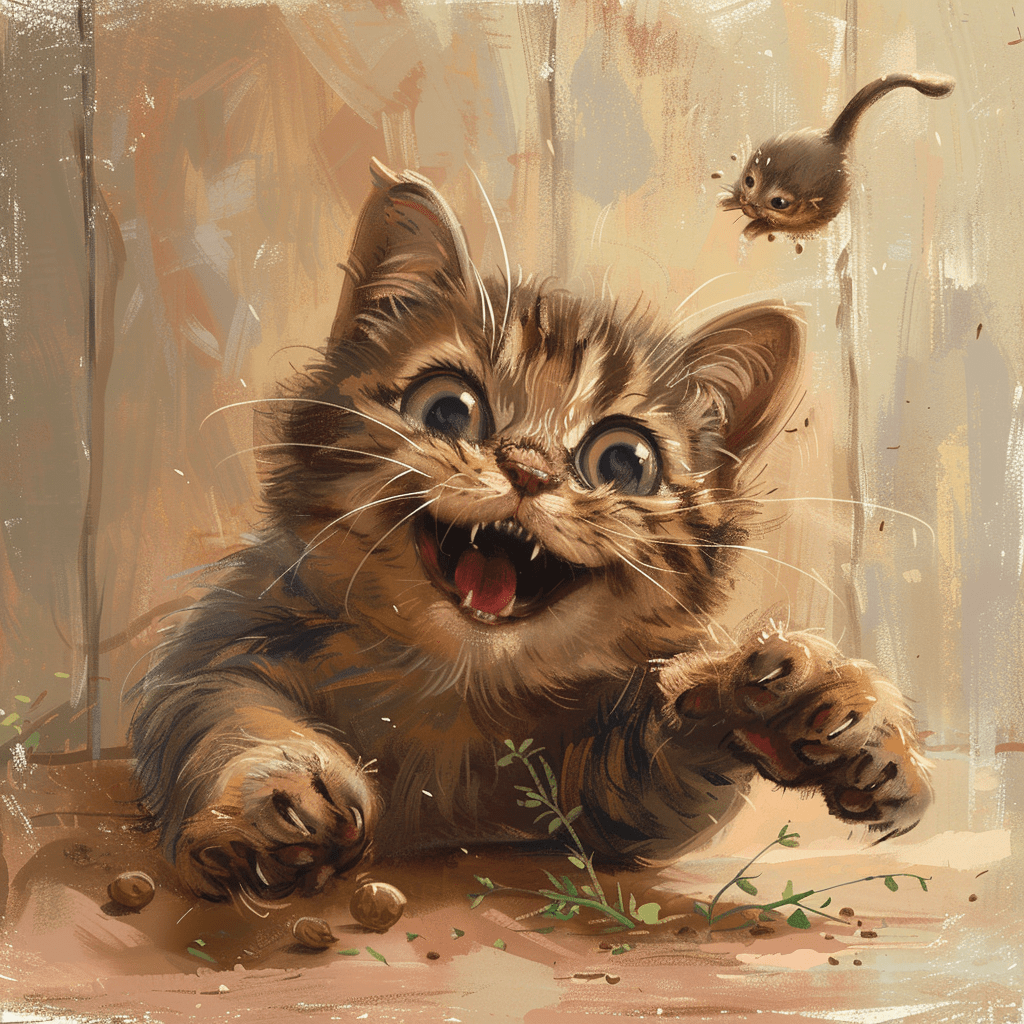
Do you have something that’s catnip to you as a reader or a writer, or simply as a person?
Keep it minimal in your story. Or if you absolutely have to have it in there — well, you are you, so often your ideas will have something that is catnip to you and that’s what makes them tic — be very suspicious of it.
How suspicious? Well, make sure it’s not the ONLY thing in the book that is interesting to you and driving you to write on.
Let me explain: I’m… old. Possibly older than dinosaurs, or at least that’s how I feel like today.
I’m a lousy mentor, mostly because I’m ADD as heck, so I tend to forget to read things. Also, my life is a complete state of perpetual chaos — yes, some of this is the ADD, but some is just that I’m cursed. Yesterday and today Engineer Cat learned how to break into the parts of the house that are still full of boxes and therefore kept closed to him. Avert your eyes…. — which means sometimes I remember for months, and feel super-guilty but can’t get to it. A word in your shell-like ear: the best way to get mentoring out of me is to keep bugging me, way past all bounds of decency.
However, in moments of relative calm, I’ve mentored people. And over 30 years, that amounts to a lot of people. A lot, a lot.
Which has led me to be aware that passion is a fickle mistress.
No, I don’t mean sex, though you’d be shocked — or maybe not — how often for the young and naive sex is in fact their plot catnip. (I don’t know. While the subject interests me enough in person, I am … not a voyeur? So reading about it is always a little blah.)
I mean whatever passionately interests the writer is a good way for the writer to forget about plot, character development or even story at all.
I will never forget the 180k word novel, in which the person — whom I later found out had a degree in the history of textiles — went astray by pursuing textile production/transport/sale/valuation in this galactic empire.
You start out with the young woman, carrying the precious cloth she inherited from someone and isn’t sure where it came from, as her sole possession and clue to her origins — she is a foundling — boarding a spaceship to the largest world/trading center. And you’re all interested…
And then she meets a cloth trader. And then we follow him on a buying expedition cum lecture on methods of weaving. And then we follow one of the weavers…
It wasn’t so much a novel as “Scenes from how cloth might be made in a future space empire with multiple nodes of trade and–“
And it took me forever to convince the poor person this wasn’t a novel. She kept saying “but it’s over 100k words!”
You could tell, too, that it was passionately interesting to her. Mention things like “You probably don’t need the scene with the android weavers” and she’d start talking about how the cloth would lack those little imperfections that made it blah blah blah….
Seriously. I don’t even know if I ever convinced her, as eventually we lost contact. And she’d come to me because it had been rejected EVERYWHERE and the rejections baffled her utterly. Because to her the book was unputdownable, of course.
Most of the time I run into this with either politics or sex, though honestly, for men it can also be “imaginary machines.” A subvariation of this is when they don’t even describe the spaceship or flying car or whatever, just beat you over the head with brand names. “He didn’t have a Dragon Rider, which was, of course, the best, but he had a great Phoenix Flyer, with the leather seats.” Seriously, if you must get all geeked out over imaginary machines, at least describe them. We don’t need details, but we do need to know if it’s bigger than a lemon and can carry more than an unladen swallow.
If it’s sex I’m put in a heck of a position as a mentor. Because if I say “Okay, thing is you have a lot of sex, but no plot or characters or anything else that interests anyone not along for the sex,” I get called a prude and my advice discounted.
Note that I figured this mistake out by making it. No, not sex. My catnip is such complicated world builds that they literally don’t fit into a book, and confuse everyone. Took me years to figure out that at best I was boring people out of their gourd. At worst, they were confused by a tour of worlds that don’t exist, with no reason to be there.
So, how did I get over it? Very easy. My husband doesn’t have my obsession with politics or “how societies work.” He very much is there for the story. So having him beta read beat most of it out of my back brain. (Though, heaven help me, the weird book might be me regressing.)
Now, I’m not loaning Dan out — though he’s awesome as a beta reader — so what do I suggest?
Find a set of first readers who aren’t obsessed with the same things you are, and then get them to give you honest opinions. If you can’t do that, and look, finding beta readers is hard even for professionals, because of the requirement to get it read on time, then it’s harder. You have to pretend you don’t care for thing, and diagram what you’re doing with characters and plots, BESIDES THAT.
It is however important. The fact that romance has become really erotica is to be laid (snerk) at the feet of “Obsession that writers and editors share.” And while sex will always have readers, the low-quality of plotting and character has got traditional publishing houses in romance in relative trouble. Meaning their circulation is lower every year.
In the same way, the fact that writers and publishers tend to have gone to the same impeccable universities is responsible for the wokening of science fiction. Beyond all other pressures to sing in the Marxist choir, there’s the fact that people freshly indoctrinated with a bunch of imperatives to “change society” think that anti-racism whatever it means this week, or the latest gender cant is the most fascinating thing EVER. And when the writer and the editor both coalesce it’s easy to forget that novels should have characters, plot, and a driving force pushing the plot forward.
Hence how many “heroes” of sci fi or fantasy trad pub epics are just scolds, who magically “stick it to” the racists or the sexists or whatever, but are, objectively evaluated by people who are not obsessed by the topic, in the exact same way, horrible people we wouldn’t want to share a cab with much less an adventure.
Look, yeah, I disagree with a lot of it, and some of it is so outright stupid even the author can’t seem to have it clear in her/his head — in fifty years most coastal areas can’t/won’t be under water. If that were true, we’d already be seeing it, and coastal properties would be devaluing. BUT more importantly, if Kansas — KANSAS, WTF? — is underwater, so is London. More importantly, so is all of England and a large part of Europe — but that alone doesn’t mean I wouldn’t enjoy the book, around it.
I read a lot of communist apologetics during the cold war, as much as the ideas they pushed disgusted me. I read them because the STORY was good. And I cared about what happened to the characters, even if they were soviet shills.
You can have whatever your catnip is, even if it is something that makes me roll my eyes so hard they roll on the floor and the cats play with it.
But if you want to entice readers, you need to make sure you have other things that will bring in the maximum readership possible. And ultimately that’s mostly always characters, plot and a story that moves. Because if you have that, even the bits that upset the reader will be ignored till the story is read.
So, put your catnip in, if you must. But treat it as a dangerous substance. And make sure there is enough around it to make it not the only thing interesting in the work.


 Mad Genius Club
12 responses to “Catnip”
someone tell Hetman Melville…
Someone tell Herman Melville how to write characters more interesting than whale butchering and comparative mythology.
Ok, my catnip is definitely clever subversions. The mummy sitting up and begging the heroes to stop the necromancer because he’s killing her daughter. The blood thirsty magic axe advising his wielder that she might want to slow down just a bit because she’s about to go carving right into her friends. The girl walking in on her guy in a compromising position that’s not his fault (in classic romcom fashion) and recognizing immediately that he is not a consenting participate in the fiasco. The near-missle that just as the audience is thinking the hero escaped, is an expanding rod warhead.
That sort of thing.
And that is *so* easy to miss the landing on.
It’s either going to be an absolute moment of awesome or it’s going to scatter itself across the runway in a thousand pieces, and I’ve yet to see anything inbetween.
Similar problems here. I have a certain frustration with awesome power fantasy characters, so I end up not writing them or pushing them to the margins of the story. There’s a beta couple in the current WIP, consisting of the hero’s female chief of intelligence (who vaguely resents him because of that time the clan elders tried to make them marry each other) and the hero’s close friend who’s taller, handsomer, more politically powerful, lovely basso singing voice, etc than the hero, and additionally a very decent and upright chap in spite of the politics. At some point the female chief of intelligence is going to flatout ask the heroine what on earth she sees in the hero, and although I do know what the heroine sees in him, I am still unclear as to how she can put it into words. But for some reason it’s important to me that the hero be someone who is easy to underestimate.
I’ve seen some clever subversions. I’ve also seen so many not clever at all subversions that it’s left me longing for playing some of these ideas straight again just to see if the writers can do it. I.e, the male warrior who acts heroic is actually heroic and not just some 90’s neurotic anti-hero, the fair maiden is genuinely decent and good rather than a vicious narrow-minded tramp, or a seeming sleazebag of a character who isn’t being mistreated because Social Prejudices but because they’re an awful person, period.
BTW, Sarah, the pic is a great depiction of all us writers high on our own supply, so to speak 🙂
It’s been decades since I read it, but it occurs to me that this might possibly have been the problem with a book I should have liked, Carve the Sky by Alexander Jablokov.
It wanted to be the New Alfred Bester, with a baroque and complex solar-system-wide culture through which the main character has to navigate. And the hook was good enough that it’s the sort of thing that, in the abstract, gets reused a lot. There was a system-wide famous sculptor who supposedly died some time ago (say ten years). Protagonist finds a sculpture that has to be by the guy, and can’t be by anybody else, except for two things: it was never documented, and protagonist is an expert on guy’s life; and there is a tiny flaw in it that could only have happened in a microgravity environment, and guy never worked outside of a gravity well. Which leads protag across the solar system trying to track down if guy is still alive and working in secret, or something else is going on.
The research and thinking-through of stuff was great — the above-mentioned flaw was essentially a small sphere of metal that cooled and set as a perfect sphere, rather than ovoid from gravity pulling at it. But unlike Bester’s two best books, it never became about more than the quest, or the art. Or, at least, that’s how I’m remembering it. The ending had a dash of bleak nihilism that suggests to me in hindsight that Jablokov was possibly trying to get in with the literary crowd — the book has many parallels to beloved-of-NPR author Paul Auster’s non-SF book Book of Illusions which, strangely, I quite like, and was written more than a decade later.But Jablokov’s book was missing something, and I never could put my finger on just what. Perhaps (I may need to reread just to see if it becomes more clear to my more mature eyes) it was that he got too deep into the research, or the world-building.
Me ane catnip, dear madam, would be funny accents an* dialects. Now, *ow can I fit a plot arount *em, arrr?
Dear hostess, I am with you on the sex thing – not my catnip. So long as there isn’t so much that I can’t avoid it, though, I’m fine.
But… The nice thing about the modern publishing environment is that a book can be put out there, and (with a decent amount of marketing) find many people that share your tastes. Not a best seller, but worth the effort.
Of course, I haven’t read the book you describe – but, despite not being a professional or hobbyist weaver – I would be likely to find it absolutely fascinating. The writer could get at least a few cents from me through KU.
A word in your shell-like ear: the best way to get mentoring out of me is to keep bugging me, way past all bounds of decency.
I’ve heard that….
Eh, I just went and found beta readers instead, and then published the thing, and then wrote the next thing, and used my beta readers again, and by doing so, trained them to what what I was looking for, and they trained me to how they saw and said things, and then published that, and then…
7 years later, she’s never gotten the feedback for that story back to me, and it’s okay, and we’re still friends.
So, you know, choose where you spend your effort.
Psst. (looks around) It’s the Boss Lady. (closes trench coat, slinks back into dark alley)