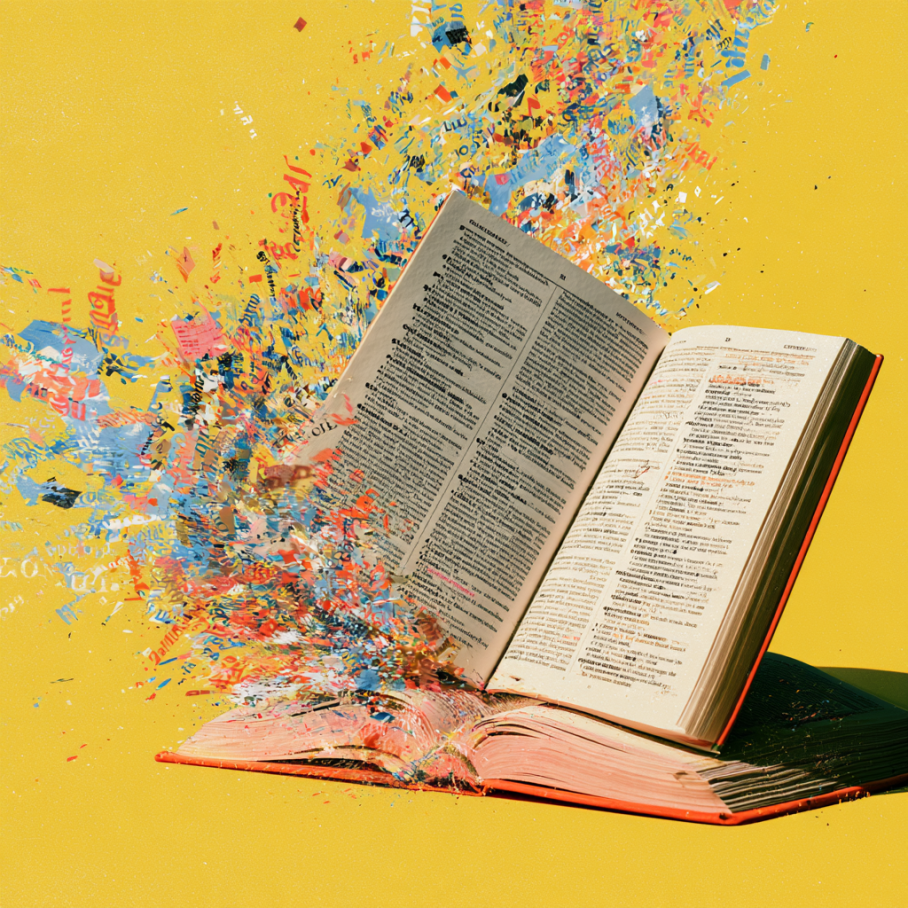
You know how it is… you’re cruising along, cranking out the prose, and then you pause, fingers suspended in the air, searching for just the right term, the best expression, the coinage that will really fit…. and then it shows up in mental neon, and so you type it, smile in triumph, and lean back. It’s just the right words, a perfect terminology to fit the need.
If you’re fortunate, you reread it immediately (instead of later on, or maybe only after it’s published) and discover that this most excellent expression is… actually horribly wrong in its literary environment: anachronistic, out-of-place slang, etc.
C. P. Snow borrowed a French mot juste [“perfect word”] for this when speaking of the expectations of “people of our generation” when discussing the “two cultures” of literature and science. He accused them of being bien vieille (“well-aged). The implication was that those beliefs seemed normal to them in their lived experience, but that time does move along and changes concepts and expressions.
I sure do see it a lot of if these days, in a failure of editorial oversight. The Regency Romance heroine who muses that her inadequate suitor’s behavior “brought her down”. The 17’th century thief who finds that he’s “blown his cover”. The villain in the 18’th century who is “fueled by adrenalin.”
Now, I have a lot of sympathy for this particular mistake. In one sense, it really may be “the perfect phrase” for what they’re trying to express, a shortcut that truly sums up a concept. But, of course, it’s inadmissible in the usage, since the word or phrase itself is alien to the context of the story (chiefly as an anachronism, but also sometimes from the wrong culture, or in an impossible context.)
But, the thing is, these phrases will themselves age over time and acquire a patina of agelessness. If you are part of my generation, the three examples I gave above are familiar to you, since you were around to witness their birth, or the discovery of their context (adrenalin). So you know for yourself that they are misassigned when applied to an earlier time period. But if we move forward another 50 years, they may just seem to be older phrases in the common mouth, their birth time no longer noticed.
Got any noticeable expressions like this that you’ve employed or stumbled across in usage? If you use editors, better make sure that they’re “age appropriate”, so to speak.






Leave a comment