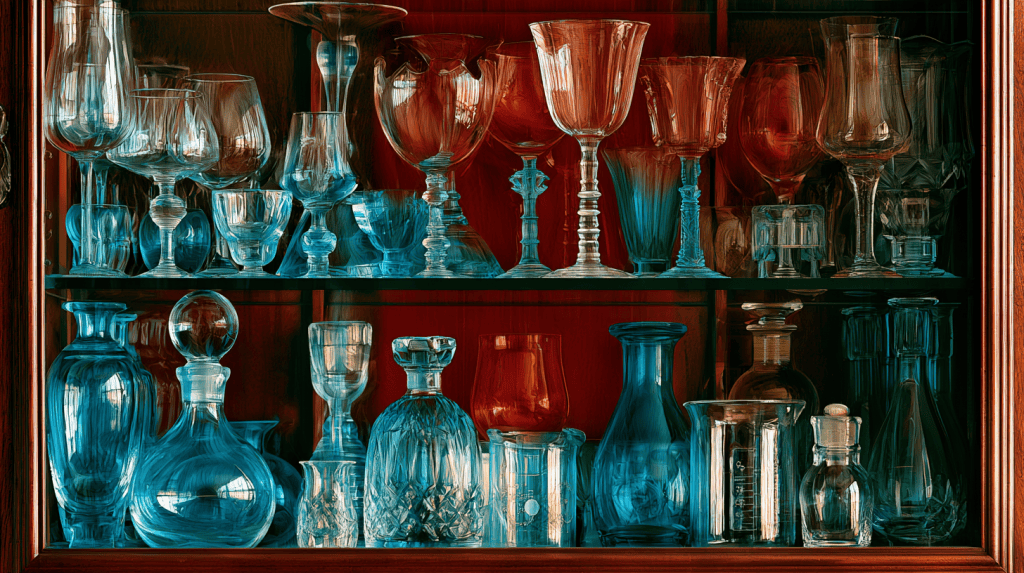
Something occurred to me while I was unloading the dishwasher. You see, a couple of weeks ago my husband and I were talking about rearranging the dining room and putting another bookshelf in. Yes, I know, that’s your shocked face. One of the things we discussed was the amount of room the alcohol glassware takes up. You know what I mean. The pretty, sparkling glasses in fun shapes, sizes, and even colors. Water glasses are dull. Alcohol glasses are not. The upshot of that conversation was that I’d served water at dinner the other night in cut-glass wine goblets. Very fancy. A lot of fun. We’d laughed, enjoyed them, and I’d washed them. Yes, in the dishwasher because I’m not that dedicated to the schtick.
This morning, while thinking about what to write and coming up empty, I’d worked for a while on editing. Pulling the wineglasses out of the wash just after going over reports on word usage in my own writing had made a connection for me. We reach for the water glasses—dull, utilitarian, but reliable and clearly fit-for-purpose—before we reach for the goblets, chalices, snifters, and decanters. I’m not suggesting that you write with a thesaurus by your elbow. No, save that worthy tome for later, when the story is out of your head, and you want to make it sparkle. Then, go in, find the vague words, the ones you use when you’ve fallen into a rut, the words you reach for when you’re tired. Take those words, examine them, and etch out facets of meaning into the story by changing them.
Now, there is a way to do this and maintain balance. A story doesn’t need to be wholly constructed of the most difficult of language to parse. I’m not going to reach for the silver-embossed cocktail glasses to drink water from. Too much work. They absolutely cannot go in the dishwasher. I only use those on a rare occasion to appreciate the beauty and what that can bring to the experience. Some words are like that. You want your reader to stay in the story, not be jolted out by polysyllabic intrusions. Getting a reader to look up words twice in a book? Fun challenge. Twice on a page? Likely DNF review from the vast majority of readers.
There’s a way to remind yourself of word use, like my opening the cabinet and looking at the pretties reminded me to start using them more often. Read outside your comfort zone. I’m not talking about struggling through abstruse literary confections that leave you glazed over and wondering what the point is. I’m talking about backtracking a few dozen decades, a century or so, and reading books which used all of the words. Go back and read Shakespeare, who made words up. Ditto Tolkien. Indulge in a comfortable evening or three with C.S. Lewis, in Narnia or otherwise. Me? I’ve been reading a fair amount of Agatha Christie, and it’s about time for me to revisit Dorothy Sayers and D.E. Stevenson. When I was running these reports on my manuscript with ProWritingAid, they were comparing the manuscript to the average writing, and to Madeleine L’Engle. Which was fascinating. Because if you look at the stats, her stuff is nothing like the average. Yours shouldn’t be, either. Go pick up Poul Anderson, Roger Zelazney, and Frederic Brown and feed your brain and soul before you start that next story.
Strive for readability. Never settle for the lowest common denominator. Challenge yourself to take a close look at the story and find those places where you can add a little flash, without booting the reader out of the story. I think it’s worth the effort, just like drinking from goblets can be fun for a change. Also, you should be reading, and making sure that you aren’t only reading the modern watered-down under-educated pap. You’ll be the better for it, your writing will pick up the flavors you are taking in, and your reader’s will be enriched as well.




Leave a Reply