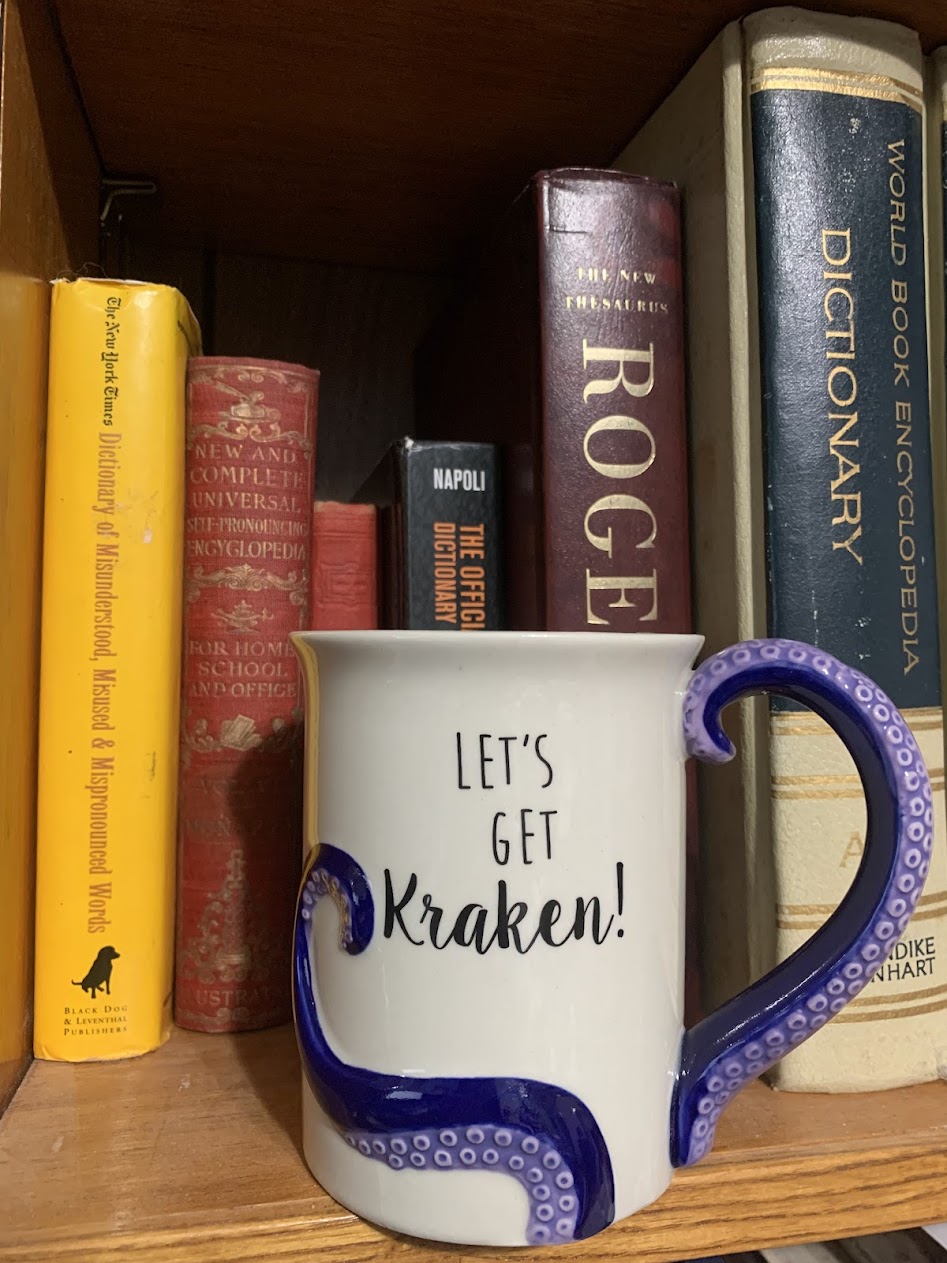
A friend and reader messaged me with a question recently, and it got me thinking. She asked me about drinking chocolate, which I know I have included in more than one of my books over the years, and I specifically referenced it in Child of Crows. I responded with a brief description, contemplated doing a recipe (it’s more a tutorial, really) and then started thinking about the role these vital ingredients to human survival play in fiction. There are books known for their rich and detailed descriptions of food and beverages. The Hobbit springs immediately to my mind. I’m sure some will be named in the comments, with fondness! There are other books where it might not be mentioned at all (a feat, since every human must consume nearly daily), and books where it gets a cursory inclusion almost as an afterthought or prop.
Without further ado, here’s how to make drinking chocolate, which is… well, I’ll tell the story after the recipe!
- 1 tbsp dutch-processed chocolate
- 1 c water or milk
That’s it. Now, from here you need to know some things, and add some things. This is a little like storytelling, isn’t it?
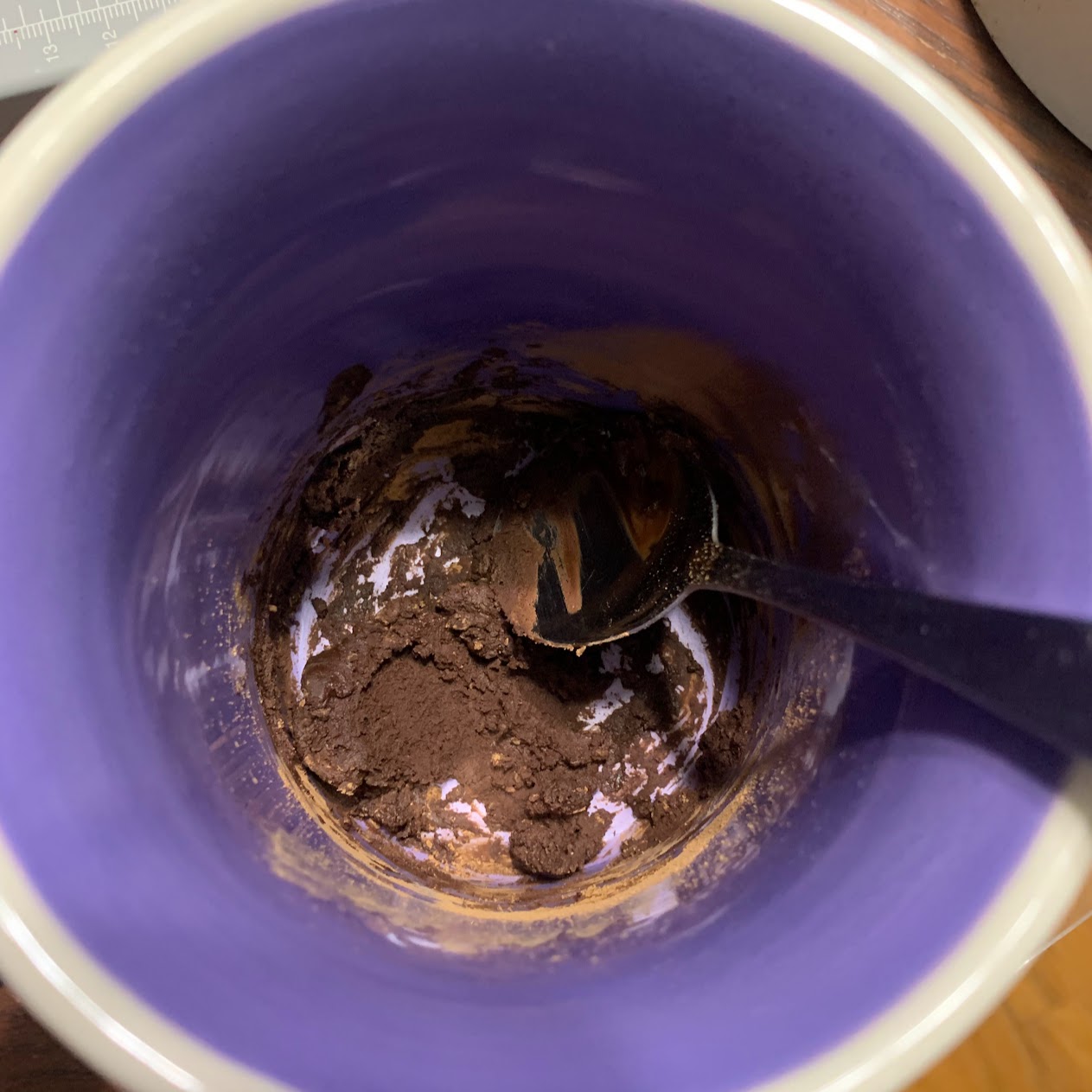
If you use blocks of chocolate, obviously this is going to be the tastiest. However, I use cocoa powder. Dutch-processed cocoa powder is the best for this, as the processing keeps it from being as bitter as a regular baking cocoa will be. To prevent this from clumping, I put the powder in the bottom of my cup, and add in about a teaspoonful of my hot liquid (I use water as I’m lactose intolerant*) and then stir this into a paste. Slowly, with stirring, add your remaining hot liquid. For a large mug, start out with two tablespoons and two teaspoons to make your cocoa paste! This stirring will take a minute, but you’ll have a smooth, dark, lovely drinking chocolate.
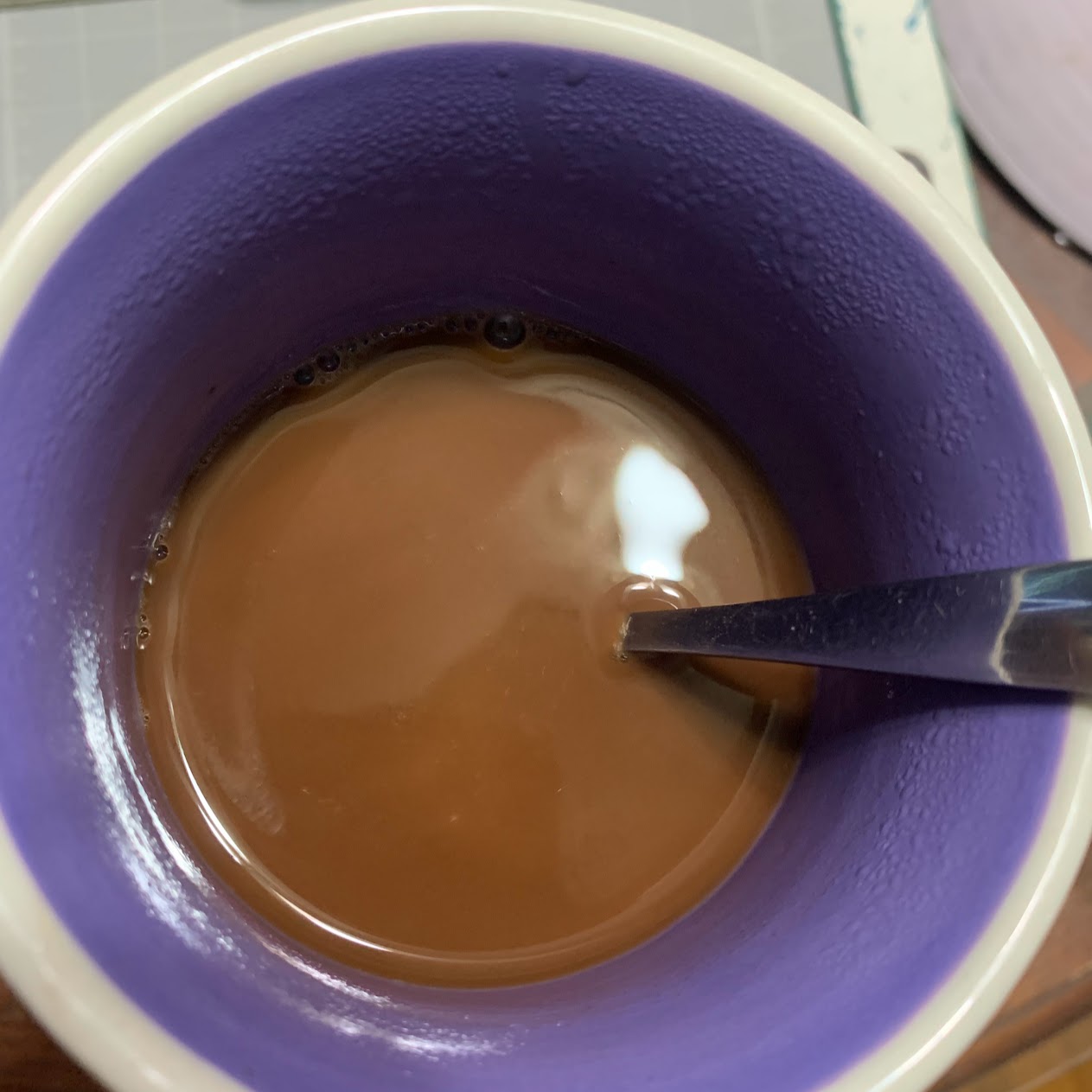
And now, you can embellish to your heart’s desire. Want it sweet? Stir some sugar or sweetener in now, or earlier in the process with the cocoa powder. Want it richer? A dollop of heavy cream is luscious* just like it is in coffee. Want to add a flavor? Take a bag of herbal tea, and add it to the hot liquid to steep, then use that to make your chocolate. Mom introduced me to this as a child, and things like cranberry tea make it taste like chocolate-covered cherries. Of course, you can use hot coffee which is what I do most of the time, to make a mocha.
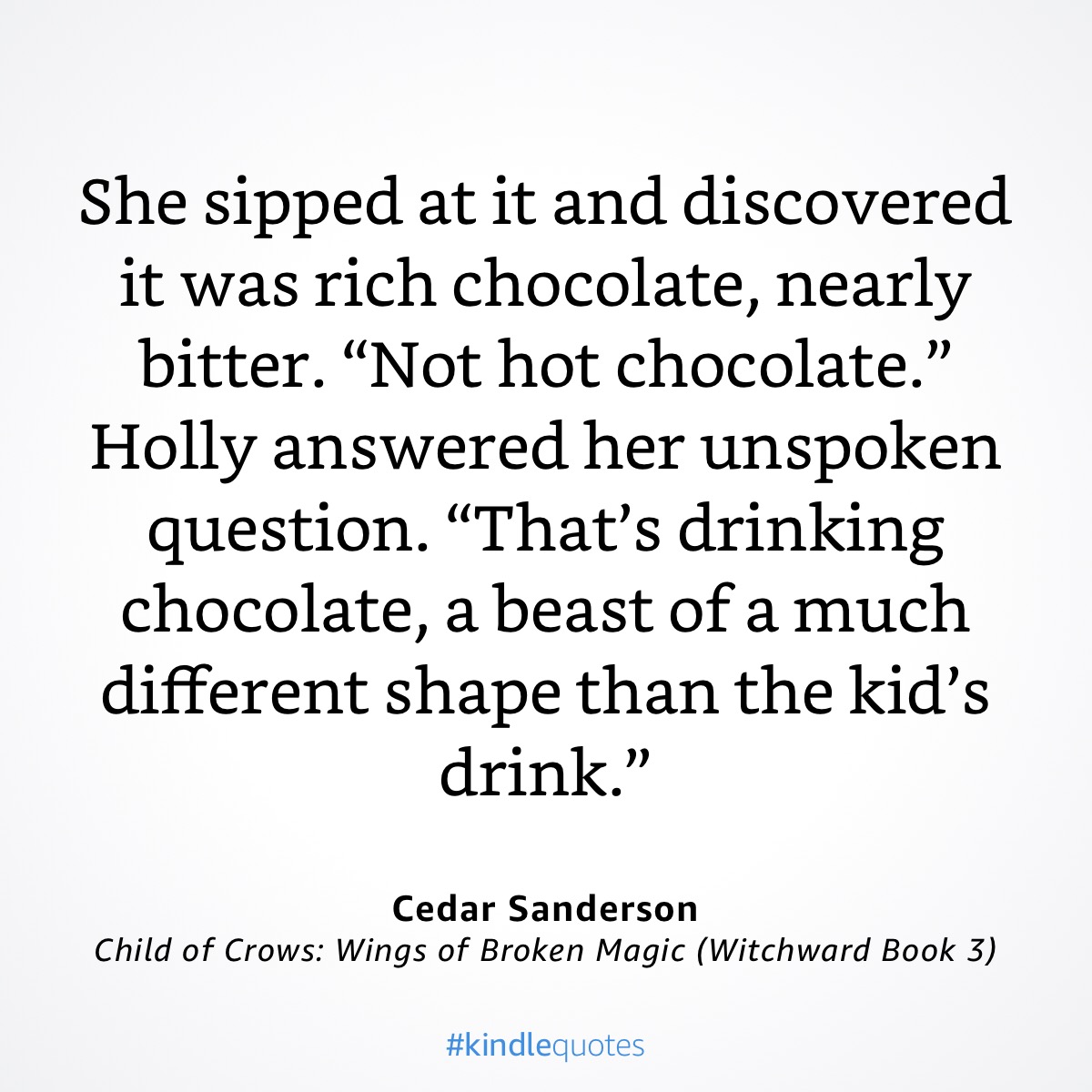
Now, how did this simple and wonderful beverage become a recurring theme in my writing? Well, easy enough. It’s what the kids these days call a core memory. I asked for a cup of hot chocolate while traveling in Britain with family, at the age of eighteen (coincidentally, the same age as the young lady in the story I quote above) and what I got was drinking chocolate. I was startled to take a sip and find it dark and much like black coffee. Then I learned that I was expected to add cream and sugar, like to coffee, to taste. I fell in love. Hot Cocoa in the US is super sweet, tastes of powdered milk, and while sometimes I do like it… I’d rather have this and doctor it up to perfection for my own personal tastebuds.
Many years ago, long before that encounter with drinking chocolate, I was told there are only so many plots in the world. They’ve all been done. Mapped out, writers have explored them, why bother doing it again? Well, because you can take simple ingredients and add your own taste to them. You can take a plot, stretch it, fold in some fruits and nuts, add a little salt, a little sugar, a little fat… all the good things that you can think of, but no one else has before you. The plots are all the same, true. This doesn’t make the stories all the same. You should write that idea, even if it has been ‘done before.’
Because only you can do to it what you like best. And then? Well, you have to find readers who enjoy it, too. But that’s a beast of a whole ‘other shape!
*I’m mildly lactose intolerant, which means heavy cream is fine for me, I can’t do milk or half-and-half. Plus, it has less carbs!


22 responses to “Food and Drink in Books”
Tea shows up in many of my books, or some other hot, steeped-leaf drink. Coffee likewise, but I incline toward strongly flavored teas, so that’s what characters do, too.
That’s been a catch in the most recent WIP, because … no tea, no coffee, and steeped herbs were medicinal. So water, beer and ale, mead, those are the drinks. Darn historical semi-accuracy!
Historical accuracy just makes life harder. This is why I write fantasy!
Food, and meals are excellent ways to set the tone of a relationship, the, umm, snob level of a household, drop a hint as someone chatters nervously to cover up not knowing what to do with all these forks!
And culture, and culture clashes . . .
It’s a good way to give a reader insight into the personalities involved . . . your nurturing hot chocolate, or a chilly stiff formal cup of tea . . .
Counterbalancing that is that you have to do the world-building to establish the snobbery level entailed.
It does work in a contemporary known-world novel, otherwise yes. It’s a good handle to use for such things in world-building though.
Robin McKinley’s Sunshine does quite a bit about food.
I mention food in my Steppes of Mars series but largely to show how different Mars is from Olde Earthe. Different things grow in different areas and this is AFTER everyone has gone through the meat grinder of history and come out the other side.
In Panschin, where the WIP is set, people eat a lot of algae dumplings and yeast blocks and tank-grown stuff. Panschin is too far north to live outside year-round and is under massive domes. That affects what and how people eat.
I mix up names from around the world for the same reason. It’s an indicator that the population underwent considerable change and trauma.
From what I remember from when my children were reading all the Redwall books, a significant portion of each book was descriptions of feasts.
I’ve heard that! Haven’t read any yet.
That calls for two comments. First, although I didn’t set out to do it, food does figure rather prominently in my novel Advance Guards. The family that is central to the story lives for 40 years in the countryside 150 miles north of Los Angeles, a countryside long since abandoned by the entire population, so what they eat and how they come by it is an everyday necessity. Then when the kids begin to journey to the city, the tasteless but presumably scientifically nutritious food varies only by shape and texture, and bringing exotic tastes to the city figures prominently in the plot.
My second comment is regarding low fat milk. Low fat milk is advertised as 98% fat free, which sounds impressive until you realize that whole milk is 96% fat free. My wife never liked low fat milk but drank it for years because it was supposed to be better for her. When she understood that the whole non-fat craze was deliberately engineered by the sugar industry, she went back to whole milk. <insert rabid conspiratorial diatribe here> After a year of going back to drinking whole milk, our dentist remarked that her teeth were much stronger. He asked what she had changed in her diet, and she told him about the change to whole milk, but she hadn’t thought that would cause any change in her teeth. He laughed and said, “Of course. Unlike low fat milk, whole milk has casein in it. Without casein, your body doesn’t absorb the calcium.”
I’ve had a recent habit of drinking a large mug of hot cocoa every night. I was thinking about adding the cocoa and sugar first then the milk and heating the milk. Now I’m going to have to try your way of making it. Thanks!
First comment is apparently awaiting moderation because I put a link in it (but I didn’t make it gay).
TXRed as Mod: I only found your comment in the SPAM catcher this morning. I have no clue where it went between when you posted and this morning. Shopping at a gourmet market?
Thanks for grabbing that, I couldn’t find it!
The “Let’s get Kraken!” mug is great.
It is! I had to get it even though we usually have more mugs than two people need.
Coffee mugs reproduce like single socks and wire coat hangers. I thinned the herd last summer, and by January, five more I don’t recognize appeared in the back of the shelf.
I still find wire coat hangers in the closet although I thought the breeding stock for them was long gone. I place them carefully back there together, hopeful… gone are the days of casually counting on them as scrap for projects and armature. A dying breed in the Plastic Era.
I have reached a point in the cupboards that the dominant feeling upon accidentally breaking a mug is… relief.
In The Mobster’s Daughter, the lady of the house is a Hungarian immigrant who loves to cook, especially Hungarian cuisine. When the family adopted a Vietnamese war orphan, she learned how to make Vietnamese dishes. I have no direct experience with either style of cooking, so I had to do a lot of research in order to describe the food accurately.
Both are delicious!
A farmer’s brown cow started giving chocolate milk. They tried making butter from it. I had that work, although I don’t know if it would. The buttermilk was awful, but the butter was yummy.
Unrelated:
“I’m a bit out of my depth here,” Reilly admitted. “What’s charcuterie?”
Tom laughed. “It’s what pretentious people call a plate of sausage; sometimes there’s cheese, maybe fruit.”