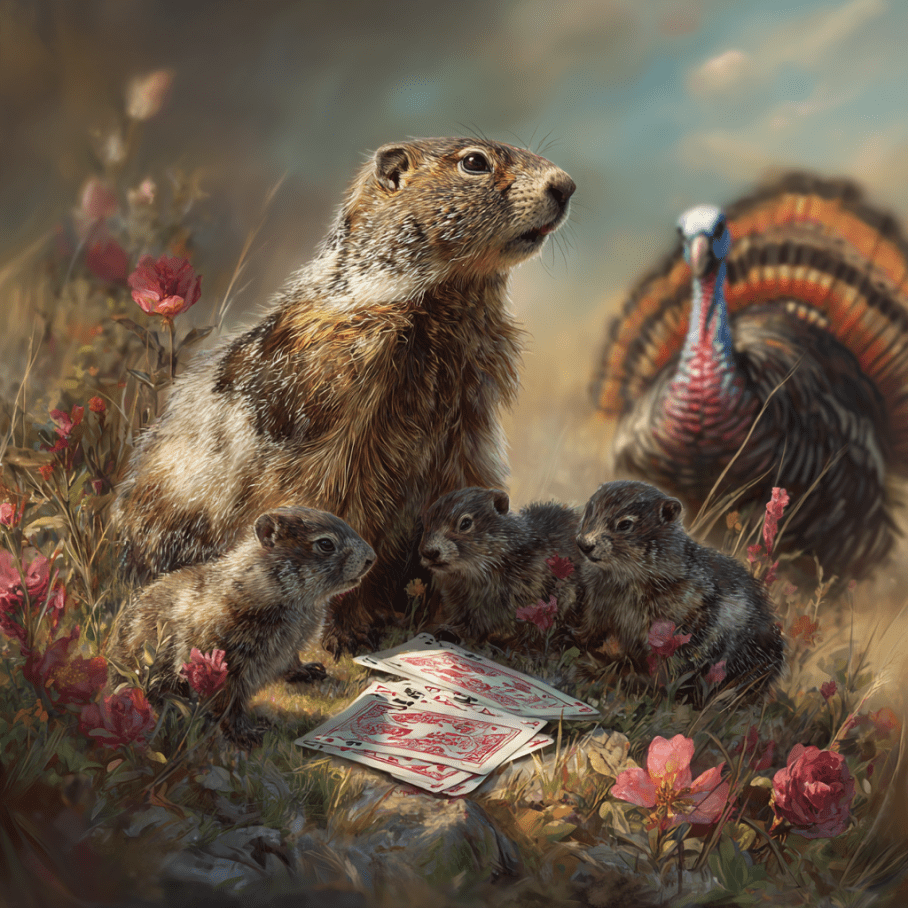
I live near the top of a (middling) mountain in wrinkled central Pennsylvania on what used to be a large farm, now being allowed to slowly revert to nature. We have… critters. I see them from my windows, I wave at them, I try not to frighten them, and (of course) I keep my bird feeder filled for whatever might appear (good thing I like surprises).
Now, I don’t really control the deer, black bears, groundhogs, possums, snakes, owls, etc., that are my current tenants, but I can’t help feeling responsible for them, as if they were my direct invention. And then, it finally clicked. They’re the analogue to all those “spear carriers” in my fiction, that is, they’re just part of the landscape or cityscape, the unnamed dwellers in the background, that don’t play any part in the narrative.
And why not? Why shouldn’t they suddenly acquire names and turn into actual characters, minor or maybe developable as important personages? After all, one of the groundhogs just revealed to me a route under my cabin basement, which I never suspected (and am somewhat alarmed to discover), and the cat hanging out underneath my parked car to evade my dog’s interest was actually revealed to be a bored possum. The scat I stumbled over identified the latest leaner-on-the-birdfeeder as one of the up-and-coming bear cubs, instead of its mom, which is something of a relief to discover.
If I were setting a story here, well, my heroes might be coherent full characters, but they would need all sorts of non-character folks to flesh out their story to a satisfying full story, sort of the way I need all these critters as unwitting stand-ins to real folks to populate my home area with personages.
So… maybe I can’t promote my wild turkeys to actual personages in my life, but there’s no reason I can’t make use of their analogs in my fiction, playing more with the possibilities of introducing strangers or other out-of-left-field encounters to make use of some randomness in my story telling.
What do you do with your accidental (or deliberate) strays in your stories? Do they stay as walk-ons, or do they sometimes get promoted?





10 responses to “Volunteers from the background characters”
Some work their way into becoming major-minor characters. Others remain minor, but valuable sources of information, or quiet constants in otherwise harried days for my protagonists. The eccentric but loyal customer, the gal at the coffee shop who always has a smile, the semi-retired coworker who sometimes passes on gossi—, er, unofficial shop talk and news, they all form a frame around the main story.
I looked at this issue from an agency perspective. I realized that I had the background characters just sitting around waiting for my intrepid heroes to arrive – without knowing that anyone would arrive.
That doesn’t happen. Everyone has a life and everyone has agency. They would be doing things. Perhaps the wrong things, but they wouldn’t just be sitting around doing nothing.
I still haven’t completely fixed the original problem, but the stuff I’ve written after that miniphany seems much more realistic.
The first (and so far incomplete and only) book is about building the ensemble cast for the rest of the series. All the secondary characters are promoted from the background. There is the faintest wisp of fate/destiny involved, but it’s mostly just like-minded people coming together encounter by encounter.
What was planned to be a walk on set of charicters, specifically the Vampire Council, ended up with the leader (Vigo Sorinson) demanding his own book, and being a key player in two books, and the problem child in the council wound up being the JR boss in one book.
The danger of making “third spear chucker from the left” into a named charicter, is that sometimes the idiot demands a bigger role.
Back when I was still trying to pants, I was writing about a young man going to magic school, and trying to figure out where the story should go next. I had read somewhere that, in school stories, the main character should always meet his best friend and worst enemy on the journey there, so I decided it was time to introduce my version of Draco Malfoy. I wanted a legitimate rival to the hero, so smart and devious, but also someone who was an obstacle rather than actually evil. And just to make sure this character was clearly different from Malfoy, make her a girl.
And then my “villainess” got up, looked around, and said, “Thanks, Zsuzsa, but I’ll take it from here.”
She’s played a major role in both of the hero’s novels so far, starred in two stories of her own, and is still at the back of my mind saying, “You know, I had that rather interesting adventure during the summer holidays. You could be writing about that…”
I have your Seelie Court novels, but what are the titles of these novels?
A series that I haven’t gotten around to putting on Amazon yet, unfortunately; Seelie Court 7 has been taking all my attention.
But one of the stories featuring the female Draco Malfoy is in Raconteur Press’s Pogue Too, “Masters of Mechamagic.”
All my minor characters have lives of their own — in my own head! — even if most of the time, they don’t grow beyond saying something important or reacting because of how their own lives are affected.
That is, they aren’t automatically helpful NPCs to the main characters.
Sometimes they graduate to major characters and get a book of their own.
Maybe it’s the way my books are focused but I don’t seem to develop Ascended Extras very often. A major supporting character, POV or not, is usually someone I figured out was necessary early on in the writing process or somewhere in the brainstorming process.
In Even After, Rapunzel had twin children. Because that’s straight from the tale.
I had adventures in the outline, working out what the boy would do and what part he would play, but his sister was just there.
Then I was writing along in the first draft, and in the kitchen, the family sat and listened to the history behind their misfortunes.
And what did the sister do but open her mouth and declare marry a cursed prince.
Dead silence. Her father gravely reminding her that she had to keep her promise, however impulsive. And me, having to work out an entire new subplot — which in the end helped work out some timing issues.
I will note that frequently, thinking a bit character is colorless, I assign him some trait to enliven him, and then he comes to life and appears. Sometimes just as the go-to character for, say, someone to say something spiteful, but sometimes into full blown minor characterhood