
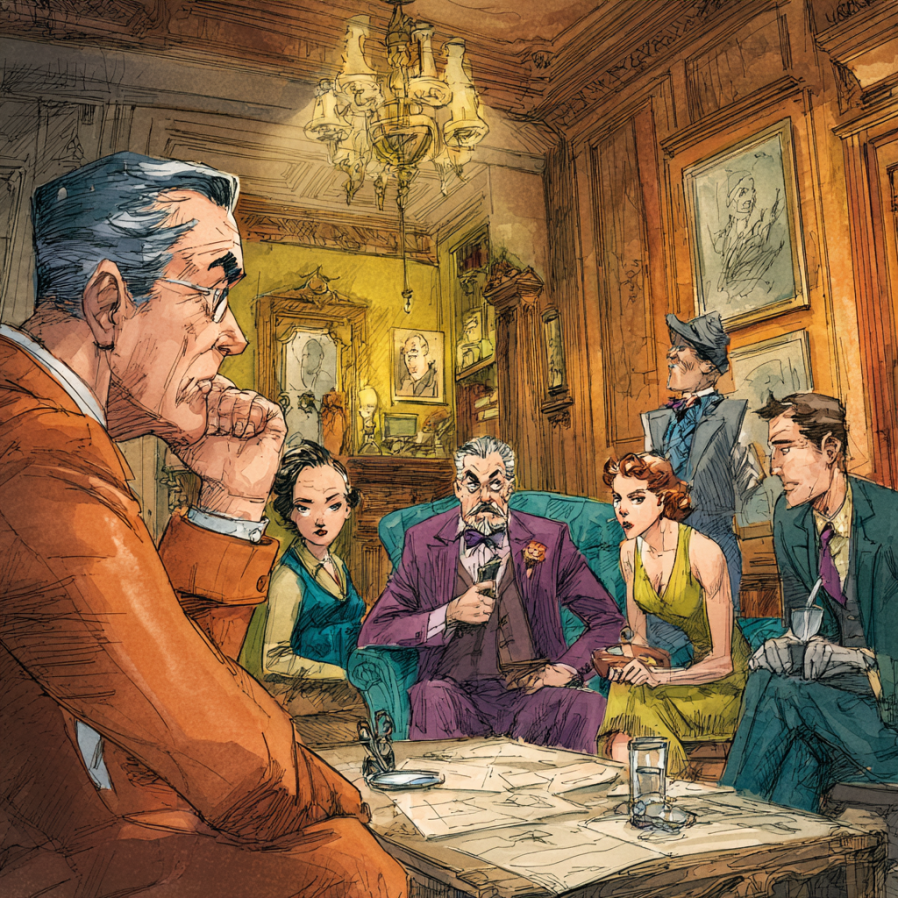
I’ve been reading a bunch of cozy mysteries by various authors lately, and among other observations, a pattern has emerged: they’re all contemporary, for the time they were written. Since this data set includes books written from the 1920s onward, there’s quite a bit of variation, and it’s making me think about details that were modern and up to date when the books were written, and how our perceptions have changed.
Reading through Patricia Wentworth’s books is doubly interesting because I own a bunch of them, from various points in her long career, and I can track what was going on in the world and sometimes in her life, via her publication dates. Plots set in the 1930s tend to have characters who are very down on their luck, and are willing to do crazy or illegal things for money because they can’t find a job. A situation that’d hit home for a lot of people during the Great Depression. Stories published during the 1940s almost always include characters who are in the military or working for the war effort in some capacity, and later books talk about ‘this hard post-war world’ and don’t shy away from what’s been gained and what’s been lost through all the upheaval.
Georgette Heyer’s mysteries include similar touchstones, usually in the form of background details. One of her earlier works includes a mention of the British Fascisti, which made me blink, wonder if the edition had been edited while grumbling about the modern propensity for labeling everything bad as ‘fascist’, then look it up and discover that, yes, such a political movement did exist in Britain during the 1930s. On the flip side, one of Heyer’s later books, published in 1953, includes two characters talking about rationing orders. One quick internet search later, and yep, Britain still had rationing then, way after the war was over.
A more modern example in a slightly different genre was a thriller that I was given- and I’ll be having words with the person who gave it to me. It was contemporary when it was published in 1992, and the villain of the piece is a psychologist who’s trying to ‘cure’ women of lesbianism, by torturing them. He calls it the science of learning. Very creepy stuff, until you realize that one of his victims was married with a child, and another was his own wife. The whole book fell apart for me once I noticed that. But in the early nineties, hardly any readers would’ve noticed that, because homosexuality was still in the closet, so to speak, so the more credulous readers were willing to be fed any amount of idiotic ‘information’ about how such preferences worked, and how to ‘cure’ them, or not.
Less emotionally charged examples came up in Alice Kimberly’s Haunted Bookshop series, which is set in the early 2000s in Rhode Island. By the way, I initially wrote ‘haunted bookship’- somebody should do something with that. Anyway, this series is interesting because it includes computers and cell phones, but people search ‘the world wide web’ on their desktops- when was the last time you heard the internet called that?- and only use their cell phones as, you know, phones. I was a kid during those years, so I sort of remember life without the entirety of digitized information at my fingertips, but anyone born after me probably doesn’t.
I swear, I’m not trying to make anybody feel old. Only to think about how fast technology and attitudes can change. And there can be a certain nostalgia in reading a work that harks back to one’s childhood; I also think that type of book is valuable for anyone who wants to have more than a cursory grasp of history, because it’s proof that people really did live differently ‘way back when.’
There are some temporal touchstones- mostly political, so I won’t elaborate- that I hope will be unceremoniously consigned to the dustbin of history. The environmental details- cars, cell phones, internet- and how they affect the story- remember the first time you read a mystery and said, “Call them!” to a character who was fretting about another character who disappeared, only to realize that that only works if the missing person has a cell phone- Pepperidge Farm remembers- those are the kinds of things that give life to a story and ground it in a particular time frame.
It’s impossible to predict how storytelling will change in the next hundred years, but I do wonder- what will future generations think of our contemporary publications? What will age well?- what will age poorly?
What do you think?


 Mad Genius Club
Leave a reply to snelson134 Cancel reply