
“Where do you get your ideas?” A little old lady sends them to you by SASE. You get a plot catalogue and buy a batch.* A muse inspires you. A cardboard box scooting across the highway, pushed by the wind, inspired a really creepy short horror story (M. Lackey). A character appeared in my head and dictated the story to me (S.Hoyt). A historical figure showed up in the backseat of the pickup and ordered me to write a novel based on him (A.Boykin and I hope it never happens again.) A fairy tale went sideways in my head and books resulted (several authors). It started as fan-fiction and got waaaay out of hand (several authors including this one.)
In other words, almost anywhere, depending on who you are and how your mind works. There are books that you can buy with story prompts or images in them to use to push yourself into writing something, kick-starting your imagination into work. I’ve not had much luck with those, but other people love them. Some people can create tales ex nihilo, others need an idea or a what if. Oysters take an irritating bit of something and build a pearl around it. I’m closer to that model.
With a few exceptions, my brain (or the strange creature that is the Muse), can draw idea from almost anything. In this case, from an environmental history of a land slide in the Inn River watershed in Austria. A mild bit of stress and a wandering mind may have contributed to the effort.
The book was on the “buy band stuff” page for the band Serenity. You know how it goes, you go to buy a tee shirt and end up with a shirt and a foreign-language nonfiction book by the lead singer. Several weeks later, a parcel arrived from foreign shores, with the tee shirt, and the book. I washed the shirt and started reading the book. Then reached for my dictionary and resumed reading the book, because some of the technical terms have slipped from my memory banks.
The story, as these things go, is about a very, very large landslide that happened during the Roman Era, probably first or second century AD/CE. If anyone saw it, they didn’t leave a written account. But the unusual thing bend a river slightly, and served as a marker, becoming a border marker, then a source for various materials. A monastery and fortress were built on or near the long-dead landslide. Smaller slips still happen from time to time, because of the geology of the region, and the occasional earthquake that keeps things interesting.
So, what has this to do with generating a story? Well, first, I’m reading something different. Second, the monastery is named St. George. Hmmm, says the writer brain. That’s different. Not much else is built on the land-slide, and it is forest and grazing today. Hmmm, says the writer brain. There are common sense reasons, but what if…?
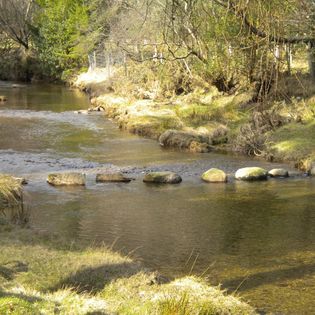
And the river moved when it shouldn’t have. It should have worn through the toe of the slide, except it formed an oxbow, and didn’t cut across the neck, but remained a notable bend. Hmmm, says the writer, how odd.
What if … no one from outside believes that the town beside the slide exists, even though geologists and others know that it’s there. And a couple of researchers come to survey the area, measure the land slip, and do cores. The locals are tolerably friendly for mountain folk, but are not at all pleased with the idea of people drilling through the landslide. For reasons. And one of those reasons is why the monastery is dedicated to St. George, and remains dedicated to St. George, and has never been closed despite Napoleon, Emperor Joseph II, and a few other turbulent moments.
I’m lifting the setting out of fact and history. I’ve been to a few places where I got a very strong sense that not poking would be a good idea, for reasons mundane and otherwise. Toss in a few fiction bits, and you could go either sci-fi or fantasy with the story. I’m taking it fantasy, because that’s how my brain’s working right now. (Some day I will finish about cowboys and aliens vs. bureaucrats. Some day …)
The point of this ramble is that you can garner story ideas, details for a WIP, or other useful bits from almost anywhere. Your mind might work best with music, or visual art, or reading non-fiction, or looking around and wondering, “What if the American had been empty when the Basque cod fishermen and Vikings got here? What if the Mississippian culture hadn’t succumbed to climate shifts as well as deforestation and land exhaustion [might make the Aztec look moderate, or might not]? What if Charles V had managed to stop chattel slavery and make it stick?” What if pigs really did start to fly one day? (Large umbrellas will become the must have fashion accessory!)
Go forth and write!
*I played with the idea in the short story “Plot Cat” in the Fleder Murphy story collection.

 Mad Genius Club
3 responses to “Story Ingredients”
Some ideas are stickier than others. This will determine their length.
Ideas are everywhere. Ideas are cheap. Making something of them, that’s where all the work is. Here’s one that jumped out at me this morning:
Robot cats don’t yack up hairballs.
There it was. I didn’t know what to do with it. Still don’t. Here’s another:
No helicopter can fly 20,000 miles on one tank of gas.
That one inspired me to write a new ending to John Wyndham’s ‘The Chrysalids’ with a zeppelin in place of the implausible helicopter. Still a work in progress.
A better question might be, what causes an idea to generate a story in your head? Don’t know the answer to that either, just that some do.
What really got me started writing was an unfinished VanDread fan-fiction story that hadn’t been updated in 4 years. If I wanted more, looked like I’d have to write it myself. So I did. Also still a work in progress.
I did finish a short story. Took 30,000 words, but there it is.
In my case, they start asking questions of each other, or ping my “Hmm, coincidence, or could there be something else going on?” Toss “saints associated with localities or Old Things,” an unusual terrain feature, a place that some maps and records said didn’t exist (the borders were … vague. Vaguely vague) and the story generator churns stuff out.