This week I mentioned on the other blog, in passing, that there is a way to break a character from which the character cannot recover.
I was using it as a metaphor for how to break yourself, but a few people were interested in it as writing advice.
What I mentioned is this: Each character, to live, to be believable, has a set of principles that actuate it, ones which make that character distinctive and memorable to the writer. Some of those you can change, over time. But there are some that are absolutely essential, and if you break them, you will break the character. it will stop being alive. (Though some readers might not notice, because some readers are like that. However, most of them will.)
Of course, it is easier to understand when you break a character, if you are very aware of who your characters are, and you created them deliberately, by giving them certain characteristics. Then you know what their essential characteristics are.
Some of us — by which you should read some of me — get characters for free, which means that I get them as fully assembled people, and while I of course “know” them, I might not be aware what their essential characteristics are (as opposed to incidental ones.)
Or I wasn’t at one point. Which means I broke two characters so thoroughly, early on, that I couldn’t finish those books.
These days, I usually realize it before I’m about to break the character and can stop in time and figure out what I’m doing wrong.
A hint is if you have the character break an implicit or explicit promise to the reader. A character who says he’ll never kill anyone and three books later is killing everywhere on no excuse at all. Some of those transformations are possible with lots of character work through the series. Some while possible will destroy what you — and the readers — loved about the series.
Of course, the problem is that if you’re sick, or tired, or sick and tired, you might not even realize what you are doing.
Some bestsellers don’t. Part of the piquancy of Laurel Hamilton’s Anita Blake’s series was that she didn’t sleep around, but — due to editorial pressure — that changed, and though it might (?) have found a new audience (look, it’s really hard to know, okay? Once you’re at a certain level of push, it will sell or appear to sell anyway) I keep running into people that hate what the series became. That one is fairly universal.
Weirdly, the other example, personal to me, because it put me off the rest of the series (though I know it still has many readers, and probably is still a bestseller. The fact the sales required to be a bestseller fall every year doesn’t hurt that, I’m sure.) is Janet Evanovich’s Stephanie Plum series.
Part of the charm of the series was that Stephanie Plum was quite obviously in love with the main love interest, the policeman Morelli. And she had been most of her life. So all the jokes about sex, and the weird places they found to have sex were fine, because we knew eventually they’d marry and have a passel of Italian kids they’d raise in the Burg, where they’d grown up themselves.
The thing is that there was another foil — Ranger — who was the “other love interest.” It was fine to have him as a tease and a distraction, but then in one book, she has Stephanie sleep with Ranger.
I honestly don’t know if it affected series. To me the series was dead from that point on. I kept trying to read the other books, but the zest and charm was gone for me. And the author must have noticed something wrong, because at least for the next 10 books or so, (after that I gave up altogether) Stephanie never slept with anyone but Morelli again, and the whole episode was NEVER MENTIONED AGAIN.
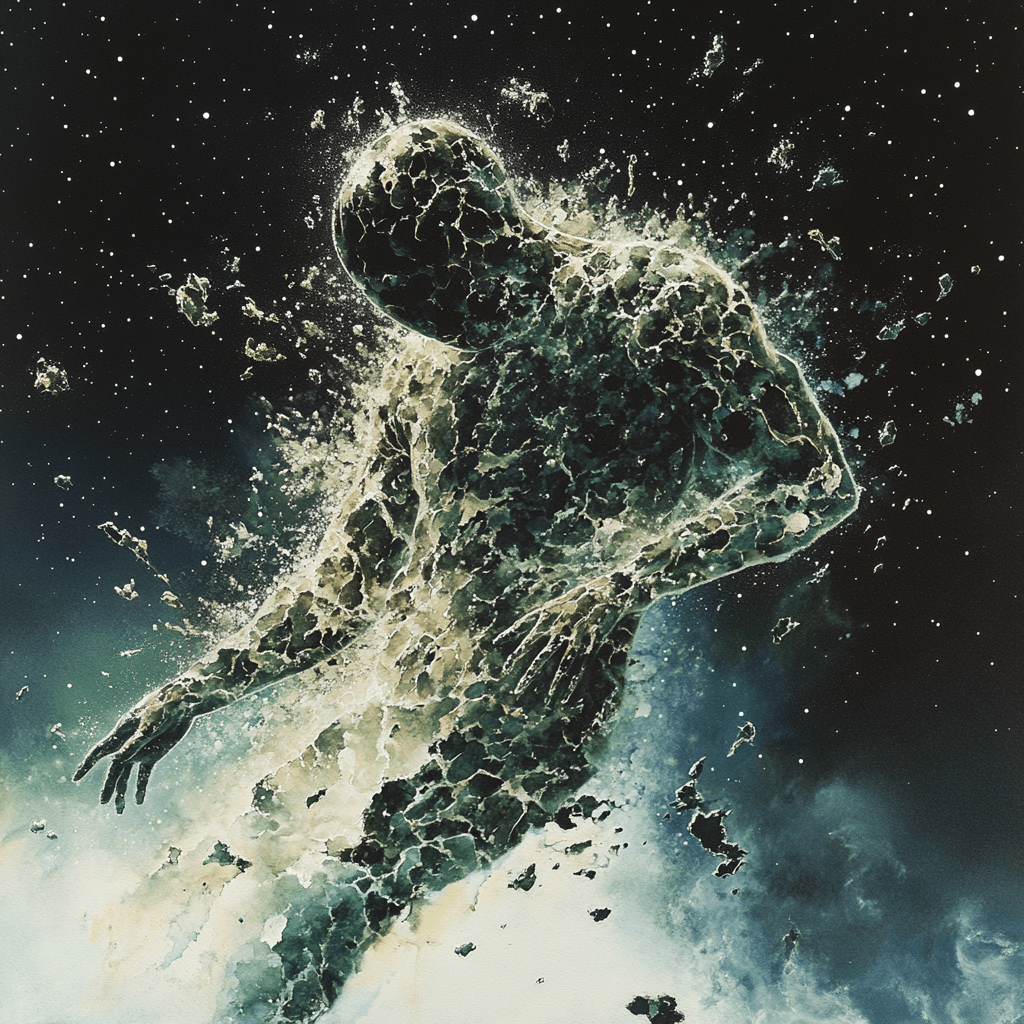
Think of the character as a golem. In its head there are the words that bring it to life: a series of of characteristics it must not violate, or it will become a lifeless pile of dust.
You might still drag the pile of dust through the plot, but it will never live again.
Figure out what the essential characteristics of your character, and do not break them.
Or, if you absolutely can’t tell, and you break the character by accident, fix it before you publish.
And yes, this is why having first readers helps greatly, though failing that enough practice to tell what you must not do because it will break your character.
Happy practicing!


 Mad Genius Club
7 responses to “Beware Of Breakage”
Is it that is breaks the illusion of the story, or is it more that the character can no longer respect them self any more?
Illusion of the story, at least for me. Say, someone has been a pacifist for the last two books, and being is a pacifist is a core of his identity and personality. If he then he kills a man without cause, and continues on as if almost nothing happened? That breaks the character. The illusion of the story is shattered, because I’m always going to wonder why he did that, was being a pacifist a pose? What’s going on?
Hmmm — a character who says he’ll never kill may just be delusional, owning to sheltered circumstances or the like. But he still would need something to crack.
Are there stories where the author sets out to break the character? I guess that would be a tragedy.
No. even in tragedies the character has to remain true to himself, even in breaking. (Different type of breaking.) Here I mean that it’s as though the character were suddenly not him/herself.
I remember both of your example series with prejudice, myself. Makes me want to fling the (then print, not digital) book right against the wall.
Yep.