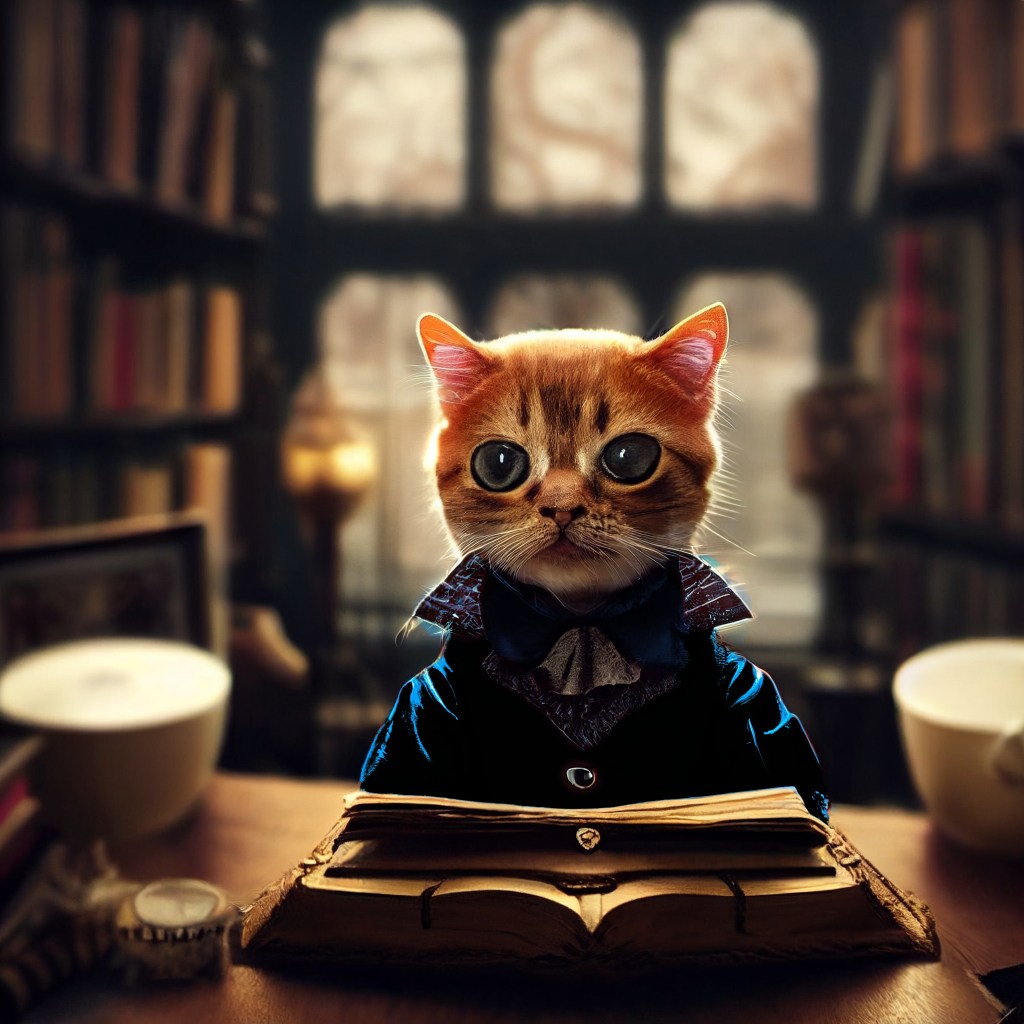
Arrrrrrrrrrrrr [gasps] rrrrrrgh! [Runs around with fur on fire, starts washing windows with a cotton ball]
Ahem. This is something most of us probably don’t enjoy much. I love writing. I don’t mind polishing here and there, adding more felicitous turns of phrase, tidying up that dangling plot thread (sometimes with a lighter*, other times by writing.) I’m not a fan of slogging through finding all the grammar errors, typos I am sure that I already fixed, and missppellings.
So, how can you make it less painful? For me at least it starts with finishing the piece, patting myself on the back, and putting it aside for at least 48 hours, preferably longer. Why? My eyes get refreshed, and some things now leap out at me. “Wait, didn’t I call her Annie two chapters ago? Why is she now Agatha? And what happened to the two week voyage? It’s only been four days and they’ve arrived.” That sort of thing. Homophones and other oopsies tend to stand out more clearly as well. Sometime what jumps out is pretty major, as when I completely dropped a major plot thread that was needed to foreshadow events later in the series.
Another problem I have is that I develop tics and repetition, especially in sections where I wrote very quickly. Now is the time to find other words for “pale,” when it appears six times on one page. No, I’m not exaggerating. I was tired when I wrote the scene. Yes, when I went back, I winced, and rewrote it to be far more concrete and clearly descriptive.
Now, here is where beta readers come in, if you have them. Otherwise, you will need to lean on a world guide with place names, creature names, and other terms listed, so you can go through and confirm spellings and descriptions. Believe me, life is much easier with a world guide. And even then, if you write at white-hot speed, you will miss stuff. Yes, some word processors have custom dictionaries that you can add to. That doesn’t always help. In my case, I’ve overloaded it because of the age of my edition of the program, and no, I can’t update because of the age of the machine it runs on. And that won’t help you with, oh, markings on non-human characters (“was that a black forefoot on the right, or a brown hind foot with a black spot on the left forefoot? Did the king-emperor have a green shading to brown torso, or was that Lord Shiguh?”)
Notice that this is before copy-editing. You should catch some copy-edit things on this pass, just because you are looking more closely at text and verbiage. But you won’t catch them all. Typos are wiley creatures, and will find all sorts of places to hide, then emerge when you hit “publish.”
For the copy-edit? Work back to front. Or change the font temporarily. Or load the draft into an e-reader and make notes. Whatever it takes to refresh the thing in your eyes and mind, so teh, here/hear/hier [Sprechen Sie Deutsch?], and their relatives are easier to find.
“But I have a copy-editor/beta readers. I don’t need this step.” That’s what I thought. I got bitten. See my comment above about the sneaky nature of typos, masters of disguise.
There are other ways to do it. If you have a system that works, such as printing a hard copy and going through with Ye Redd Pen to find things, great! More power to ya. Or using note cards to write down what you find as you read the draft on an e-reader? Perfect. So long as it helps you and reduces the confusion and errors, it’s a good system.
*Used to singe off “Irish pennants” or soften synthetic threads so they will stay put during inspections.
A more detailed start to editing.

 Mad Genius Club
11 responses to “Time to Revise and Edit!”
I do a sort of combined beta read and copy edit for a few close friends. 65 years of reading (didn’t appreciate the value of books without pictures until about age 8) and 25 years of reviewing massive government documents has instilled in me a knack for typos and an a fondness for a tight plot and clever turn of phrase.
What I deliver is a complete manuscript with header comments on my take on plot, flow, and any disconnects in the story line. The document itself is in MS Word with track changes enabled so any changes I suggest are recorded. Word has a spelling and grammar checker which I pay very little notice to as 95% of the time it’s wrong or worse meticulously correct in its old maid school teacher manner that fails to appreciate colloquial dialog.
Not at all a solicitation for new work as health issues are a factor these days, but I do love the small part I have played in some award winning novels.
I think I recall Correia said he created character glossaries as he wrote, where he put down all the names and relevant characteristics, so he had a handy reference he could go back to to check what the character was supposed to be like when he revisited them after a while.
It’s more important for the little characters than the main ones. Not the main ones can’t bite you with incongruities. . . .
One of the few books I have e-walled changed the name of the eventual villain halfway through the book. Said villain fairly prominent through the first half of the book, and (skimming) in the second half.
The book had other problems, especially since the series it led (yikes!) featured an allusion to a famous mystery novel from the 1930s. Seems the allusion was in name only.
I haven’t done that to a villain (so far as I’ve noticed), but I did switch the name of my current hero’s uncle partway through the first book and only just caught it. Yikes. Uploading the fixed version now.
I have occasionally slipped and referred to a character once or twice by a name I had changed, leaving a beta reader saying, “Morgan? Surely this has to be Robin?” but not a switch like that.
I relied on spreadsheets with basic cast of characters lists when I was starting out. I mostly use Scrivener now.
I try to give it two weeks before my first reread. And if it leaves me with a sense of dissatisfaction, I haul out the hero’s journey, and see if I hit most of the points, count try fails, learn things, gain things . . . dangling threads, opportunities dropped . . .
Then send it off to the grammar naz . . . grammarians. Who are mostly also alpha/beta readers (depending on whether I’ve gone through the first draft before putting it where they can see it)
Eh, at least that’s the general idea. Since I’m usually switching back and forth among three of four stories, it’s not at all neat and tidy.
A week here
Just wanted to add my emphasis to one remark (“change the font”)…. If you do nothing else, change the font (& size) so that the line-wraparound is now in completely different locations from what you’re used to.
The favorite hiding spot for typos is line-ends, where the brain merrily fills in what it expects to see next while your eyes move, not what’s actually there (or missing).
Yep. I do that with short pieces as well as long ones. It is amazing what obvious errors pop up when you change the font – or even the font size. When I look at the original, often I still cannot see them, even though I know they are there.