
I have a series that’s gotten so long I’ve split it into four parts. It’s actually more of a Multiverse with lots of interconnected separate stories, than a “series.” They overlap in time, tend to follow several groups of characters, borrow characters from each other, have kids and grand kids and . . .
Well, the term “Soap opera” has been applied. It just keeps going.
My readers seem to follow along loyally, expressing favorites but buying, borrowing, and reading all of them. So . . . now I’m trying to analyze how I managed bringing in new characters . . . reasonably successfully.
Okay, the basics remain. Must have good story, must have characters the reader cares about. Doesn’t matter whose kid they are, if the readers think they should they should be the poster kids for vasectomies, they aren’t going to buy the next book.
Continuity is good, familiar people, places and Worlds. I have several villages, cities, universities, and organizations where stories happen. The Main Characters of the first book have become the immortal archetypical gods on one World. And the fathers and grandfathers of some of the new characters. So they reappearing now and then.
I think the hand off between generations works because I had excellent relationships between parents and children.
In Organizations, my new characters have the same bosses as the old ones, until the old character become the new boss. They work for or guard the same President, or guard that old boss when he runs for president.
The daughter of the old president goes off to University, and meets new people . . . who were secondary characters in a previous book, or maybe the MC of a short story. Again, the father-daughter relationship was very good in the first book, so the readers were happy to go off to college with her.
The University Story grew into a sub-series with that gang.
It’s sort of a relay race. Handing off Main Character Status to the next lap runner. It works best with a good relationship between the characters.
Serious changes . . . I had the son of a previous MC grow up, meet new friends and enemies, and on his third book, go spy on the cross-dimensional (sort of) parallel Earth that had attacked his. Which split off a whole new set of books on that World. At first without characters from the previous setting. Then gradually bring them back into contact.
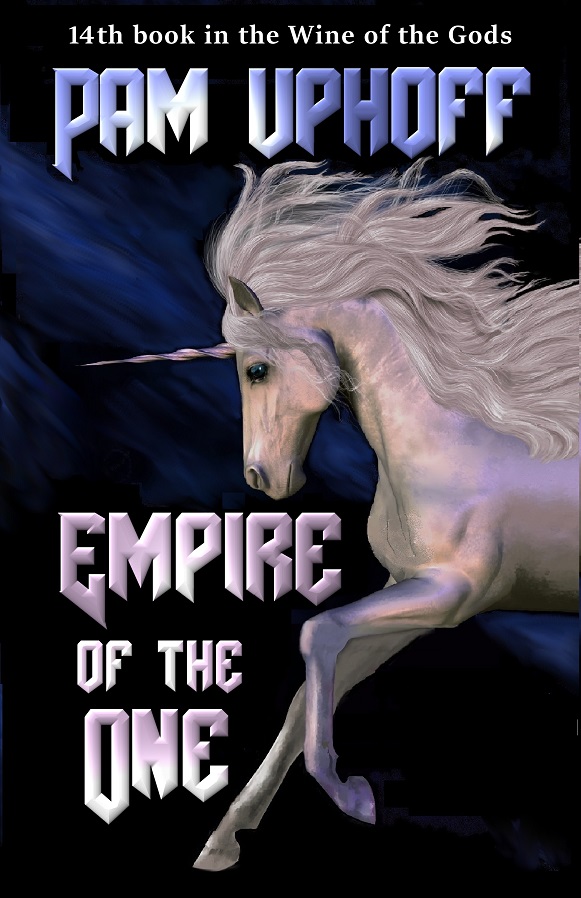
They needed a new Peril to overcome, and after defeating a vicious Cross-dimensional invasion of brain chipped soldiers and Cyborgs . . .
I took a leap of faith and started a story in that very nasty multidimensional Empire. Writing Good People trapped in their poisonous culture.
This time, without a connection to previous characters.
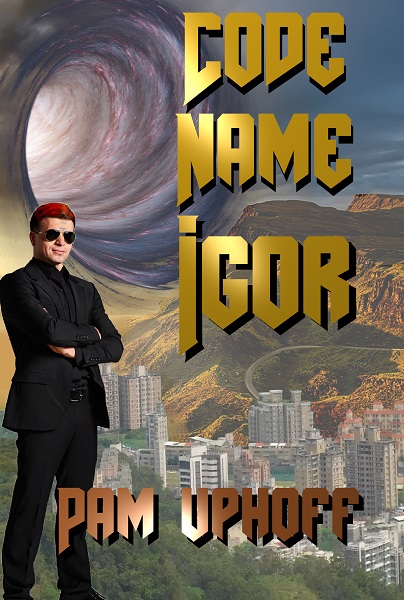
It worked.
So far.
Right now I’m a little worried about it becoming a bit cookie cutter. Young people dealing with bad families. Over and over. “How many times can the kids win?”
Oh, well. I brought them back into conflict with my old multidimensional empires and had the Evil Empire collapse from a mixture of external sabotage, and internal factional fight gone ballistic.
They’re not rehabilitated yet, but it’s getting close. They’re pulling themselves together and my main (nice) characters are in semi-friendly contact with my earlier empires and familiar people.
And now I’ve got plenty of young characters from all sides ready to interact . . .
All I need now is a New, Bigger, Badder, Threat.
And I haven’t a clue.
Other than, all I can say is, new characters will work if the readers like them, and it’d better be in a good story.
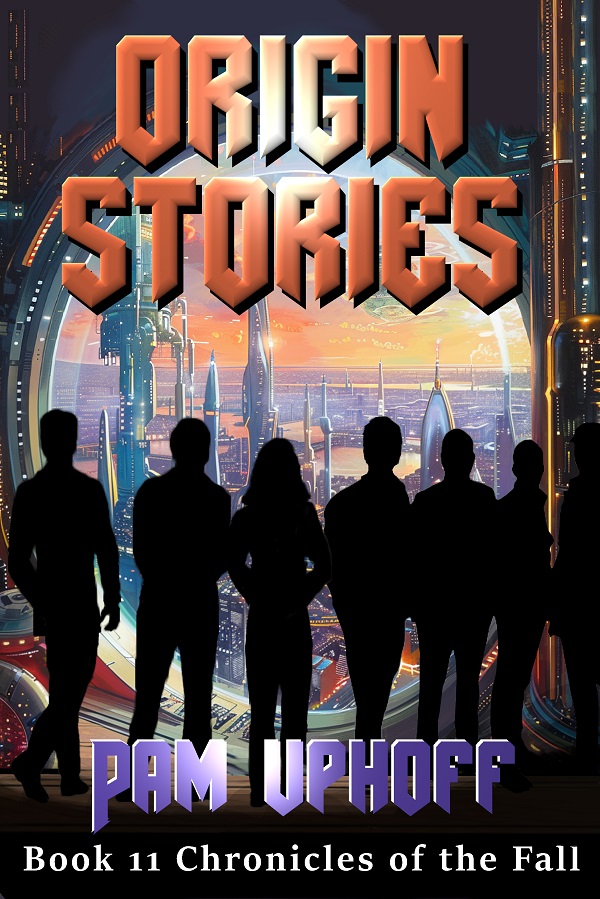
Here’s some of the new kids from the Evil Empire—they’re all going to wind up at the same University, Real Soon Now.


 Mad Genius Club
11 responses to “New Characters”
It can be difficult.
One thing to avoid is undermining the earlier stories’ happy endings. That is one difference between Star Wars EU and the Disney bit. In the EU, yes, problems aplenty. But not because the sacrifices were in vain.
And if it’s your own series, you can’t even blame “a new writer” for betraying your favorite characters. So, don’t. Just don’t decide three books later, that that cute relationship went down the tubes, or the squeaky clean good guy has turned into an cynical old drunk.
Pam, You built a universe that is expanding with new civilizations. You have characters that flow from one book to another.
Igor was a fascinating character. Once you create a villain civilization then you get into who are they? Then you get to create villains and good guys.
I have noticed that you get into mystery and detective fiction which Is Ok, but should not be the main story line in my opinion.
The biggest problem is that authors try to create a bigger problem and that gets un real and boring.
In your universe you has lots of choices to create a story. I have noticed that you mostly do coming of age stories . I like them ,but too many get stale.
And . . . everyone’s off at Liberty Con!
It does have to done with care to prevent the long arm of coincidence being too clear.
Honest question- why do authors seem to think the new problem must be bigger rather than different? Lots of series about a country/planet being invaded and several books are about fighting off the invaders. Then if the series does not end with peace breaking out the next book often means a second bigger invasion. You don’t often get a book that then deals with trying to fix the economy and pay off the debts from the war while having to reward the heroes even if they are the last people you want involved in the economy since they are really good at breaking things. Or dealing with the refugees that were resettled to keep a third country neutral in your favor and now you have to deal with those new people and make them yours.
With college kids I see two problems- one is that I went to a small college and met very few of the total students. Kids in my major, my dorm and a club I joined. So you have to have the kids meet first. Then schools really like to keep their students busy. So saving the universe often has to wait until after graduation. On campus problems like a cheating ring are more likely.
I have been known to take a break for a Fall Festival, or a wedding . . .
A. Why do the problems have to be bigger rather than different?
Well, they don’t have to be bigger. Bigger often comes from:
1.) expanding scope of the world.
When starting the first story, we had farm boy who hadn’t been 20 miles in his life. By the end of the first story, he’d trampled half the country and fought three kingdoms, becoming a general.
Well, at that point, the author is thinking not at village life level problems, but kingdom level problems. So the next book is going to start at kingdom level problems… and when you start with a general instead of a farmboy, you’re going to start with kingdom-level politics and probably wars.
2.) Characters leveling up in power.
So, Badass Heroine/Hero/Adventuring Party defeated the monster. In doing so, they got this nifty loot drop, gained these powerful allies, learned these new spells, stretched their powers to new heights, or got these abilities from the dead monster.
What do you do now? If you have the monster’s twin brother attack, with the new powers, they’re going to be defeated before there’s a story there. So you have to come up with a newer, more powerful monsters. Whose loot drop will leave the protagonist(s) even more powerful. Wash, rinse, repeat.
3) The author is getting better at telling that type of story
I talked with an author last night at the con who is really good at writing space battles. He got that way be writing space battles, because writing takes experience to get better, and that experience comes from each story you write. So each story is set in space, and has battles. By necessity, if he’s writing a space battle book with a continuing character from the last space battle book, then he has access to mare weapons and better tactics from the last fight… so the next one needs to challenge him, with bigger ships or newer, better weaponry.
B. “You don’t often get a book that then deals with trying to fix the economy and pay off the debts from the war while having to reward the heroes even if they are the last people you want involved in the economy since they are really good at breaking things.”
No, you don’t. Because “defeat the dragon trying to kill us” is a really clear story, with a clear protagonist and goal.
“fix the economy and pay off debts from the war” is extremely hazy and nebulous. How do you define “the economy”? How do you define it being “fixed”? Who is the clear protagonist of the piece who can do the fixing?
The economy is not a single thing: it is the broad grouping of the actions of thousands to billions of people, none of whom is critical to the lives of all the others as a whole. Politicians can’t “fix” the economy; they can only enact regulation to make people’s lives miserable, enforced by many bureaucrats who absolve themselves of responsibility by blaming “the system”, or remove the regulations so created. They can’t actually go out and put more money in people’s pockets to spend. If they do that, this thing called inflation happens, and it hurts everybody. And while they can force everyone to buy something, the money had to come out of individual budgets, and they’re actually hurting the ability of each person in the general public to make their lives better by stealing so much of everybody’s paycheck with that mandate… sure, they fatten up some folks with the money stolen by mandate, but that’s not actually helping “the economy.”
With that in mind, who are your protagonists? A single person spending in the economy, whose contribution to the outcome is neither large nor critical? A committee of politicians who make decisions they’re insulated from? Bureaucrats who have no responsibility or actual ability to solve the problem?
how do you define “fixed”? What is the goalpost, and how do you create a stand-up-and-cheer moment?
The very lack of clarity, or the ability of an easily recognizable protagonist to make a critical change to the system to enact an outcome, is why you don’t usually see that outside of biographies (nonfiction) of founders of an industry.
Well, now, I point you at authors like Andrew Wareham and a series like The Pinchbeck Peer. It’s a Georgian/Regency-ish coming-of-age-and-lifetime-career series by a man who specializes in a lot of Mil(and other)-Historicals in various British eras. The hero starts out as a young cast out naive man who has to make his own way (beginning as an exhibition boxer) and ultimately earns a place in the peerage. It covers initial rags to marriage & riches, multiple marriages, variously-skilled and useful children, Industrial Revolutions, canals, coal, steam, firearms, etc., etc., etc. 8 entries so far, and no end in sight. [If you like Mil historicals of all sorts and different periods, I strongly recommend this author who has several series and remains astonishingly prolific.]
Each book’s challenge(s) are real and important. It’s not so much that they’re bigger but that the character has grown and made some sort of progress in life/career/family/opportunities/connections, and so his life is bigger in the sorts of challenges he faces, and thus each challenge is now something that he is ready for. This is much more like the Victorian and earlier Life Novels (e.g., Tristam Shandy, Tom Jones), without the satire.
The difference between this perspective and the more typical Fantasy one, is that the character doesn’t go from nothing (or The Chosen One) to Royalty in quick leaps. Like many Mil-oriented genres, there’s a more moderate career track perspective, both in and out of the actual military, a recognition that advancement in life itself isn’t just earned once via success as a young man at arms, but in learning how to succeed, creating a family, understanding the economics of his time and place, acquiring colleagues and opportunities and political sponsors, etc.,…. in other words, in growing up as an intelligent and determined person with a lifetime to improve his situation by fitting into and then prospering as opportunities permit. The goal isn’t to become King — the goal is to prosper, with his family and interests, and it’s all done within the rules of his society (more or less).
The only end to a series like that is death. You can write entries with local challenges all day long, until you age out completely, and even then you might continue with the family line.
There are plenty of examples of series like this in SFF, but mostly on the SciFi side, rather than on the Fantasy side. I think of these as Life/Career-Adventure novels
Examples:
Liaden (Sharon Lee & Steve Miller)
Trader’s Tales from the Solar Clipper (Nathan Lowell)
Foreigner (C J Cherryh) — not MIL-based
Not to mention a budding civilization of intelligent rats with a very junior mentor.
Or the elves that are likely to be met again.
Or the Texan’s (who bring a whole new meaning to car-bomb) looking for a book or five.
So many balls in the air but “Who Counts?” 🙂
I’m just happy to pick up a book about interesting people doing interesting things and not another rehashed war story.