
[ –Karen Myers– ]
For me, the act of reading fiction is a way of closing out the quotidian world and sinking into a story — full immersion. (For hours at a time, if available.)
Reading fiction is the closest thing we have to visiting:
… another person’s thoughts
… a nonhuman life
… a foreign culture
… an alien planet
… a religious belief
… Elfland
… Hell
Not even movies can be as immersive, since they stop at the skull (unless they cheat and do a voiceover of interior dialogue).
(And, yes, a nonfiction diary/memoir can have some of the same qualities, but here I will focus on a deliberate exercise of shaping the story by the writer, rather than just the recounting of actual events.)
As writers, how can we draw someone under like this, quietly, insidiously, insistently?
For me, it takes two forms — the characters, and the world.
We think we know how humans work, and we trust that our readers do, too, so we assume they will understand when we show them what a character is thinking about why he does what he does. The reader may understand more about the background and motives than the character does, and giving the reader that god-like view into another person’s behavior is something that has few parallels in real life. It’s something like the old cartoons where an angel sits on one shoulder, and a devil on the other, each recommending a course of action, and we are silently observing and cheering for one side over the other.
But it’s not our choice. We can watch the bad decisions get made, we can lament the opportunities passed by, cheer the heroic resolve, and so forth, always with that personal echo of our own experiences and sympathies. Sometimes, of course, this is depressing — I don’t enjoy many horror or villain-as-protagonist stories because it’s difficult to be adequately detached. Still, when we are immersed in a character, we have a strong conviction that we understand how he will choose, and that’s exciting.
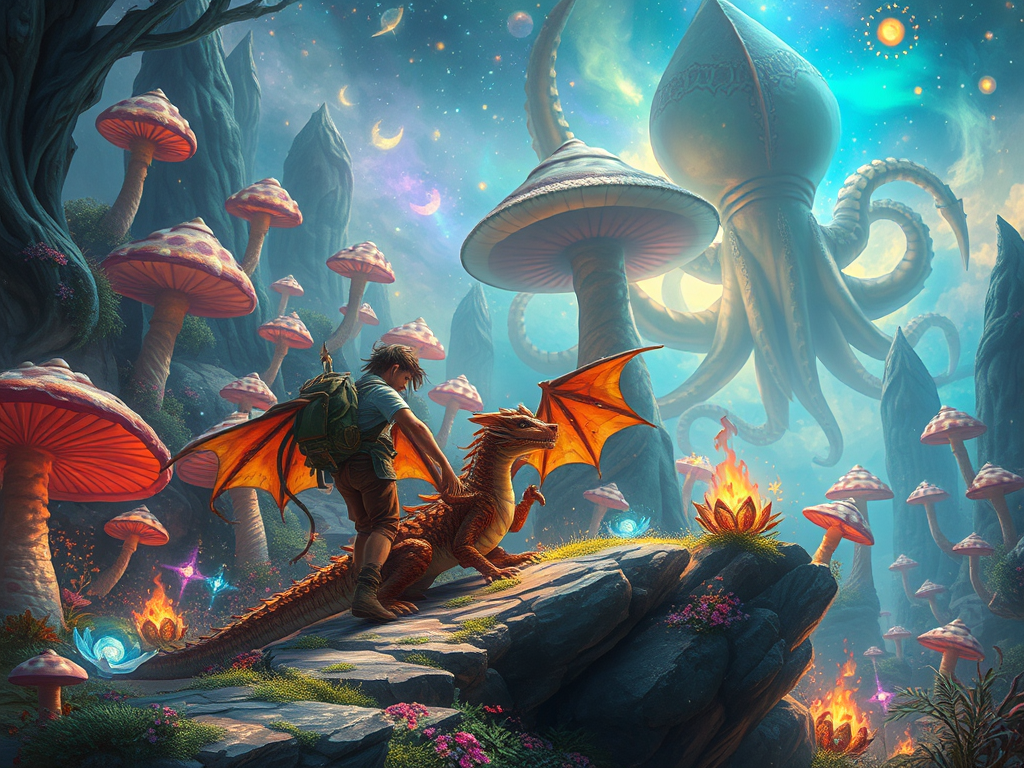
Our immersion into the world works differently. We put it on like an old coat with many pockets as it is introduced to us. The better we can feel it, the more alive it is. If the story tells us about the stone head of a statue suddenly turning to issue a rebuke, we think “this world has real gods that listen in and pay attention and can animate objects…. well, of course it does!” Each new revelation about the world slips into place either in a way that satisfies our growing internal construction of it, or that extends that understanding into surprising but perfectly-congruent directions, like any real thing whose existence is undoubted.
And this is where the danger lies for us as craftsmen. The reader is so immersed in our story that, like the real world, any inconsistency stands out alarmingly (“that’s not what that character would do!” or “that’s not how this world would work!”) The more you immerse your reader, the greater their sensitivity to any errors on our part.
How do you balance the provision of sufficient detail vs getting all the bits of it right for your own characters and your own self-contained fictional worlds? Do you encourage your readers to sink down deep (and give them enough oxygen to survive), or just dog-paddle along splashing away, happy enough on the surface?



 Mad Genius Club
2 responses to “Sinking into the depths of a book”
I’m not sure how to do it on purpose, plotting it out. But you need to get the reader involved with the MC, and the genre and World sketched out quickly, as hook, and then keep them on the line.
But the immersion factor? I think that might be a matter of describing enough of the setting and situation that the reader fills in the details. I think that “filling it in from their own experience and expectations” may be a part of the immersion.
If I do one or the other, it’s not really a conscious thing. I don’t spend a lot of time torturing myself with stuff I find difficult to write (non-linear story-telling, people thinking about their feelings at great length, Robert Jordan levels of scenic description), and I tend to see Theme as an emergent property of Story rather than something I need to figure out in advance. So, I guess I don’t care if the reader is dog-paddling at the surface, so long as it is happy dog-paddling.