Over the last few days, several things have come up that have left me scratching my head and wondering why. Why do I write? Why do other people write? Why is common sense so lacking in our industry and in people in general?
The first WHY I blogged about yesterday. One of the local school districts has “suspended” seven books due to concerns about the books’ content. In my blog, I noted that I’m conflicted about this. On the one hand, I’m thrilled that parents have taken enough interest in what their children are studying to actually read the books in question and then voice their concerns to district personnel. On the other hand, these are high schoolers and the content of the books is nothing they haven’t already seen on TV or in the movies or have read about in Twilight and other popular YA books. The huh? moment comes when you realize that the action the district took in removing — or “suspending” as the district puts it — the books is in violation of district policy. Then there’s the fact that students were already reading and discussing in class one of the books. The irony comes when you realize that this action has taken place during the Banned Books Week.
As a parent, I remember going out and buying the list of books my son would be reading during the course of the school year. I learned early on to buy the books as soon as I got the list, even if the school said it had enough copies to provide for the students. For one thing, there were never enough books. For another, if my son had his own copy, he could highlight and annotate the books as needed. So now I wonder how many of the parents of these students had done the same thing. That’s money apparently down the drain now because, gasp, the books aren’t “safe” enough for some parents.
As a former teacher, I wonder who is going to come up with the alternative book list to fill in for these seven books. Books, the teachers spent time reading and preparing class lectures on. Books they had prepared tests or other assignments for.
Somehow, it is all very ironic and somehow appropriate that this happened during Banned Book Week. I have a feeling there are a lot more people talking about banning books, etc., as a result, at least on the local level.
On the writing front, on at least three different occasions this week, I’ve found myself in a discussion about reviews. How to handle them, how to deal with the negative ones and when you should take them to heart.
I’ll admit upfront that my recommendation is to find someone to read your reviews for you. This should be someone you trust to let you know if a pattern in the reviews appears and who knows you well enough to understand when you should read a review and when you should be told to go away, there’s nothing to be seen.
Reviews are the bane and the blood for writers. They help readers decide if they want to buy our books. A good review can help bring new readers in. A bad review, if well written, can warn readers off. But, more often than not, the reviews we tend to get hung up on are those on Amazon or GoodReads and are often written by folks who haven’t even read the sample of our book. For some reason, those are the ones that are the most scathing and the ones that bother us the most.
Here are my rules for reviews:
1. Don’t respond to a review unless it is to simply thank the reviewer for reading your book. The last thing you need is to get into a pissing contest with a reviewer. For one thing, it doesn’t do you any good. It looks bad and it will discourage other readers from posting reviews, even good ones. Also, I guarantee that if you get too in your face with your rebuttal to a review, someone will copy it and post it to social media, complete with links back to the original review. I know the saying that any publicity is good publicity but that’s not really true. You want to encourage readers to try your work, not discourage them.
2. Don’t obsess over your reviews. Yes, it is wonderful to have nothing but five-star reviews but after the revelation that a number of authors, both indie and traditionally published, had been buying reviews, readers tend to look to see if you have a smattering of all levels of reviews. After all, no book is going to appeal to everyone. Frankly, you need to have a few bad reviews to go along with the good ones. That makes it clear you haven’t had all your friends, family and sock puppets post reviews for you.
3. Don’t pitch a fit in social media about a bad review. Or, if you do, don’t be so specific with it that folks can go right to the review to see what was said. That’s especially true if you aren’t accurately portraying the review.
4. If your reviews seem to have a common theme — issues with editing or copy editing or spelling and grammar problems — maybe you need to take a moment to think about what they are saying. That’s especially true if that theme carries over through several books. Yes, there are those folks who automatically say there are editing issues with anything that is self-published simply because they think no indie novel goes through an editor. But when you have that as a constant review theme, there might just be something there. So find yourself a trusted beta reader or hire yourself an editor. If readers keep seeing the same issues book after book without improvement, they will stop buying from you because you will lose the trust of your reader and that is not something any writer needs.
Folks, it is really pretty simple. As writers, we need to put out the best product we can. No book will be perfect. Even if you think you’ve caught every spelling error and every grammar or punctuation mistake, someone will see something you missed — or that they think you missed. The reality of the situation is, people expect more errors in indie work so they seem to seek them out. Not really, but that is how it feels sometimes. So you have to remember that and work to combat that notion. Don’t fall back into the “I know I have problems but don’t keep beating me over the head with them” mentality. Those blinders will wind up harming you.
Finally, remember that we are in this to make money. Whether you want it to be enough so you can quit your day job or just be a supplement to your regular income, you want those sales. There is nothing more exciting that receiving that first royalty check. But, if you want to keep receiving those checks, you can’t coast and assume that just because you write a good story people are going to buy your books. Those books have to be well-formatted, cleanly edited and proofread and have a cover that doesn’t send readers running in the opposite direction. Just as you wouldn’t turn in a half-assed report to a major client at work — at least not if you wanted to keep your job — you shouldn’t be satisfied with putting a half-assed manuscript up for sale. Take pride in your work and present the best product you can.
My last WTF moment came last night as I read yet another screed against the Evil that is Amazon. Yet another author was railing against Amazon and how it is sooooo evil because it doesn’t pay enough to its factory workers in Germany and how, if it is evil to its employees, how long will it be before it turns evil against authors. Oh, wait, it already has, according to the author who then points to how badly Amazon is treating Hatchette authors before circling back around to how amazon doesn’t pay a living wage to its warehouse workers.
After stopping myself from tossing the laptop against the wall — which would have had dire consequences since I’m having to work on my backup laptop right now after sending my work laptop back to the factory to have a new keyboard put in — I found the irony in the author’s condemnation. Here is yet another well heeled author jumping on the Amazon haters bandwagon who can’t see the forest for the trees. He was so quick to condemn Amazon for not paying its warehouse workers more but he doesn’t get that his own publisher is acting the same way toward their authors. Think about how much a publisher actually pays per title for books it hasn’t earmarked to be bestsellers. Now think about how long it takes to write a book, edit it and prepare it to go to a publisher. Then add in the time spent dealing with the editor and final proofs before the book is published. Now, is that $5,000 – $10,000 advance a living wage? Before you jump in and say “yes”, remember that advance will be paid in two to three increments AND your agent is going to take 15% or more of it AND you might never see another penny from the book because most never earn out thanks to the handwavium that is BookScan.
Now, to do a bit of promo, Hunter’s Home is on countdown this week. You can pick up a copy for 99 cents today. It goes up to $1.99 tomorrow.
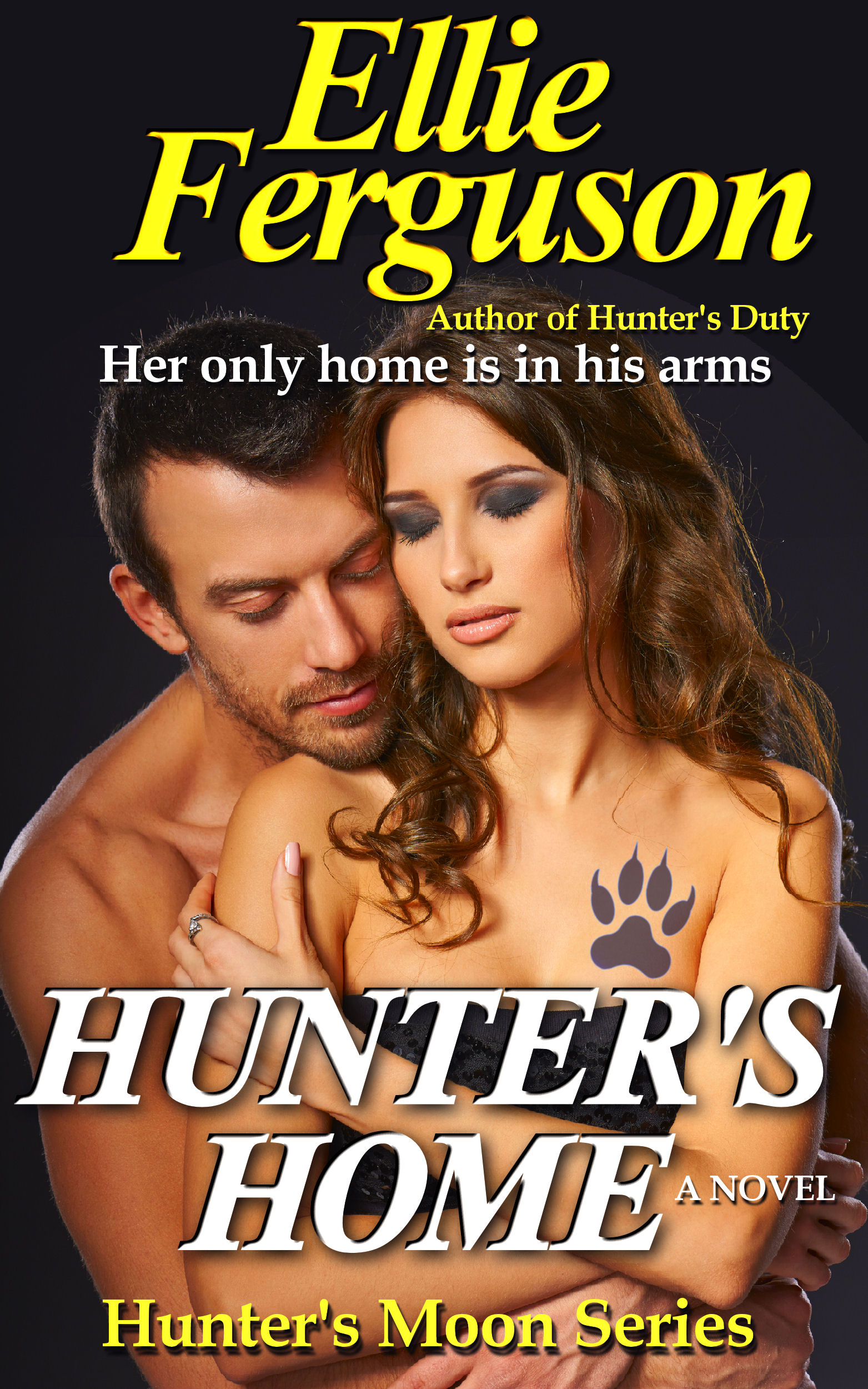 They say you can never go home. That’s something CJ Reamer has long believed. So, when her father suddenly appears on her doorstep, demanding she return home to Montana to “do her duty”, she has other plans. Montana hasn’t been home for a long time, almost as long as Benjamin Franklin Reamer quit being her father. Dallas is now her home and it’s where her heart is. The only problem is her father doesn’t like taking “no” for an answer.
When her lover and mate is shot and she learns those responsible come from her birth pride and clan, CJ has no choice but to return to the home she left so long ago. At least she won’t be going alone. Clan alphas Matt and Finn Kincade aren’t about to take any risks where their friend is concerned. Nor is her mate, Rafe Walkinghorse, going to let her go without him.
Going home means digging up painful memories and family secrets. But will it also mean death – or worse – for CJ and her friends?


 Mad Genius Club
24 responses to “Common sense needed”
Common sense isn’t common. [Sad Smile]
Yeah… It’s quite a misnomer, one thinks.
I think it may be a historical artifact, and a reference to class differences. Did the nobles work with their hands? Were they that close to the life and death consequences of their work habits? That said, last time I floated this around Amanda, she thought some of what I was saying was, IIRC, stupid. Maybe it was something else I said, maybe it was how I said it, or maybe it would be a good idea to ignore this.
“Common sense is not issued, but it is authorized.” — USMC proverb
Amanda – given my interactions a few years back with a number of education students and professors, I doubt seriously most of them are reading the book before they issue it to the students for the first time. There has been a push over the last few years to make things easier on both the student and the teacher, and if you get a work that has been “used” in other districts that makes things easier for the teacher. That, by the way is a direct quote from a fellow I was taking teacher certification courses with.
Secondly, most YA lit these days isn’t. It’s adult lit given a veneer of YA by making the characters teen agers or some similar behavior. Not that I object to teens reading ‘above’ their level – the doom bunny knows I was reading above my level at an early age. I’d much rather see kids given classic lit that covers the same subjects and might require some work on their part rather than something that’s listed as YA because its an easy read.
Lloyd, in this case, the work has been put in, by at least some of the teachers. As for making things easier on the teachers, that’s only up to a point. The administration is using pre-set curriculum guidelines but that is so everyone is teaching to the lowest common denominator. It is also so the teachers have time to do all the state and federally mandated paperwork they now have to do. Educators don’t get to educate, not like they used to, and that’s a shame.
You are also right about YA and that is why I’m left scratching my head over this. Well, to be honest, I’m not. This is another case where the objections of a few are being accepted with a kneejerk reaction before actually investigating their complaints. Common practice these days.
So what were the books that were banned? And was it because of Sexual Content, or Political Content?
They seem to be all around crappy boks, except for Song of Solomon by Toni Morrison, which is an edgy book for college students. Indoctrination books, mostly: capitalism is evil, gay is good, blah blah.
There is a big difference between kids reading edgy books on their own, and actively indoctrinating them to believe certain modern dogmas in class, with implied threats for going against goodthought and PC.
There is also the fiduciary duty not to spend school levy and state tax money on books which most of the taxpayers find immoral.
Finally, a crappy required book tends to turn kids off reading, or it teaches them to resort to intellectual dishonesty in order to pass without reading the book.
These books should never have been in the curriculum in the first place, and either the curriculum committee or the individual teacher should resign in disgrace.
Pretty much my reaction, too.
I’m not a big fan of “reading lists” unless they are along the lines of “other people HAVE found these good” or “we WILL be reading these next year.”
Hate, with a burning passion, the “read seven of these books that we won’t check up on, because they’ve been chosen from things you would NOT want to read and we think you need to have your thinking fixed.”
I agree that the books aren’t what I’d necessarily want my son reading. However, I’d rather he read them when he is still living at home so we can discuss them than in college where he is surrounded by the SJWs and their ilk and would be roundly and soundly shouted down for being EVIL for not agreeing with what they said.
About reviews – I’m not sure what to make of my book sales. I rarely get reviews at all, though people still buy my books, (of course I’d like to sell more, but I’m not complaining). One of the few times I’ve had some sort of feedback (from the library service), it was extremely negative to the point of rudeness and it seemed clear that the person behind the comment had no idea what fantasy was, yet that title sold at least as well as the others. I’m really puzzled.
Ask for reviews. In my latest series I specifically tell my readers that if they like the book could they please write me a 4 or 5 star review, because Amazon ratings are based more on reviews than they are on sales. And that If i don’t get good ratings, I don’t get sales, and if I don’t get sales I can’t keep writing what they want to read.
So, I’ve got about fifty-five 4 & 5 star reviews now, which is about 1 review per 60 books sold, which is the highest return I’ve ever seen.
I decided to do that when I saw a bunch of people arguing about an author who put something like that in HIS book. I noticed he had a LOT of 4&5 star reviews. (Note: I bought it, read it, and liked it). So I figured if it worked for him, it could work for me. Readers do need to be reminded that reviews are the lifeblood for us authors, and it is not unethical or wrong to ask for them.
Catching them in your afterword after they have finished the book is the best time.
As for bad reviews, I’ve gotten a few on that book, two from SJW’s, one of which I still laugh at quite a bit. Yes, some of these people are strange, and in some cases I wonder if they really read the book. But it’s always funny when you get a dozen or more reviews going on about how they loved something, and then you get one that goes on about how that same thing wasn’t in the book!
Any advice on how to ask, in an afterword? I’ve always had problems with that – I tend to be over polite and apologetic when I request something of strangers.
I know what would work on me:
“If you enjoyed this, please say so in a review; while I am really happy that you tell all your friends, the only way I can hear from you that you loved it is if you post a review. This also lets other people know what you liked about the book, and means I’ll be able to (hopefully!) write more!”
Oooh, that sounds really good, thank you!
I’ll have to start putting that in also. Thank you for the phrasing!
Good tip. I need to remember to do that. It’s easy to put an active link to the product page into the back of the ebook. Hmm, a new step in the process to be add. Thanks!
One of the YouTube guys my kids subscribe to always ends his videos saying, “If you enjoyed this, like, comment, or subscribe. Or don’t. Because I’m not the boss of you.”
I don’t know what kind of response he gets, but it always gives me a chuckle.
Reviews are an oddity and I haven’t figured them out yet. I get very few reviews for the number of books I sell. But what I have seen is that once I get a few negative reviews, my sales seem to increase. It is as though potential readers are relieved to see books that aren’t all 5 star. Whether they distrust books with nothing but good reviews or they are like me and read the bad reviews and figure out those reviewers are like movie critics — if they hated something, I was probably going to love it — I don’t know. shrug.
Yes, reviews can be really odd. Oh, well, as long as the books are being sold, maybe the reviews don’t matter in themselves.
Re: Required reading that’s later “suspended” _after_ parents have already bought the book for the class, you said, “That’s money apparently down the drain now because, gasp, the books aren’t “safe” enough for some parents.”
That’s just sad. Even if the book’s no longer on the reading list, and more especially even if the book is a terrible book (either because it’s demonstrably badly written or, as described by the well-known Holly Lisle essay, otherwise well-written “suckitudinous fiction”), it can still serve as reading material, perhaps for enjoyment or perhaps for critique. Just because it’s no longer _required_ reading for a class, there’s no reason to assign the money spent as “wasted.” *shrugs* JMO, of course.
Then. . . reviews. I hear you. I submit both positive and negative reviews to Amazon. I _try_ to make my negative reviews as constructive as possible, and if I mention large numbers of language errors (not just grammar), errors of fact (from authors who hadn’t bothered to do their homework), etc., in the text*, I always include examples, because as I read–whether “dead tree” books I own or ebooks, I note egregious errors that mar my reading experience. I rarely credence negative reviews that do not show evidence that the reviewer has actually READ the book (and whether negative or positive reviews, I often remark on the ones that demonstrate an inability to show comprehension of plain text, period. *sigh* I also find myself somewhat likely to avoid books that have rave reviews posted by illiterates).
Oh, well.
Keep fighting the good fight.
*Re: errors of fact. Authors who don’t bother to do their homework irk me. Read a book recently that had an egregious error that the author kept restating as a relatively major point concerning the protagonist (who was some sort of psychic). The character “had an ancestor who was burned as a witch after being condemned at the Salem witch trials”. No, Not one of those convicted was executed by burning. Just say she was hanged (as were all the Salem “witches” who were executed, save one). I finally had to say, “Oh, well, maybe in some alternate universe. . . ” *sigh*
She was rope burned, I guess.
Either that, or Judge Hawthorne used his elemental fire powers to burn the witches, and then he reverse-burned them to remove all evidence. 🙂
David, that money wouldn’t be wasted in my household. The books would still have been read. But I recognize that my household is the exception and not the rule. It would be money wasted in too many homes because the books would be relegated to a corner or a shelf and wouldn’t be picked up again.
It sounds like your review process is similar to my own. Although, I have been known to get snarky on my blog if I review something and someone comes after me with false premises. But that’s only after I try to discuss the matter calmly and rationally. If that fails, full snark mode engaged 😉
As for the factual error, I love your example. It’s one of those things the author should have researched and obviously didn’t. It is also something that, while most folks might not catch it, those who do will be driven bonkers each time the mistake is repeated. I so hate when that happens to me.