
in fair internet, where we lay our scene…
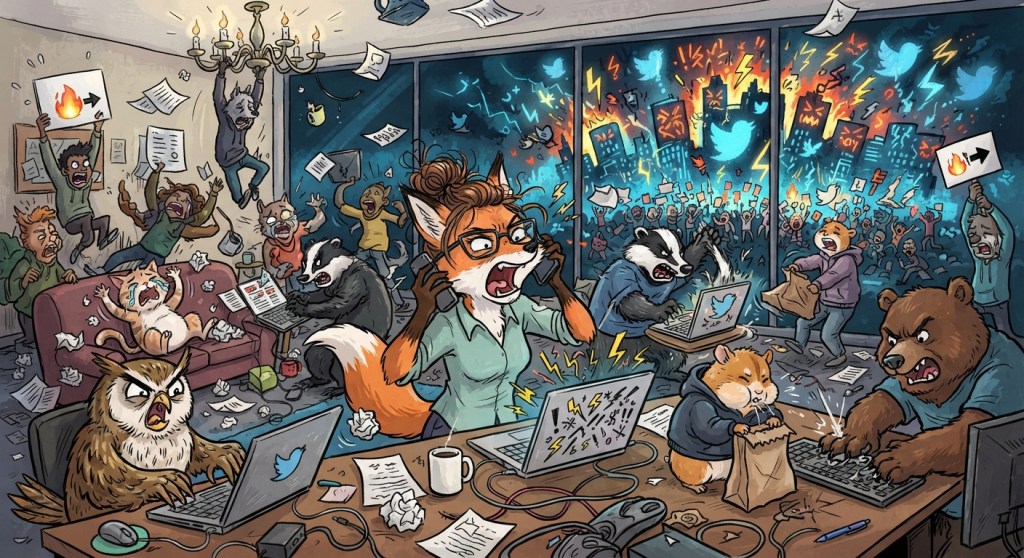
Apparently there’s been a bit of a kerfuffle over short stories versus novels on Twitter/X, with some people saying that beginner writers ought to start with shorts before they try novels, and other people pushing back. I’m not on X, so I don’t have a front-row seat for whatever specific arguments they’re slinging around this time, but I have written a decent number of stories in a variety of formats, so I’ll shove my oar in. And yes, I’m aware that Sarah did a post on this subject on Wednesday, but I wrote mine on Tuesday; Wednesday was a traveling day for me; Thursday was Thanksgiving, and now it’s Friday and I’m tired. So you get to read about the issue a second time, you lucky people.
A short story is usually a self-contained package of between 5-8,000 words. It usually has a fairly narrow focus- one battle, not the entire war; the first date, not the whole relationship. Because of the limitations of the format, there’s usually fewer characters, they’re introduced faster, and their arcs tend to be shorter. All the plot threads get wrapped up by the end, unless it’s explicitly part of a series, and even then, the stand alone tendencies are stronger in shorts than novels, so the reader doesn’t have to read every piece of the series to know what’s going on. Each word does more heavy lifting because there are fewer of them, so there’s more scope for pretty language and evocative turns of phrase.
Not always. Don’t come at me because you found one contradictory example.
A novel is longer; I’ve heard anything above 30,000 words described as a novel but in my experience, that’s a really short novel, and most writers are going to struggle to fit an entire novel’s worth of story in less than 40,000 words. There’s theoretically no upper limit, though in practice, most editors will tell you that anything over about 120,000 is actually two novels smushed into one, and you’ll give the reader a better experience if you split them up. A novel’s worth of story includes more characters, with their arcs of various length and complexity; multiple try-fail cycles; plot threads that vary in length- some go all the way through the story, some get introduced later or wrapped up faster. There’s room to spread out, to build the world and characters, to kick back and enjoy the ride, and if there’s still plot threads or characters to spare at the end, novels lend themselves well to sequels, trilogies, and series.
There’s also novels and novelettes- word count ranges for those vary, and so do the definitions depending on who you ask, but they’re generally somewhere between a short and a novel, and the style varies accordingly.
On the far other end of the spectrum is flash fiction, which can be anywhere from a few words- think of the famous tragedy in six words- “For sale: baby shoes. Never worn”- to about 3,000. The latter is a natural stopping point for me, personally, and interestingly, my chapters of novels tend to be about the same, though the chapters are not a complete package; plot threads carry over into the next chapter, or else what’s the point of writing it as a novel instead of series of shorts?
Canny readers will notice that there are gaps in these word count ranges; yes, I see them too. Writing isn’t exact, and if you have a story that falls in one of those gaps, pick one based on your target audience and how you want to get it to them, then trim or pad the word count as you see fit. Or take a little risk, leave it as is, and see if your audience likes it. The writing police aren’t going to come after you because you were a hundred words short.
So, what do these formats have to do with each other? A lot, but they’re of course not the same, and one doesn’t necessarily lead into the other. Some people start out writing long and get more concise; others start out writing short and punchy, and learn how to draw out a story later on.
There is one main benefit to starting your writing career with short stories or even flash fiction: you get in the habit of finishing things. Writing, typing, holding a story and characters in your head, all the organizational skills necessary to take a project from start to finish- those are like muscles, and you have to build them. If you dive straight into a novel, many writers will get tired or bored and never finish it. Knocking out a few shorts first is like paddling in the kiddie pool before you take a dip in the ocean; you can get out and rest if you want to. On the other hand, I started with a novel and moved over to short stories as life got busy and I had to finish things as quickly as possible or forget about finishing them.
The main benefit to concentrating on novels is economical; they tend to sell more, and the writer makes more money per copy. Whether they make more money per word- or per unit of production time- is another matter, and probably varies a lot.
Other than that?- each story length lends itself to a different skillset. If you naturally fall into one or another, and are content with that, write whatever length of story plays well with your style. If you want to develop different skills, try something outside your normal wheelhouse. If it doesn’t meet your standards for quality, you don’t have to publish it; stick it in a drawer or email a copy to yourself and move on to the next attempt. I don’t see why this developed into what sounds like a knock-down, drag out argument, but it’s the internet; people will fight over anything, and the platforms make money off encouraging people to willfully misunderstand each other.
Just write, people. Write a lot, develop your style, and enjoy your job. Not many people can do that nowadays.






Leave a Reply