I’ve lately been bitten with an appetite for history — ancient history, in particular. Tolkien induced me to supplement my high-school Latin and French by dabbling in classical Greek, Old English, Egyptian hieroglyph, and other dead or funky languages while in college. This was in service to understanding the stories set in and around these cultures (like Tolkien, scratching the itch that his Appendix left me) as well as the feel of the languages themselves. Hard to read the Iliad in Greek if you can’t visualize the journeys, or understand which languages influence which other languages.
But the history that informed these languages? Well, I rather skimmed that. My formal problem with history has always been the “where to start” aspect. If I can’t get my head centered on a particular geographic location at a particular point in time, it’s hard to track the story action. If I haven’t got an anchor on who spoke what when and where, it’s hard to associate languages and their progressive changes with temporal cultures. So, for many decades, I contented myself with a “cheap but adequate sense” of the history of a particular period/place, enough to give me a simulation of a foundational location, when I needed one.
Recently, I got tired of this stale and lazy customary evasion. (I can tell you, “If not now, when?” seems like a much more pointed question in one’s 7th decade.)
And, after all, we are living in a grand period of book acquisition for the curious reader, nothing like the difficulty I encountered trying to annotate Tolkein’s appendices when they first appeared.
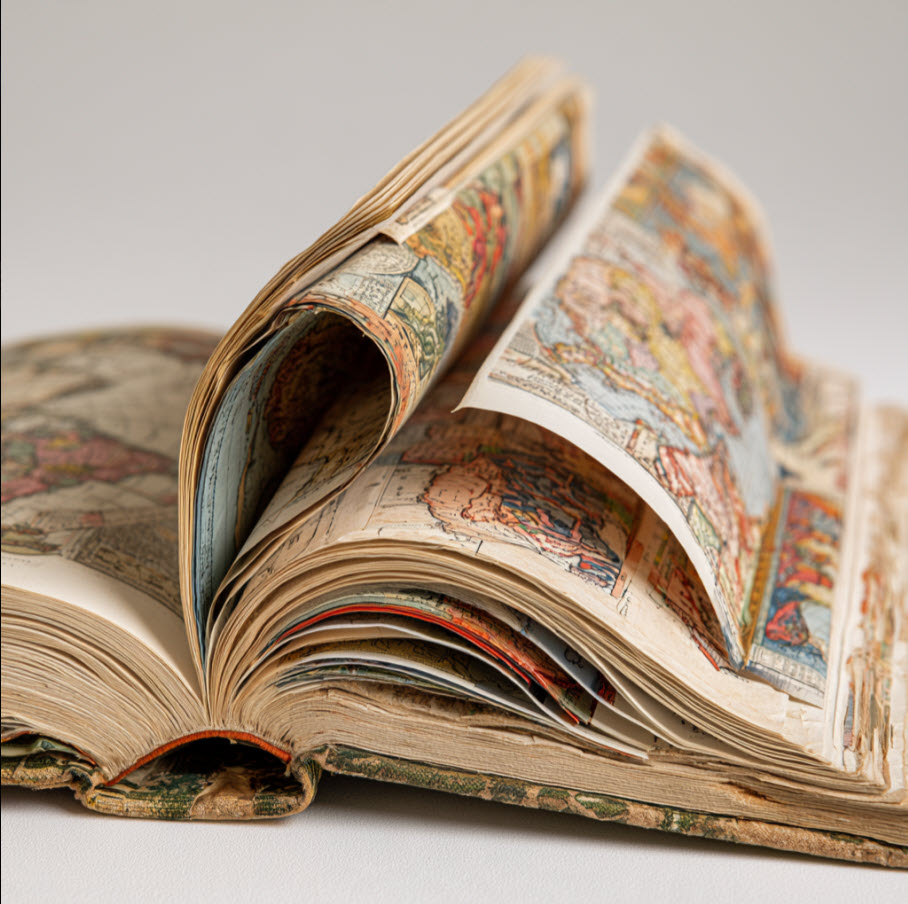
So. I started with the morass of the Near East. I could never keep the various foundational civilizations in their proper locations and time-relationships — I knew more about their languages and epics than about their historic influences and inter-dependencies. I laid in the appropriate books, and then I realized what had been missing all my life: a custom apparatus. Specifically, maps. Lots and lots of maps (the internet is your friend), and books that referred to physical locations to illustrate their information. It’s so much easier now to locate myself in space and time.
Now. Picture the size of Mesopotamia. Start with Crete. Throw in Egypt. Went there, did that. Got a taste for it. OK, what about the earliest history of India-and-its-neighbors? The Harrappan language is still un-translated, alas, but Indo-European roots and migrations from North and West and the whole Silk Roads migration of civilizations from all direction came marching in, connecting all the many and various fragments. I knew a good bit about all of this, but only in unrelated fragments, not in the full context. All the influences go washing to and fro, and a few surprising details pop out (for example, I had no idea there were famous written guide documents about pricing and goods available in ports and commerce and by ocean between India and Crete so very, very early, before Alexander).
What does all this have to do with us as writers?
Well, if you write in an imagined world rather than the real one, how do you explain it sufficiently to your readers? Do you let them glide through your world un-educated about the deeper histories that inform economies and civilizations and dynasties? Do you present your world as a sort of “mesopotamia-lite” and leave it at that, maybe with a few decorative monsters? Or do you find a way to sneak grounding explanations into the reader’s attention via adroit story details? Before us is always the example of Tolkien, as the acknowledged master of this skill.
The days of every fantasy book needing an Appendix of “historical events before our story” are mostly past as we seek more sophisticated ways of filling the blanks, or even harden ourselves to not explaining at all. But “tabula rasa” is not necessarily a good look for trying to ground a place-and-time.
If you write the sort of story where this is a consideration, how do you decide what the appropriate treatment should be, to assist and ground your readers?





Leave a comment