I was watching a video on making linocut prints the other day, and the cheeky fellow presenting was talking about analysis paralysis and then he grinned and said something like ‘I abbreviate it as Anal. P.’ which also flashed in text on the screen. It made me laugh. It made me pay attention (I’m often streaming videos in the background as random noise while I’m working on something else) so he achieved his goal.
That moment came back to me while I was struggling to come up with what to write about here today. The problem is not a lack of ideas. The problem is too many. Some of them require far more time, energy, and research than I can manage (even if I were so inclined) at this time. Others feel like cheating because I’ve talked about them before here.
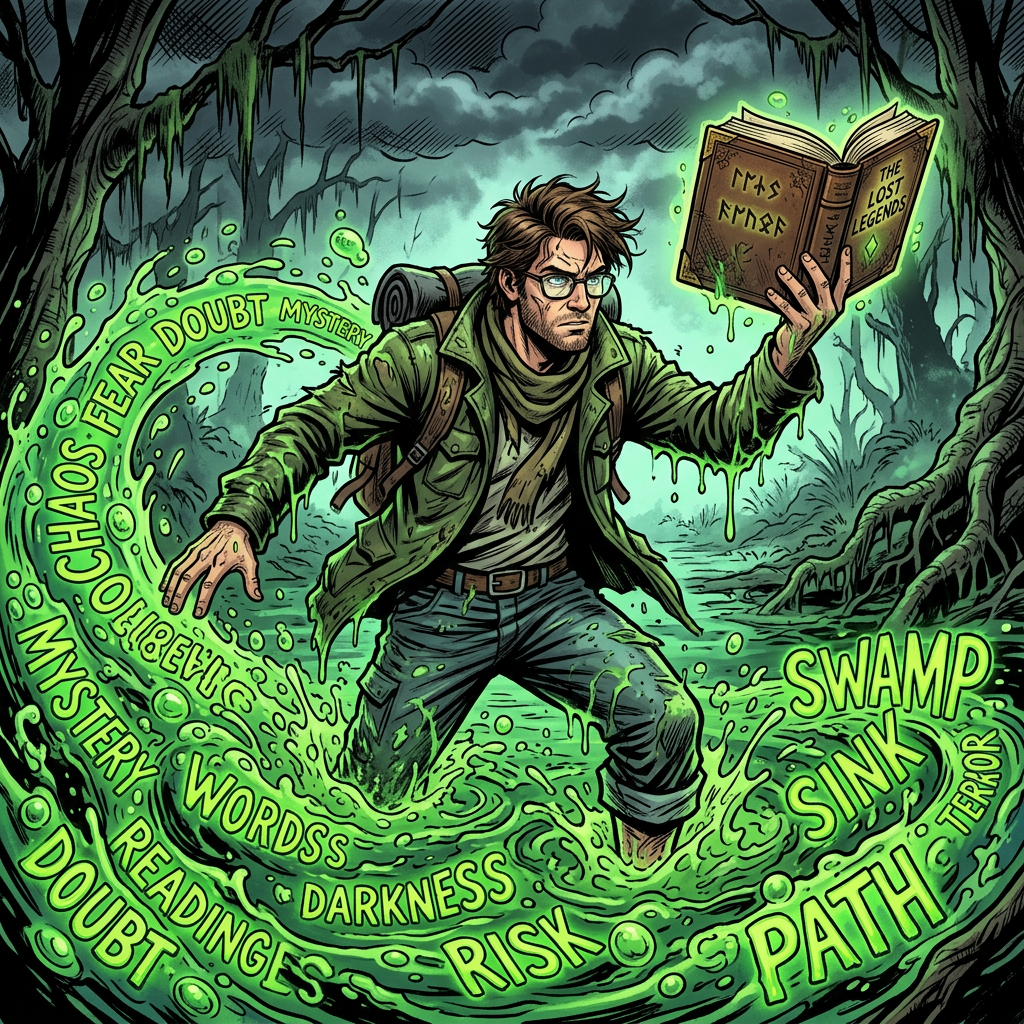
So. I’m paralyzed.
Which leads me to back off and take another tack at it. Who am I writing this for? Nominally, you, my Dear Reader. I have a rough idea of who you are: a writer or an author (what’s the difference? Well, one has finished something with the intent of publishing, the other may or may not have finished anything and likely doesn’t plan to publish) who is Indie-oriented. There are not a lot of you relatively speaking for whatever reason. We try to put good stuff up here at MGC but the audience is small and dwindling.
So, who am I really writing this for? Me. Same as with my fiction, really. Yes, I try to understand my market and accommodate their expectations (doesn’t always work, see my latest two-star review where the reader was disappointed in a cosy romance that didn’t pay off for them. No idea what they thought was going to happen aside from the main characters getting together, but I let that person down badly) but mostly I write what I want to write. Why?
If I didn’t write what made me happy, I’d stop doing this. Bluntly, it doesn’t make sense to continue beating your head against the wall (and yes, I know that when you stop it feels better but you see, I’m not stopping!) unless you are getting something out of it. In the indie world, that wall is discoverability, algorithms, and shrinking attention spans. Writing for yourself first keeps the flame alive long enough for the business side to matter. With my fiction that gets published I get money which pays bills and buys me more books, to be reductive. With the non-fiction what am I getting?
I get a chance to take a look at what’s inside my head.
You read that right. If I put what’s a mess in there — inchoate, tangled, un-examined — onto the page where I have to sort it out and make sense of it? Then I know better what I’m thinking, and why, and if it doesn’t make sense I can attempt to figure out what I need to correct in my assumptions. I’m making myself a little bit better every time I write an essay where I’m truly thinking and not just dialing it in.
What can you, Dear Reader, take away from this exercise?
First of all, when you are paralyzed about what to write, stop worrying about who you might be writing for, and just write. Give yourself permission to be bad, however you define ‘bad’ and write something down. Write for you and you alone.
Secondly, writing non-fiction can help with the fiction writing by helping you examine your underlying thought processes. Writing about why you are structuring a story like that, what is going on with your world (also, world-building essays do not belong in the story, I said what I said! Come at me…) and what’s motivating your characters from an external-to-the-story point can help you figure out what you’re doing wrong with the story and help you kickstart the storytelling.
Finally, the act of writing engenders more writing. Doesn’t matter the ‘flavor.’ By writing something down, you’ve started a cascade in your brain you can then channel into the directions you deem useful. Along the way, you may find that you have something which can be used for other things. Like posting on the blog.



11 responses to “Analysis Paralysis”
Indeed!
My blog is not part of a marketing strategy. In fact it’s an unfocused mess. That’s why I call it Musings of a Restless Mind. There I write about whatever is bugging me. That’s my outlet because I write therefore I am. I’m in favor of slow but steady growth. At least that’s what I tell myself. In three years my blog has gone from a hit or two a day to averaging about 12-20 hits per day, and I’m lucky if I put up one essay a week, but I’m building an inventory of useful thoughts (at least in my own mind).
I don’t do Farcebook or ex-twitter or any other social media except LinkedIn (a residue from my old days as a software engineer). I don’t have publicity roll-outs, search engine optimization, or build mailing lists. At my best, I’m that voice in the wilderness (probably waiting to get my head chopped off). If I can write, and people can enjoy what I write, I’m happy (not that I’ll stop trying to reach as many people as possible).
Fortunately, I have a retirement income now. My sympathies to those young and starting out, but the life of a writer was never that good as I explain in my latest essay on my blog.
I spent … too long looking at the lay out of the monuments around the Hill of Tara in Ireland today, and tracking down the time required to travel with oxen from the mount of the Boyne River to Tara. I could have made it up as I went, ditto the sailing time from Scotland to Ireland. This is fantasy, after all. But … I’m already moving a stone circle, and I don’t know the actual layout at Tara and Newgrange because I’ve never been to Ireland. So I went digging, to be sure I got close enough for my world-building comfort.
Analysis paralysis and its cousin, research reserve.
But, but research is fun!
You are so right, I can lose days to research. The next novel (when I finish the WIP) requires a ton of it, and I’ve been torn between looking forward and shying away from the amount I know or at least think will be necessary.
I remember Newgrange as being impressive but pretty straightforward: opening on the east(?) side of mound goes to straight interior shaft goes to big round room. But it’s been a long time. (Checking, I see there are side chambers off the big round room; were not very visible in the low light and largeish tour group I was with some decades ago when they were still letting people in. Sometimes visiting in person is not as helpful as all that).
The mound at Newgrange itself is relatively simple (until you start looking at the LIDAR and the results of digging around it). But how it sits related to Knowth, Dowth, and other things like the Mound of Hostages and Tara … That’s where the messy bit was for me. It is hard finding a decent map of the area that has the Neolithic and later sites on it and that is useful for navigation.
Yeah that is is a bummer.
Eh. World building for me blurs the lines a bit. The world building I just wrote the other day will make it into the story, because it is itself a story. It will be abbreviated and passed between characters as the myth and legend it is. The purpose of the story-within-a-story (with three act structure) is to move the plot and draw the reader in.
The (fake) world has history! Myths and legends, heroes too, not just monsters. The fallen hero’s resting place serves a purpose for the living, too. That purpose leads the characters to a thread that leads to a tapestry. Just because it’s pulp fantasy doesn’t mean you can’t throw big shadows up on the cave walls.
When I get analysis paralysis, sometimes working through my thoughts on paper helps.
Last week I first read Salt and Rothery’s Design for Electrical and Computer Engineers. (First opened. I have not finished, the first chunk was some pretty good stuff for me to chew over, and so I paused.)
Anyway, was a bit of a mind opener for me on the topic of trying to do too many alternatives. Yesterday it shook me out of a stall to look at its advice. (For the technical stuff it covers, if if a choice between alternatives is difficult to make, then they may be close enough that a random choice will be good enough. (Not a tool for artistic choices, but I was selecting between technical alternatives.))
I’ve basically been setting myself up for failure with the expectation that I /have/ to be thorough and exhaust every possibility.
In actually unrelated business, I’ve been stopping myself from dumping some of the walls of text onto the internet.
On the other hand, I’ve been a bit more consistent and systemic in journaling.
And, some parts of the day and the week, I just need to let go of the tasks and the long term, and sleep. Makes things look different, it does.
“if a choice between alternatives is difficult to make, then they may be close enough that a random choice will be good enough”
Surprisingly, this works well for artistic choices, too. Trying to decide between alternatives may involve trying to build the entire rest of the story based on that decision, and holding two (or more) parallel universes of story in the head… and that leads to paralysis when the brain can’t hold that many complete decision trees in head at once.
Just making a choice prunes half the decision tree (or more) away, leaving the imagination free to run down the rest. I always tell myself that if it works out horribly, I can back up and take the path not taken before… but I rarely do, because none of the alternatives were bad ones, so it’s not the point where I’m going to get blocked.
I’m glad to know I’m not the only one using meta-writing to clarify my thoughts about how the book should work. I’m actually enjoying that. Talking to my vast internet audience (I think my record is five likes) helps tame the mass of swirling thoughts into something tractable.
I also use it to track progress. Not really by-design, but it’s turned out that way. Chapter 18 has an entire saga (and it’s now chapters 18, 19, and 20).
I expect the really fun part to be going back and re-reading it after the next book is done. I’m assuming – with no justification beyond “practice improves things” – that it gets easier and I will be able to laugh at my early troubles.