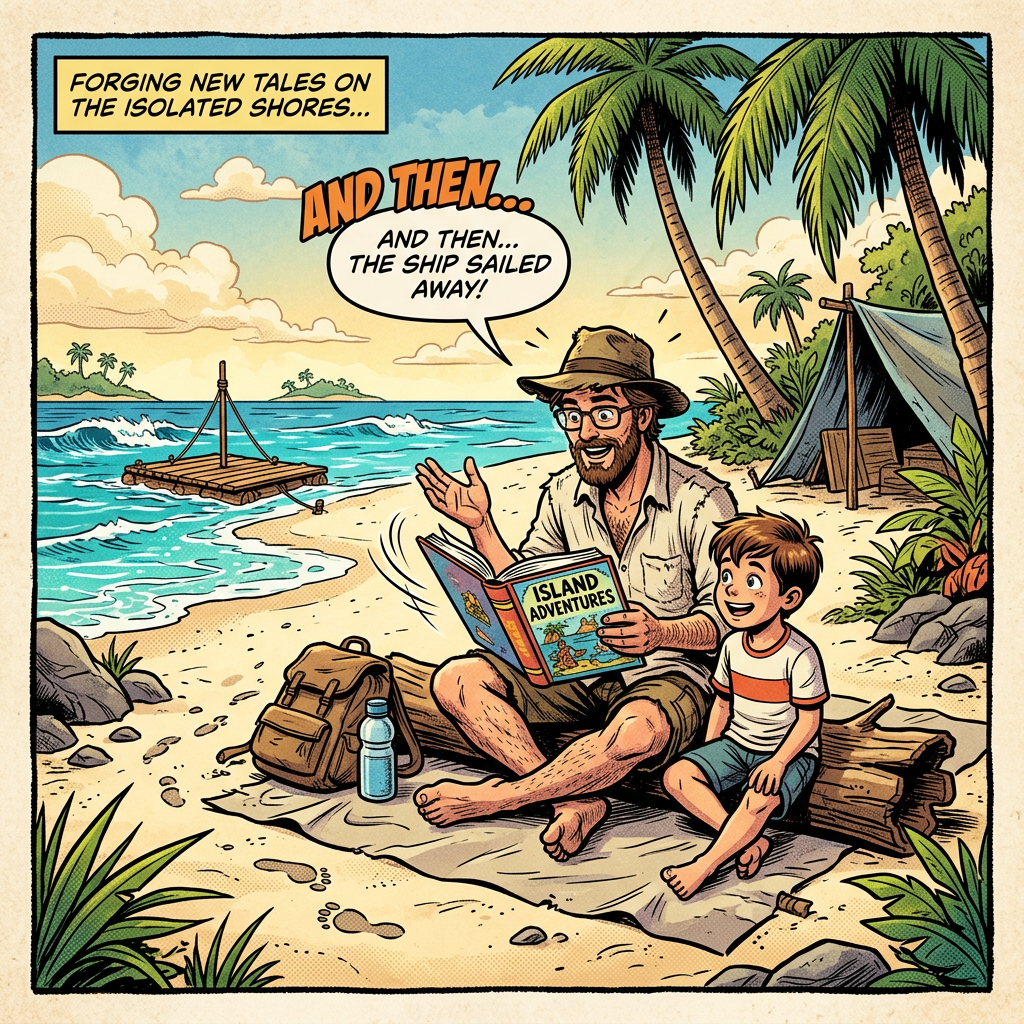
‘Oh, they’re movin’ father’s grave to build a sewer…’
It isn’t Father’s Day here in Aussie, but it’s been interesting observing it across the rest of the world. My impression has been that there’s been a bit more this year – good thing, IMO. They’re still dorks on TV and in advertising, and often outright villains in Trad Pub… but there seems to be a sea change in the public.
Fathers tend to – in real life anyway, be protective. The male fantasy of being the rearguard who stays facing possible death, to see the women and children get away is a very much a part of Western culture. A good thing too, IMO. Of course, this is a little problematic when the hero of the story is not the dad. Maybe there’s the answer.
They need to be.
The world is a pretty ugly place. We need to see that, and, boys especially, need heroes that they want to grow into being. To build and to protect. Honestly, it’s hardwired into genetics, and it feels good to do it. Everyone wins – except the ones who wanted him buried and that grave to be a sewer.
To the Old Man who read me ‘The Elephant’s Child’ – salute.


3 responses to “Movin’ father’s grave”
Dad told us The Hobbit from memory on long car drives, until he bought the Mind’s Eye radio play version to pick up the slack. I think Tolkien would have approved of Hobbit returning to the oral tradition from whence it came a mere 10-12 years after his death.
Apparently one of the big differences between the English and Japanese versions of Transformers was the way Optimus Prime was read. The original Japanese read casts him as a more conventional hero archetype, strong, heroic, willing to self-sacrifice. So when he died, it was seen as expected by the role.
Peter Cullen, inspired by his brother, read the character as strong enough to be gentle. Still strong, still heroic, still willing to sacrifice, but the core heart of the character was his desire to care take those who would come after. Fundamentally, that version of Optimus was a father, rather than a warrior. And I think that’s both why the character stuck so deeply into the Western zeitgeist, and why Hollywood could never quite figure out what to do with the character or the series.
Then, for a kid’s story, it’s a real trick to sell a story where the dad is the hero, and the kid — a sidekick?
Things like having the child’s story and the dad’s run in parallel can be tricky.