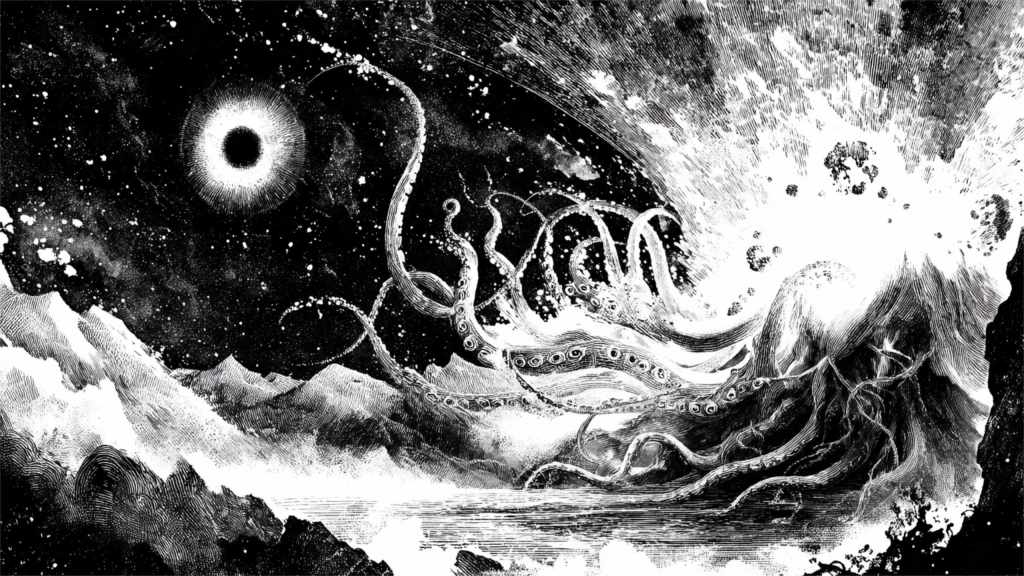
I’m tired. So tired of this. After the Supreme Court declined to revisit a case regarding AI and copyright, that lead to a whole new wave saying basically that the court had ruled you can’t copyright AI anything… this is false. It’s a lie, and I’m tired of hearing it.
So... Since I know social media denizens won’t bother to read it, here’s the actual rulings from the Copyright Office on AI use as a tool. It’s lengthy, but worth reviewing. To boil it down: it is a tool. If you use it as such, refine the work you do with it and tweak it, and disclose it when you file for copyright, you can copyright your work even if you did use AI.


You can, in point of fact, copyright an image you made within the tool, if you can show your work. What you can’t do is copyright the work to the AI. The AI is a tool, I repeat. Would you copyright stock art, or clipart that you used in making a book cover? No. You copyright the end results that you created.
David Badurina provides even more case law, and rants, in his lengthy summary post on the topic. This is also worth your time in reviewing. Since early 2025 the Copyright Office has granted copyright to thousands of images which were made using AI as a tool. You just can’t ask them to issue the copyright to the TOOL as it’s not a person. And frankly I think the whole idea of type in a quick prompt, grab the first result, then try to copyright that is nonsense. For one thing, this would swamp the Copyright Office. For another, does an artist copyright their preliminary sketches? They do not.
There you have it. Art made with various and sundry tools, where you can show that you’ve created something unique to you, can be copyrighted. Also, it’s legal, it’s ethical in bounds*, and if you do it right, it can make you a better artist and designer. Put in the work. Don’t be a dunce on the internet. Don’t be afraid to use whatever tools you want to get it done.
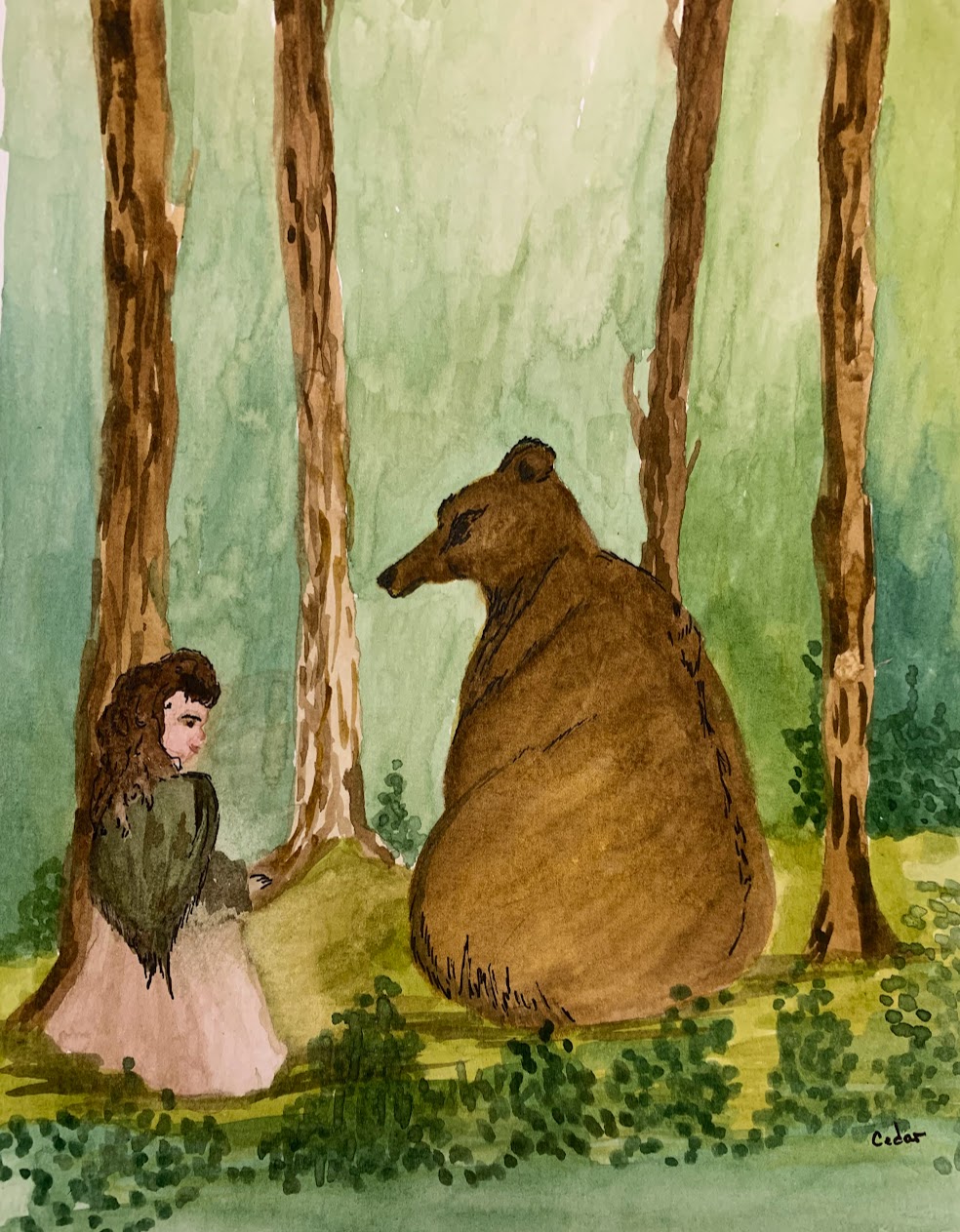
*I make no bones that I don’t consider making and selling fan art ethical, and that’s been happening since long before AI was a thing. Deliberately trying to copy a living, working artist to make a profit off of is scummy, no matter what tools you’re using to do it with. While copying work is a good way to learn, you don’t profit from that directly, and once you have the skills, you start creating original work. /ranton I find it darkly humorous that the loudest, shrillest anti-AI voices are the same ones I’d struggle to find their original work at their convention booth to buy. /rantoff

 Mad Genius Club
20 responses to “One More Wave of Ignorance”
To your final point: I have written and posted a fair amount of fanfic (that I have NEVER tried to sell), and have received quite a few messages from people who want me to pay them to create art depicting scenes in my fics. This drives me nuts. This is work that I created with no expectation of reimbursement, and they want to make money off it? No.
I’d put fanfic and fanart in the same bucket: something you use like training wheels to learn how to ride a bicycle. Then you can take them off and do it on your own without the structural support!
And I recently told someone looking for a cover artist: if they have fanart in their portfolio, do not pay them professional rates, they are not a professional artist. Yet. Perhaps some day. But now? No.
I’m sterner than that. They can teach you some useful skills and some bad habits. Original is better from the get-go.
And I’d disagree with Cedar on this.
In 1967, Jack Gaughan won the Best Fan Artist Hugo (work done in 1966). He well deserved it — he was giving away (totally free) tons of sketches for fanzines to use as interior or cover art. Not even just for non-media fanzines, but for fanzines like Spockanalia — the very first Star Trek fanzine (look for his work as early as issue 2). You can look on fanac.org for his fan work (look up Spockanalia, or, for example, the sketch he did for ODD, issue 16). Clearly his fan art is all over his portfolio.
But, if you look at https://www.isfdb.org/cgi-bin/ea.cgi?1805 for his professional credentials in 1966, they show three dozen professional book and magazine covers, and about ten dozen interior illustrations for mostly magazines with some books. He, very deservedly, won the Best Professional Artist in 1967, as well.
His fanart in 1966 isn’t an entry to professional career; his professional sales go back to the 40s.
Doing fanart doesn’t make you not a professional. It just means you have another way to contribute to making the SF community better.
Ben, you are right, as always. However, I’m seeing rank amateur fan art being pushed at Indie Authors who are looking for cover artists, and my caution to them is that if the portfolio is all fan art, the artists are likely not up to the work just yet.
I completely agree — look at the portfolio, and if it looks unprofessional, then it won’t sell books (which is the purpose of a cover) And most fanart doesn’t make the cut. But, if it does — you may have another discovery on your hands, and a great source of covers,
Yeah, that’s a well-known scam that’s ubiquitous on places like DeviantArt.
It gets even better when you’re posting art you clearly state that paid someone else to make for you and they ask if you want to allow them to make prints of “your” art. And they’ll totally pay you for it. No, seriously!
I follow some of the ai first draft people on YouTube and they seem to put an excruciating amount of work at the outlining and developmental editing stages. I can’t work like that, but I also have no doubt that the people do work like that have ownership of their output.
I couldn’t write like that, either. But my first impulse to anyone saying ‘it’s not real’…. fill in the blank is to ask them if they have tried to do it.
100%
Well, they sort of have to: that’s where they craft the prompt the AI has to be fed to produce the output. If they want to narrow the data they train the AI with, that’s where they figure out which data to include and exclude. The AI is literally a typist and grammarian; the creativity is in the preparation.
Yeah, that makes sense.
To me, this is simply affirmation that this lower court ruling is now the law of the land, and you can create copyrightable art strictly with AI tools. One change shows user intent via inpainting, out-painting or iterative generation. For my understanding, this was game set match for the luddites. This is completely independent on the legal questions regarding how models were created with stolen material vis a vis written works and songs, but we’re far FAR into irreparable damage territory on that front and nobody’s gonna get fairly compensated for those losses any time soon. Artists are the least protected of the bunch since you can’t copyright or trademark a style.
https://www.ddg.fr/actualite/artificial-intelligence-and-copyright-the-invoke-decision-and-a-single-piece-of-american-cheese-a-landmark-decision-by-the-u-s-copyright-office
Decades ago, the comics and SF/Fantasy artist Wally Wood set forth his Wood’s Rules of Art:
For Wood, these were techniques to make elements of a work. Not the final work; he did not just make collages (which are recognized as art).
In fairness, Wood could probably have sneezed on a piece of Bristol board, and it would be more artistic and esthetically pleasing than most artists are capable of after years of training and weeks of effort.
Now define AI.
Autocomplete? Spell check, Grammar suggestions? How about Google Translate?
The term AI is just so incorrect, mainly because it implies actual thinking.
If people don’t read the output very carefully, or study the images well, it seems as if the LLM/image generators are creating things, rather than synthesizing test and images.
I was mildly amused when I had a student try to use an LLM for something, and I caught on because it read like a State Department policy analysis from the early 1990s. Apparently the LLM was trained on a lot of .gov documents OR the State Department was/is so bland and jargon-rich that it has the creativity of a computer generated document. My money would be on the latter, to be honest. 🙂
Two further, perhaps overly pedantic, points.
1. Under present law, copyright attaches *the moment something is created*. Registration merely creates an objective record of when something has been created (and gives you a chance of greater compensation should your copyright be violated and you win the resulting litigation).
2. The Copyright Office does not do any investigation into works that it registers. Getting a registration is not a “win” and does not prove anything except that you made a registration on that date, for that work. Too many people assume that having a registration means the office ensured you were not plagiarizing, or something along those lines. Nope. They record that this person registered this work on this date. Period.
(I do know of one case where an author of a series of works-for-hire realized that the publisher did not register their copyrights, and began registering them himself, to himself. He was open with the copyright office about it, and after they’d recorded several of them, the agent at the Office even contacted the publisher saying, in effect, “are you *sure* you don’t care that you’re not going to own these???”, and they shrugged it off. Until a few years later. But that’s another story.)
And that sounds like a wild story!