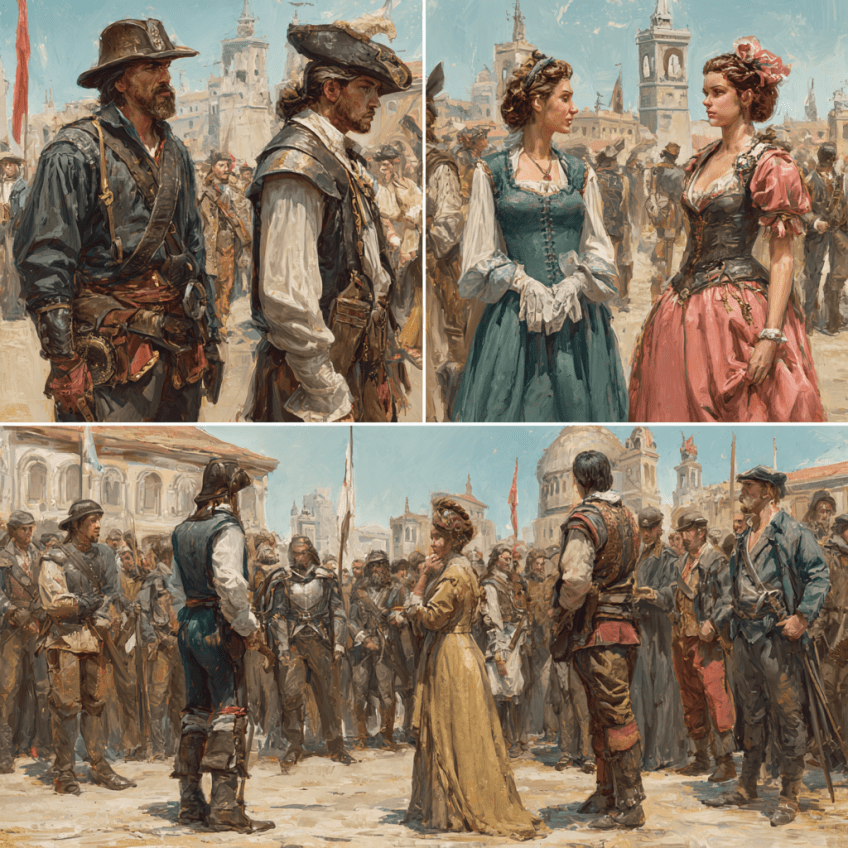
As authors, we control not just the events of the stories we write, but also a whole carefully planned structure of who knows what information when and how, not just to hold the logic of the story together, but also to heighten emotions, mislead readers, bamboozle character assumptions, and so forth.
How can we use these plentiful opportunities to both hold everything together and engage the readers?
Here’s a partial list of some of the possibilities to consider… (add more in the comments, of course).
- The naive character.
The new boy in town, the growing child, the visiting alien, the intelligent animal, the inanimate object, the new wizard, the teenage girl… the list is endless, and they’re often the primary protagonist or an important side character. Maybe they trust without evidence, maybe they foolishly admire bad influences, maybe they try to protect others, maybe they can’t bond with anyone, maybe they’re quick learners who wise up with a will.
One thing about them… it’s hard to predict (or should be) how they will grow when we first meet them. Do we know how they’ve been formed before we first see them (family, etc., as a potential clue)? Will they twist and change? Will they intrigue the reader to the end?
When they are the protagonist, it’s their story the readers (should) care most about, though that’s always at risk from charismatic side characters.
The characters tend to form various groups, all of them of interest to the readers and essential to the plots: - The expert and the hero’s team
- The false friends.
- The opposition team
- The strangers that start the story running
Well, the list of character types is endless, isn’t it? And they spend a lot of the time plotting with and against each other. But what I think most about is the reader. We only care about these characters in the context of a plot. In a straight-forward hero’s-tale plot, we wind each group up in consideration of their competing goals and find out what happens.
But other plot types have other clockwork mechanisms. For example, lately I’ve been reading the entire oeuvre of Elizabeth George (sophisticated British police procedurals), and have had occasion to focus on how her plots are structured.
Mysteries in general are not my favorite genre. As far as I’m concerned, they’re only as appealing as their primary continuing characters. The “mystery” plot itself is more of a snore for me, not a puzzle to be solved — the required background for the interactions of the characters.
But Elizabeth George’s plot constructions have made me reconsider what the genre can accomplish in the hands of a master.
Starting with an initial group (either new to the reader (just for this plot, or potentially the beginning of a new continuing group), or already one of the continuing groups, the starting ensemble is usually what alerts the reader to the possibilities of (part of) the mystery/mysteries in each book to be solved by the end. This alerts the reader to pay attention to what happens in these beginning bits, to speculate how the players and events at the start might be about to interact with the continuing character groups, even before they are sure whether these initial characters (if new) are villains or hanging around for the plot as victims or heroes.
This makes a very fertile field for playing with all the permutations of who knows what when, not just for the plot character mechanics, but (more importantly) for the reader’s constant speculations.
What sorts of authors (and genres) do you think fully embrace the possibilities for manipulations of the reader’s understanding, and how do they manage it? Got any favorites, masters of misdirections or reader surprise?


 Mad Genius Club
5 responses to “Who knows what?”
Obligatory video: https://www.youtube.com/watch?v=kb2IdRzawNg
How have I missed this all my life?
Hot Lead and Cold Feet is one of Disney’s more underrated movies. And yeah, Brit dude is the chap who reads the American Harry Potter books.
I’ve read it done in historical fiction, in books that focus on court politics, or on groups on a pilgrimage (not that group). Different factions move in the shadows, or in the open, and you have the occasional outside ambassador or merchant briefly joining the group and adding a new element, or tossing in a complication.
And all the problems of dramatic irony. I am not typing this all over again, so: https://writingandreflections.substack.com/p/i-know-something-you-dont-know
Meanwhile, I’m poking at a saga covering a century and clashing cultures and whether I should give a viewpoint character of the evil culture.