This is a bit of a continuation of my post last month (already?!?) about borrowing ideas and reshaping them to fit.
I found a magnificent description of something. I’d love to do a near copy-paste, since the source is long (nineteen hundred years or so) out of copyright. No one will know, right?
Alas, I have a conscience, and stealing chunks of text even from someone dead over a thousand years is still theft. Too, the material has been cited by so many academics over the past hundred years that someone will catch me. Using the material straight would also raise the question among readers of “how did no one find this before, when you have clearly said that everyone in the county/parish/district knows everyone else’s business?” A great deal of filing, reworking, and considering how to catch the sense but not the exact wording will be needed for me to use this nugget of intriguing information in the WIP.
However, I can take the material, adjust some things, and use it almost as is in a very different story. Remember, I’m the Worlds Second Laziest Writer. There, the description will blend in nicely, so long as I do sufficient filing that it fits smoothly, and is in my own words. It will be a small part of a larger whole, a place that is noted by the protagonist as one of several, to be avoided or visited as the cycle of seasons or faith dictate.
Catching the sense of the material but not the plain text is my goal for both books. The mood as well as the actual wording is the critical thing. It would be the same if I was reading The Sea Around Us, or The Outermost House, and found descriptions of the seashore that fit the story and caught the mood and details that the story needed. My task would be, and is, to reread the passages, sifting out what gives them the feeling I want to mimic, and which details are too precise, which turns of phrase cannot be reused. Once I’ve done that homework, things should be clearer. Then I rebuild the moment in my own words.
We all do that, just not entirely with full awareness that we are doing it. What details from history, or fairy tales and legends, or personal observation do we writers incorporate into the story? Larry McMurtry took history, looked at place, and rewove it into Lonesome Dove, and The Last Picture Show, among other things. David Drake has done it with American history and military history, with more success at some times than at others. Stealing from operas, Norse mythology, Chinese mythology, Irish folklore, Eastern European and other history, I suspect we all can name an author or two without too much effort. It’s part of our common coin, all the stories that have accumulated over the thousands of years that humans have been telling stories.
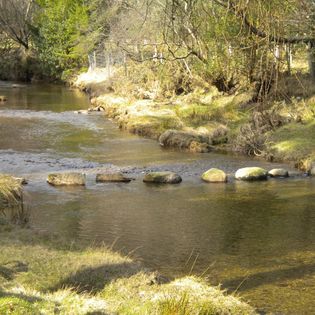
So, back to the description I want to steal, ah, emulate. The dark stillness, how people and wildlife avoid the place, the shadows that linger when sun ought to shine, the great discomfort the observer and author both report …. Those are fair game for duplicating, perhaps even the sort of place (pond, or grove of trees, or rock formation, or rolling grassland with one strange stone lurking among the verdant herbs and grasses.) The exact words? No. Will I give credit in the end notes? Yes, because that’s just what I do. I’m too academic not to.
 Mad Genius Club
9 responses to “How Much Can I Copy?”
I for one love that your fiction books come with bibliographies.
I stole the idea from Crossover.
Awww. 🙂
I thought about including one with the last book but didn’t quite have the courage.
Am I the only one who thinks nested excerpts are nifty?
Or am I too ADD for my own good, again?
For non-fiction, it works very well, or better for some of us, sidebars, so we can finish reading, then go back and check the other stuff. For some fiction, it can work, especially when it is part of the narrative, like Princess Irulian’s historical commentary at the start of chapters in Dune. Or having technical excerpts and commentaries written in, because the story is told as a history book or sorts.
See ‘Melancholy Elephants’ by Spider Robinson. There are a finite number of words, and a finite number of ways to put them together that make sense. Eventually, every possible phrase, sentence and paragraph that accurately conveys an idea will have been used somewhere.
It’s one corollary of the Infinite Number Of Monkeys Principle.
———————————
Jordan Peterson: “If I told you to cook in the bathroom and shit in the kitchen, that would be a new idea. Doesn’t make it a good one.”
We are standing on the shoulders of giants. Why should we not borrow from our betters? I have quoted from several sources — Bible, Doyle, Enoch, etc. and see nothing wrong with it. I can trust my readers to get the reference.
More obscure things? Maybe have your character say, “as the ancients put it…” A simple asterisk and an endnote where you got it from is sufficient in my mind, especially if its in the public domain.
And now I should probably go back to the WIP I’m avoiding.
With fairy tales, it helps to read lots and lots so you generalize to the type and then write your own.
I can’t tell you how many fairy tales I put in The Princess Seeks Her Fortune or Even After — or, for that matter, The Enchanted Princess Wakes or The Other Princess, where I wasn’t packing them in so much — because there’s no real way to count.