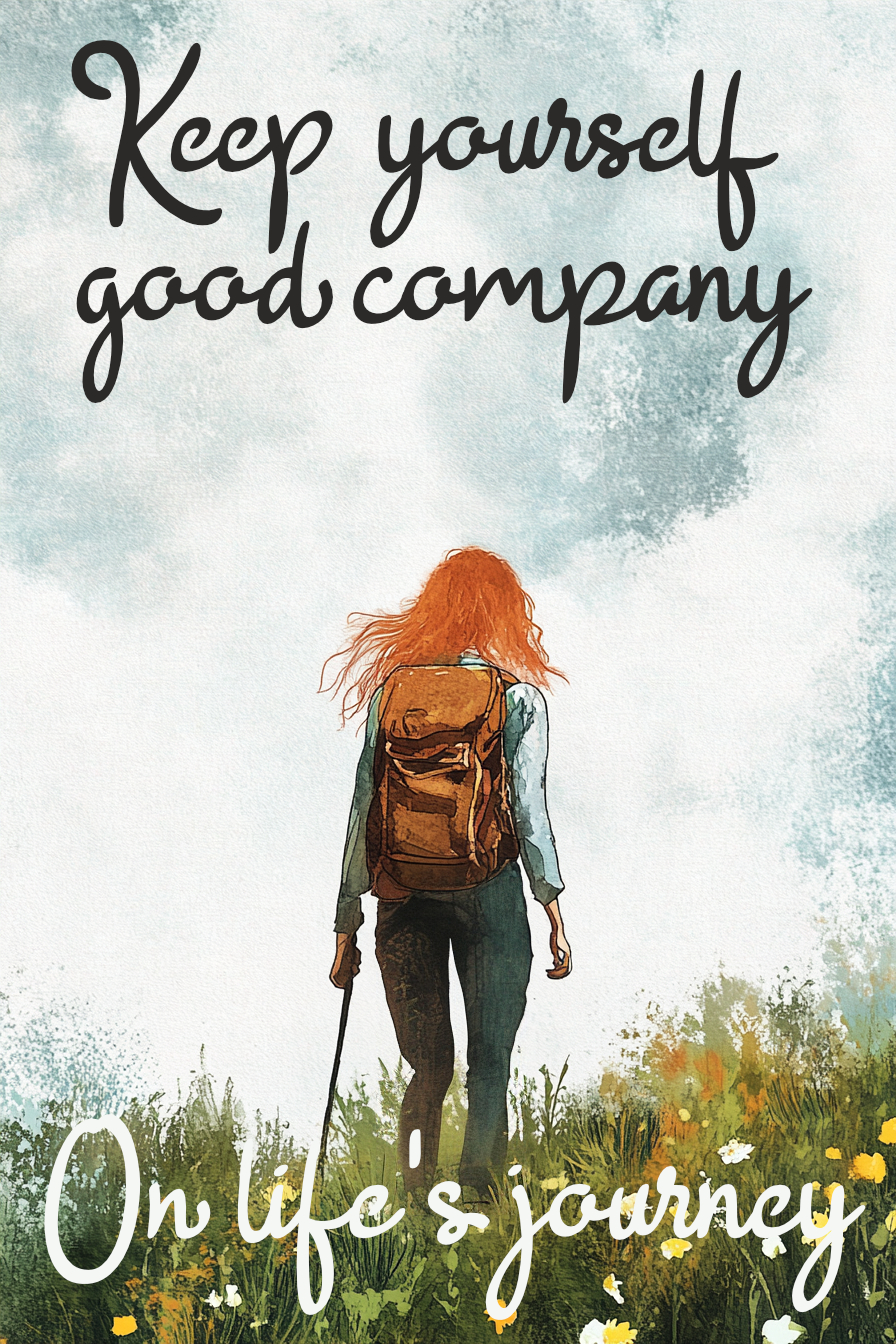
This year, not only did we go off to LibertyCon, but afterwards, my love was feeling well enough to keep going… all the way to Savannah, Georgia, where he wanted to ground-truth some scenes he’s writing for a civil war naval battle / attempt to take a fort, then hit a few other similar spots on the way back.
I love a good road-trip, and we’ve had years to hone the art and skill of doing one together. However, it’s been a heck of a year, and once the fun wore off and the con-crud kicked in, we looked at each other, and mutually decided to cut the trip short and go home.
Not that we didn’t fit a little exploring in on the way home, but the main story was over, and this is the part that usually gets glossed over, as home starts looking more and more attractive. Heck, I even looked forward to being followed from room to room by my creaky old arthritic Kili-Cat, so she could make sure I knew I was being snubbed.
The older I get, the more I appreciate Sam Gamgee’s “Well, I’m back.”
That said, our characters rarely have the luxury of returning to a home unchanged – the hero’s journey leaves its scars, and either the hero or the home, or both, aren’t the same. Sometimes, you can’t go home again.
All is not lost in that case. Home is where the heart is… there’s always making a new home, and that’s quite a viable alternative. Heck, that’s the critical end to every romance – making a new home with your partner, and making a Happily Ever After, or a Happily For Now.
Indeed, my love has lost his original country (in a very real way, two countries he fought for no longer exist), and most of his friends and comrades in arms. The few surviving are separated by an ocean and years apart. However, he’s gained a new country, becoming a citizen of the United States of America, and a new home with me. We’ve made our home in a Tiny Town in Texas, and have good friends nearby… in fact, we are living our happily ever after, even if it does have its own little crises and adventures. (And con crud.)
And yet, our bones still long for other lands, and a piece of our souls will always reside in the mountains and the oceans we left behind.
Nothing’s ever as simple as we make it in stories.
How do you define home? How do your characters define it?



 Mad Genius Club
11 responses to “Coming Home”
I moved around a lot growing up, so home to me is “vicinity of the parents/siblings” (most of us live within a few blocks, the other branch lives in the next town over). current heroine rode the range growing up, so although her father’s ranch (seized when he got on the wrong side of the last revolution) was “home,” that was already a comparatively fluid concept by the time she had to flee the country with their horses. Hero was probably a “home is family” person growing up since he seems to have spent his formative years on a giant airship, but parents died when he was a young man in a Flight 93 type incident aboard the airship (airship survived, although it was out of operation for a long time.) Since then, it seems like he’s mostly been going where his work takes him.
They are neither of them “rootless cosmopolitans” in the usual meaning of the word, but they are also people with very pragmatic ideas about getting by wherever you end up, and that probably seems weird to other people in their setting.
I saw this anime shortly after we finally settled in the US, and for some reason this part always stuck with me. Not everyone is meant to stay….
Reminds me of Shane, the book not the movie. He didn’t get to stay either.
I think Shane was probably an influence, albeit filtered through other influences.
I’ve lived in a bunch of places so I don’t know where home is. But it looks mostly like desert because that’s what makes my eyes happy.
Right now, home is where family is. Eventually that will change, but I think home will be where my Calling to be is.
For my characters, home is people and duty. Although I do not see Rigi being happy away from Shikhari. She has lived on other colony worlds, and on Home, but she’s become a bit of a native.
Work In Progress, the heroine is trying to cope with an isekai and having very poor memories of before. Muddles up the notion of home entirely.
Home is where they have to take you in… and you want them to. Both parts matter. It’s a special sadness to stand on the outside looking in, instead, and even worse if it’s your own fault. Many a story has gotten its engine from this conflict.
I guess I wrote a book where the heroine decided that home was where her uncle loved her, believed in her, and needed her, as opposed to other places where she thought she was “doing good” for random people she met.
One of my stories is exactly that, A Hearth for Ulysses. Sorry I missed you at LibertyCon, but I was kept pretty busy.
The older I get, the more I appreciate Sam Gamgee’s “Well, I’m back.”
That said, our characters rarely have the luxury of returning to a home unchanged – the hero’s journey leaves its scars, and either the hero or the home, or both, aren’t the same. Sometimes, you can’t go home again.
And, indeed in LoTR, most of the characters in the Fellowship don’t go home again. Sam, Merry, and Pippin do. I guess Gandalf does, although we don’t get to see how that turns out.
But Boromir dies. Aragorn stays in Gondor—hopefully to make a better home, but he doesn’t go back to the home of his childhood. And Frodo, Legolas and Gimli all find themselves too changed and/or damaged by the journey to be happy in their Shire, Mirkwood forest, or Lonely Mountain anymore.
The message of Tolkien in this matter seems to be, “You might be able to go home again, but don’t bet money on it.”