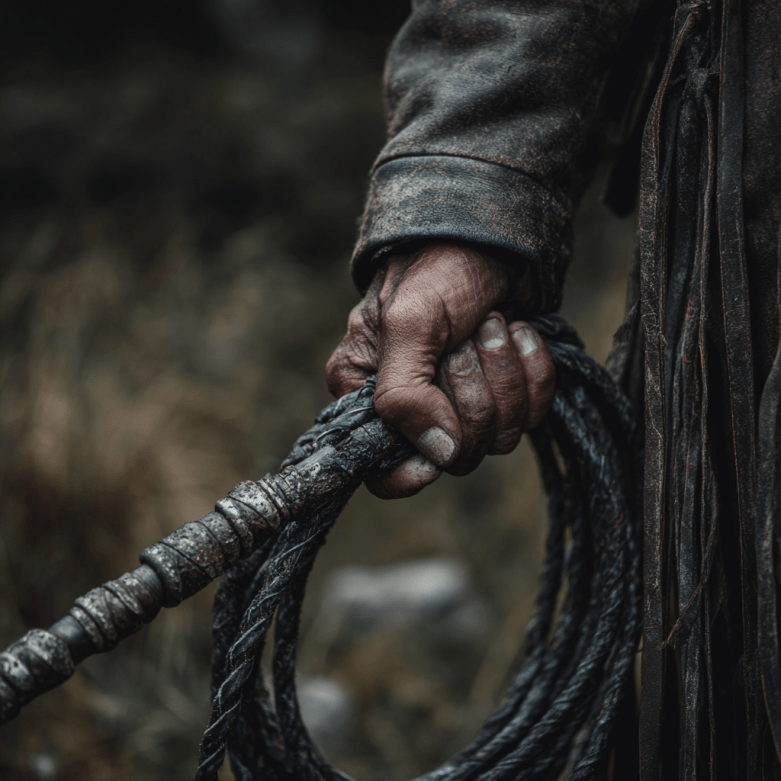
What do you do with a drunken character? What do you do with a drunken character? What do you do with a drunken character so early in the morning….
Well, the answer is drunken or sober, you do what the character allows you to do.
No, you don’t in fact have the whip hand. You might wish you did. But you don’t.
Okay, it’s not that black and white.
I’ve met writers who tell me their characters do exactly what they command. In fact, the characters have no interior life of their own. In fact, if the characters disobey, they get fired and new characters brought in.
The strangest thing about this is not that they talk like that — and are they telling the truth? Who knows? Remember fiction writers lie for a living! — but that a lot of them also talk about how the characters have exactly the characteristics that are assigned to them, no more, no less, and then ….
And then talk about how they INTERVIEW the characters before allowing them to be in the story. … How do you interview someone whose every characteristic you assign? I don’t know. And neither do you. And neither do they. And I’d like to personally chide them. Not for lying, but for being bad at it. What part of “this is your job” did they miss.
Meanwhile, I do know there are people who just do in fact assign their characters whatever purpose/characteristics are needed. And the good ones actually make it fly and make it very, very good. But those are rare. The not very good ones leave you wondering why this character who is highly insecure is also absolutely sure or where to find the McGuffin. or whatever.
My own experience is mixed. I have now had TWO — not one but TWO — characters who allowed me to change their sex from male to female. One of them you know, though I’m not telling you which book. (If you figure it out, I’ll be amused.) The other is fully written but waiting the rewrite, because it works better with a female main character. And the character said “sure. Not a problem.”
Meanwhile I have characters that refuse to change their sexual orientation — A Few Good Men — their smoking habit — A Few Good Men again — their hair length — most of them — their hair color or their name — Kyrie in Shifters. I mean, I can change it, but if I do the character dies, and then I have to carry them, dead, through the book, which is really not worth it.
What do I mean by dead? Look, I can’t script EVERYTHING the character says or does. I can script MOST of it, but there will be things. Like, the character suddenly decides to bake when he’s upset. Or has musings on the nature of musical scales. Those things, it turns out, not only fill holes in the plot but are ultimately essential to characterization, to the chaining of events, to … everything.
They are grace notes spit up by your subconscious (look, I like to sleep at night) okay, that take a so so novel to great. And you don’t have to slog at each of them. But change a character in a way they don’t want and…. the subconscious — or the character — shuts down tight.
Suddenly, in the middle of a chapter, you find yourself crying because you don’t know if your character prefers sword or saber. Or if he’s verbose or spare with words. Or–
A friend who is one of my fledglings said it’s exactly like being a DM only you can’t bribe your players by giving them chips and the good beer/soft drinks.
She’s right, you know.
Also wrong.
Turns eyes inward, Listen Bub, you can become the secondary main character in the second book, or I’ll cause all your pet koi fish to die.
No. All of them. Yes, even the cute yellow one.
Ah…. I see he’s coming around. Excuse me, I have to go write.


 Mad Genius Club
25 responses to “The Whip Hand”
how about a character who was supposed to be a second rate bad guy – you know, the kind that mans the lower level castles and after you defeat him he says “but the princess is in another castle!” type? And then not only does he decide to NOT be a second rate bad guy, he decides he wants to be a good guy. And before I can wrap my head around the fact that what I had meant to be a bad guy is now a good guy, he’s THE good guy – and by that I mean he became the LINCH PIN for the ENTIRE story! I mean the ENTIRE EPIC is about him – even when he’s not directly in the story!
And what does he do? He sits back in his elegant chair, gives me a smirk, and sips from his wine glass before reminding me I can’t do anything about it now.
Yeah, well, Mister – just know what happens to the favorite character!
This article and this character (and the others living in my head) are why I found the movie “The Man Who Invented Christmas” to be highly entertaining and relatable!
For me, it’s more of a gradual “getting to know what works for given characters” thing. The lead in the Star Master books originally had a kid sister he was somewhat protective towards, and took on as a passenger a male spy who was flirting with her, but it didn’t work in my head until I swapped the Y-chromosome over to the younger sibling, making the sibling a guy and the spy a gal. A Platonist would say the sibling was always male and the spy was always female in their ideal states, I just didn’t know it initially. An Aristotelian would perhaps say that I was making a subjective aesthetic choice based on what I was comfortable writing and my dissatisfaction with the stories by other people that had given me the idea. Does it matter? Dunno.
Similarly, I’ve had cases where it seemed pretty clear the characters would do X, but not whY they would do it, and I had to figure out what was bothering them. I just figured this out in the Space P&P retelling last night: Darcy in this version first encounters Elizabeth under circumstances that keep him from being anywhere near as rude as he is in the source material. I kept looking for reasons why she’d take against him as hard as she does? Is it because she’s already met Wickham and he starts undermining Darcy at the first opportunity? Is it because their siblings, Jack Bennet and Georgiana Darcy, have a somewhat messy history? Those aren’t wrong answers, but it turns out Darcy’s aunt has already been…encroaching, on the Bennets’ family business and made a very unfavorable on Elizabeth.
DON’T HURT THE ARCHMOUSE’S FISHIES!
This is 1) me amusing myself, and 2) part of why the characters “living” like this is so important.
It feels like I know him, and I have Strong Views on his continued well-being. And that of his fish.
He gets ridiculously attached to pretty-helpless. Koi, bunnies, kids.
LOL. I don’t think I could. He looks so desolate at the idea. BUT he really needs to step up to voice character.
“Squeak, dang you, SQUEAK!”
Oh boy do I get that. I had to delete a ton of dialogue from one character that was too much of an arse. So much so, the readers said “why are the other characters treating him so mean?” It’s because he was a lech, a lush, and too damn young to know what he was doing was wrong, even though he was not THAT young.
His coming to Jesus moment is one of the turning points in the story, so it needed to be less of an out-and-out villain (which he, happily, WAS). He likes being mean, but not evil. The kind to trip you in the hallways and point and laugh, not stab you in the front (or the back). He’s been stuffily quiet since I neutered his fun. Mostly by having he MC *ignore* his antics, and he HATES being ignored. It makes him escalate, which is why I had to tone it down. Vicious cycle.
Drawing him back out is going to be a pain. He’s not very likeable, but he is understandable. Lots of pressure on him made him break, and he broke badly. He’s frustrated, needy, and he lashes out constantly when stressed. He needed redeeming factors, but resists having anything to do with it until he gets what he wants.
Needy characters are a pain.
The Archmouse isn’t needy. BUT he’s self-contained and VERY shy. and I want him to TALK.
I’ve only read a couple of books with what I would call “dead” characters, and it’s an odd experience. Most novels, even with the characters that I don’t like and am reacting to differently than the author wants me to, I acknowledge their life. If I say, “Bob is a horrible person and is acting out of character here,” I’m admitting that Bob is a person and has a character to be out of.
But there have been a few books where I never acknowledge Bob as a person. Bob is just a name, a sequence of letters that appears repeatedly in the story I’m reading, that never develops any sort of personality or character or even life. To modify Mark Twain, the only reason I can tell the difference between Bob and a corpse is that the corpse was once alive, and Bob never was.
I don’t know if this is because the author was trying to force Bob to do something that Bob wouldn’t have done, or if the author just never got to know Bob in the first place, but it’s like reading about the Eerie Valley: there are things here that are sort of acting like people but obviously aren’t!
I don’t believe I’ve read any cases where only the protagonist was like that. I’ve read authors where all the characters were like that, and a few cases where the author was obviously closer to the wavelength of one set of characters than another. (Blunt Instrument would be a pretty good mystery in the hands of another writer, but in Georgette Heyer’s hands is mostly proof that she’d never met and liked a sincere religious believer from her own country(1)).
(1) I add the country caveat because the French priest in These Old Shades rings somewhat true to me as a man with worldly past experiences and also supernatural beliefs. The Anglican clergy in her books are just focused on doing good in this world without any particular concern for the next.
Jerry Pournelle talked about characters not doing what he wanted, but said they were too well armed to argue with.
LOL. He would.
I’ve had characters that required bribes to get back onto the plot…and sometimes the bribes were too much…
Adelaide: “Hey, I’m going to explore this whole high-end male couture thing!”
Me: “No, we need to get back to the first part of the Lycée storyline. Will you come back if I give you a cookie?”
Adeliade: “Three cookies. And I want to get a grand slam with Sayuri, now.”
Me: “Four cookies, and a solid second base near the end of the first book. We can’t get to third until we’ve kicked her father in the nads.”
Adelaide: “I want to do the kicking.”
Me: “Sayuri has to do the kicking. She’d defend him if you did, because he’s her father. Absolute scumbag, but her father. I promise to add kinky boots if you’re good.”
Adelaide: “….fine. Four cookies, second base, and I’ll won’t try to murder Father Herrera, seduce Sister Justina, and/or blowing the whole campus up. But I want the boots!”
*–*–*
Me: “Peter, what are you doing?”
Peter (absolutely innocent): “…about to destroy the whole egg-cracker economy?”
Me: “…
“…
“…
“How are you going to do it?”
Peter: “Nano-machine therapy and AI support for vulnerable populations. And letting ATHENA run loose and figure out where the money is going, and giving honest prosecutors the facts to let them bust these people without getting plea bargans.”
Me: “Don’t get caught.”
Sometimes characters demand that you assign them some characteristic and THEN run wild with it.
(BTW, people, if you backspace and it removes more than you intended, try CTRL-Y.)
ctrl-z too
CTRL-Z is “undo” CTRL-Y is “redo” this may prove useful in other contexts.
I’ve done all of one fanfic. I had no less than three different characters inform me that, no, they weren’t going to to the thing I thought they were, and were, in fact, going to do something completely different.
I do do a form of the interview thing, but it’s more like pulling a character aside and asking them wtf? Why are you two acting weird? “Well, we’re married. It’s obligatory.” Wait, what? Since when? How?
“And then talk about how they INTERVIEW the characters before allowing them to be in the story.”
And then their fricking story reads like a memo from the HR department. About parking spaces.
Which has become predominant in Dead Tree since ~2010, 2012ish.
And that is why I write my own, even though my characters are often uncooperative.
“No, that’s stupid, we’re not doing that.”
“Ew.”
“Did you forget who I am again, foolish writer?”
“Screw your vague plot outline, this is what’s up.”
“Hold my beer, old man.”
My first encounter with this sort of thing was Charlotte, Brunhilde and Beatrice refusing to be mere automatons. They were real robot girlfriends, they were not going to do it my way, and I had best go back and fix all that stupidity at the beginning of the story where they were just disposable robots.
A snippet from Unfair Advantage of Beatrice doing it her way.
“But Angel, nobody knows how to do that.” Jimmy objected. “I’ve read all the latest papers about quantum computers and entanglement and all that stuff, nobody on Earth is within a hundred years of doing what you’re talking about.”
“That brings up another issue, Jimmy Carlson,” she said, suddenly miffed. “Not to change the subject from my no-doubt fabulous inner workings, but how long are you going to keep calling me Angel instead of giving me a proper name?”
“Wait, what?” stuttered Jimmy. “What’s that got to do with quantum entanglement?”
“Keep up Jimmy,” she said, snapping her fingers under his nose. “I’m not your robot friend, I’m your robot GIRLfriend. Girls are mercurial and capricious. You need to at least come up with a decent name for me or I’m not going to talk any more physics with you.”
Jimmy, being a social oyster, said, “Ok, how about Angela?”
This earned him an elbow in the ribs. “Do I look like an Angela to you?” she demanded. “Angela is some cute little blonde gymnastics teacher. You’ve got until tonight to come up with something impressive enough to match me.”
In my current work, the heroine discovered that she’s going to spend some time spinning her wheels and being envious of those who are accomplishing more because she (and her group) are not the only ones in this program.
That was not in the outline. I had to invent it on the fly.
wait, i was supposed to give my players the good beer?
Only if they bring you the really good beer.
[…] Read more…. […]
And then, for no reason, I grapped a bricki-ish rose-madder that I used at the edge of the towhee’s breast from the marker box. And painted it under the edge of the crumbling stone wall. It wasn’t in the plan or part of the palette…
I think this might go to why storytelling constrained by the canceler- or profit-pigs dies the death. But I think there’s also something there about the shared boundaries of a stable society: Everyone’s internalized the Law into their hearts. It’s a good law. And there’s forgiveness, which makes for broad margins for error