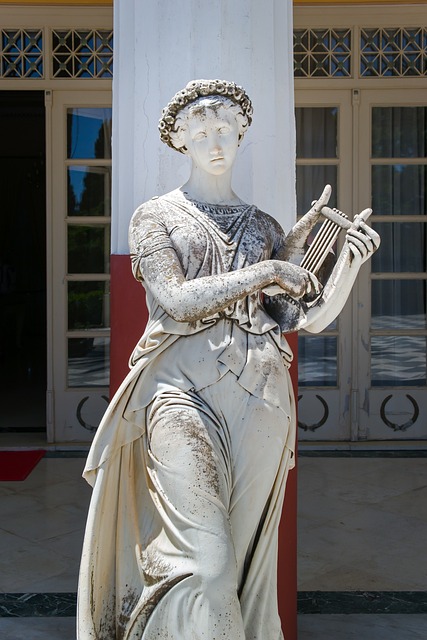
Those of us who have read the Odyssey, the Iliad, Aenead, or other older epic poems are familiar with an opening invocation.
“RAGE:
Sing, Goddess, Achilles’ rage,
Black and murderous, that cost the Greeks
Incalculable pain, pitched countless souls
Of heroes into Hades’ dark,
And left their bodies to rot as feasts
For dogs and birds, as Zeus’ will was done.
Begin with the clash between Agamemnon–
The Greek warlord–and godlike Achilles.”
https://poets.org/poem/iliad-book-i-lines-1-15
The Lattimore translation of the Odyssey sets the invocation as prose:
“Tell me, Muse, of the man of many ways, who was driven far journeys, after he had sacked Troy’s secret citadel. Many were they whose cities he saw, whose minds he learned of, many the pains he suffered on his spirit on the wide sea, struggling for his own life and the homecoming of his companions….From some point here, goddess, daughter of Zeus, speak, and begin our story.”
The poet seeks inspiration, literally “breathing in” but also to inflame, to animate (“anima” spirit, ghost). The Muses, daughters of Zeus, breathed words into the poet, giving him their power to create poetry, or history, or music. A poet was someone touched with the divine, perhaps not entirely sane as most understood sanity, given the gift and burden of telling a story. It could not be done without the influence of the gods. The earliest recorded use of the word “inspiration” in English carried that same connotation of being touched by the divine and guided by a deity.
Most of us don’t open our books, poems, or other writings with an invocation to the Muses. I have been known to mutter “Come on Clio, give me a break,” during long stretches of seemingly fruitless research, but that’s as much in jest as frustration. I would be exceedingly nonplussed if Clio, the Muse of History, appeared in the archive and said, “Next box, dummy, like it says in the catalogue listing.” Calliope, the Muse of Epic Poetry, was often shown with a stylus and writing tablet, once the Greeks became literate.
Later writers and artists might invoke a muse, as Dante did in his Divine Comedy, or might refer to an inspiration as “their Muse.” Amanda Green refers to “the evil muse Myrtle,” who ambushes her with the wrong story when Amanda’s trying to finish a project. Sarah’s muse is a right jerk, appearing as characters who sometimes dictate the book at her. My muse likes to wait until I’m involved with something else and throw a scene from a different thing at me, or whisper, “Hey, what if you took this bit here, and added that bit there, and let’s make it steampunk, because you’ve never done that before.” Once and only once has an idea appeared like Sarah’s sometimes do, and it startled the living daylights out of me. The book, Blackbird, was one of the hardest to write, because I didn’t like the protagonist, and I knew that he wasn’t going to live a long and happy life. But he wouldn’t go away, either, and several readers have told me that that’s their favorite book.
How do you get inspiration? How do you know if the spirit of the story is moving you? No idea. Inspiration can be “I’ve got bills to pay, and cozy romance sells really well, so why not?” It can be fury at a book that has a decent premise and then goes sailing off in the wrong-for-you direction. (Found one of those this weekend. My rebuttal will be a short story*, I hope.) It can be noodling around , reading nonfiction, and thinking, “Huh, I wonder why no one’s written historical fantasy set here?” Or it might start as fan fiction and go in a totally different direction as the characters take on a life of their own. Or you might get a deck of idea cards and try it, or do the story prompt-of-the-week, or roll 2D6 and look at a character creation chart to see what attribute you want to try writing. Or it can be a minor character from one story who turns out to be either more intriguing than you thought, or more stubborn and persistent, and who ends up with an entire book. (Lois McMasters Bujold did it, so I don’t feel as bad about the Lone Hunter.)
The muse might hit you with an idea so hard that you write at top speed, to the point of collapse. I hope not, because that’s rough on both writer and housemates. Or it might come slowly, forcing you to work to chase her down. Replace “Good Luck” with “Inspiration” and it describes life for some writers:
Good Luck, she is never a lady,
  But the cursedest quean alive.
 Tricksy, wincing, and jady—
  Kittle to lead or drive.
 Greet her—she hailing a stranger!
   Meet her—she’s busking to leave!
 Let her alone for a shrew to the bone
  And the hussy comes plucking your sleeve!
     Largesse! Largesse, O Fortune!
     Give or hold at your will
     If I’ve no care for Fortune,
     Fortune must follow me still!
Now sing, o Muse, of the trials of a millwright, and the life of a blue-collar craft master born to two gods, who accepted a commission and perservered despite hardship and migraines.
*My short stories have a depressing tendency to become novels unless I fight them into staying short.



 Mad Genius Club
9 responses to “Opening Invocations: or “Yo, Muse, Gimmie Words!””
Ideas come so easy to me. They pile up in heaps in every corner, whimpering for attention.
Turning an idea into a finished story is much, much harder and where I flounder. Perspiration would help considerably more than inspiration.
Sometimes they can be induced to work together. Particularly if they are not complete.
I try! And sometimes, they cooperate. My ideas and characters are never like Nabokov’s, he who claimed his characters were galley slaves and did as they were told.
And now I’m imagining Nabokov as Quintus Arrius in this scene:
I’d read that.
Words are visual and auditory representations of meaning, and meaning is where language lives. Poetry packs meaning in towering form, wringing subtleties from the smallest of things.
In prose, pulp tends to be where you scrunch the words down into as little space as possible and still get the story out, more or less. My story ideas tend to sweep in like wildfire and its a race to get them on the page before sleep claims me, as I’ve little time to write. The good ones do, anyway.
Other times it’s packing a mass of notes and plot thread into a clumsily woven scene, turgid and sticky in the execution.
Of late, it’s beating back the other stories that want to be told with a metaphorical stick. No, I’m not writing plant man today. Not the other ones, either. Back in your spot, plot bunnies!
A singer/songwriter’s point of view: La Musa no viene sola (the Muse doesn’t come by herself) https://www.youtube.com/watch?v=5QjaFbvh6Rs
(Maybe someday I’ll do a translation, but it’s hard to find time now. Anyway, it’s a cute song about not finding inspiration).
I can get inspired, but the inspiration quickly gets squashed by a hundred or so other things which are so much more important. And reading other’s inspirations is so much easier….
Brilliant
Back in the bad old 60s-70s, the druggie approach to hallucinogens like LSD was (for some of us) an invocation of a muse of a sort. We wanted to see how the mind worked (not how the gods worked, but the result was much the same).
The gifts were many: (some of) what sensory input contained before it was subconsciously filtered; how you could modify the visual field at will, draw on it like an Etch-a-Sketch; how one train of thought could spark another, and another, all brought up to the conscious mind to observe and play with. (The dullards would just watch the light trails as they drew their fingers through the air while they (as we put it) “watchen-den-blinken-lights,” and the nervous/insecure would panic when they discovered something uncomfortable.)
That introduction to playing with sensation and playing with thought has lasted me all my life. My half-asleep musing at night or when I wake up is always full of solutions for plot/character issues, tying things together, providing motives, suggesting crises, and so forth. I always keep pen & paper next to my bed for jotting down snippets of good suggestions for works-in-progress. The hard work is done at my desk, but the inspiration comes (mostly) from within, from forces that like to fabulate.