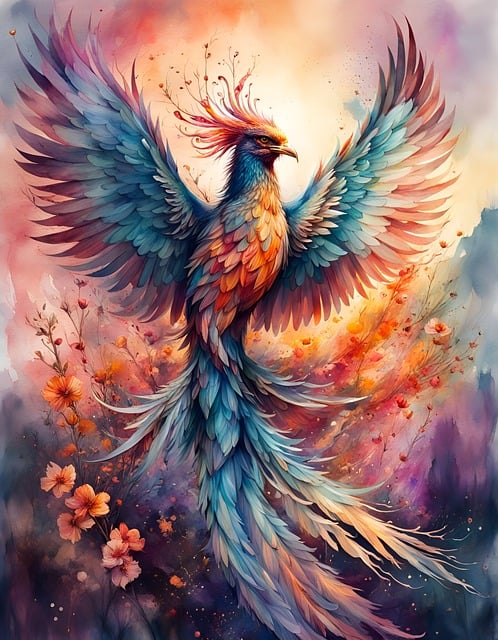
Last week I had a fascinating chat with a visual artist (not Cedar) about how AI* is changing different fields. The artist has a dear friend in the professional theater/acting business, and talk shifted to how CGI (computer generated images) and projections have moved into being almost as realistic as an actual performance of dance or music. There’s a real concern that the major studios for movies will shift to all CG in a few years, and acting as a career will become very, very hard to maintain.
Writers have been hearing this threat for a while, with cover artists not far behind. “Computer generated books will replace novels! Computer-generated work will be as good as, even better than, 99% of human-generated work! Learn to Code! Doom, DOOM, DOOM!” As the legal profession has discovered, using a computer even to generate something as relatively generic as a common contract doesn’t work that well. The devil is in the details, and in the minutia of understanding context and application. Eventually a computer text-generation program might pass the fiction-writing version of the Turing Test, but now? It’s got a ways to go.
Script-writing might be different, although that has so many side considerations, and let’s face it, the quality of writing from the big studios for TV and most films recently has been … poor. Some things are even more formulaic than an apartment rental contract, and perhaps a computer program could successfully replace a script writer.
Visual artists are the ones feeling the effects of computer-generated things first and the “hardest.” I say hardest because in some ways, artist have been using computers as long as authors have been. Programs that allow the manipulation of photos and other images are at least thirty years old, as well as things to allow drawing and sketching. Adjusting colors, removing unwanted lines (and people), adding painterly effects … Artists have used computers to add value or change images for quite a while.
Current programs flip this. Now, using prompts and ideas, artists generate images, then modify them to suit what the artist desires or client wants. My artist friend pointed out that using something like MidJourney to create several rough ideas for the client would make things much, much easier and faster for commercial artists in certain design categories. “Oh, that’s what it would look like? No, that’s not what I had in mind. I want this, and this other thing, and you’re right, blue doesn’t work well.” If you can have the computer create several roughs, then the artist takes over and refines things, it will make life easier for both artist and customer. It eases the pressure on the artist, and will stretch budgets farther. This is good for all parties involved.
I can imagine using a text generator for something like that, a sort of brain-storming session before the writer digs in and does the work. If you think about formula romances written for a house (or westerns, or men’s adventure novels, or …), the editor gave the writers basic information about character, genre, rough plot, and the authors went from there and turned in a 65-70,000 word book. Will text-generators serve a similar purpose, but directed by authors? Or perhaps authors will read what the prompt kicks out, and say, “Ick. Oh heck no, what about this, and if the protagonist does that in response …”
What the computers won’t do any time soon is replace truly creative individuals. We will find ways, and I suspect there will eventually be tiers of art, as there have always been, now ranging from “purely by human hand” to “human-improved computer art” to “pretty decent computer art.” We may see similar things with text, although thus far, text aggregators and generators have a long way to go before they replace truly good human work. For “fill-in-the-blank” reports and news stories? Some places already use computer programs for that. (And they are rediscovering GIGO, but that’s a post for a different blog.)
Image credit: Image by Nanne Tiggelman from Pixabay
*No, it is not really Artificial Intelligence a la HAL 9000, or Max in The Black Hole. But everyone calls it A.I., so I will too.

 Mad Genius Club
27 responses to “Adding Value to A.I.”
Thinking, “Sky Captain and the World of Tomorrow,” which went for all “special effects,” what, a decade ago? Visually, it was very good. But the writers didn’t understand the conventions of space opera/pulp, and it was unsatisfying on that account. (Probably because they absorbed ‘feminism,’ with their mother’s milk, and the idea of a woman admitting she’d been a skunk and undergoing a change of character to loyal girlfriend/wife was foreign to them).
They spent so much time on the eye-candy that character growth never happened, at least the female protagonist. The very slickness was a bit of a turn-off for me – I had trouble getting into the film.
It came out in … 2004?!? Good grief.
(For pulpy fun, _The Rocketeer_ was so much better.)
Slight disagreement–the problem with Sky Captain wasn’t so much feminism as that they went so hard for the 1930s serial feel that they basically made a stereotypical one, compounding a ludicrous plot with stilted dialogue and zero character development.
And then they threw in some jokes that undermined what story they had.
Personally, I’m not so prolific that I need to generate tons of covers. I want to keep my Polish artist for my current series for as long as I write them, but I worry that he will eventually become unavailable, by not getting enough work in general to keep him in business. There’s a cost to putting people out of business even in intellectual fields — the whole category of artists/artisans simplifies to programs that (effectively) mine the past in massive ways — but who comes up with the new visions, never before imagined? The recombinatory aspect of AI is huge, but it’s not innovative.
You guys are nuts. Sky Captain is a Great Movie. I’ve seen it many times. And so is the League of Extraordinary Gentlemen. Awesome stuff.
Could it have been made better? Maybe, if they let Ringo, Correia and Hoyt write it, and then LISTENED to them, something that never happens in Hollywood I’m told. But as they stand, two of my favorites. I also love SAO, which it has become fashionable to hate.
Though almost all others decry my choices, I remain loyal. ~:D
To each their own, and we all look for different things in films, books, art for the wall, music, and so on. What you love, someone else might find odd. 🙂
I’ll grant you that League of Extraordinary Gentlemen, while not a great movie, is a fun movie, and I wouldn’t have minded a sequel.
Neither would I mind. Mind you I thought of improvements to the structure in the theater.
From the post: “Some things are even more formulaic than an apartment rental contract, and perhaps a computer program could successfully replace a script writer.”
You are being too charitable. -Most- television is horribly formulaic. It feels like the writers took a pile of tropes and formulae, threw them up in the air and then used just the ones that landed on a square on the floor. You can see them in the “writer’s meeting” if two guys in an office can be called such a thing.
Writer: “We’re going with Trope Set C for this episode, and Action Set 12, except we did 12 a few episodes back so this time we’ll run it backwards.”
Director: “Fine, the stunts are still set up, it’ll be cheap. What about dialog?”
Writer: “What about it? Re-use episode three and ad-lib a little.”
Director: “My assistant could have done that in her sleep. Why am I paying you again?”
Writer: “Union contract, baby. No pay, no play.”
This is why I watch anime. To be fair they do the same thing, but the cost of production is so low that they let the writers and artists out to play a little.
If the cost of anime is so low, why do we still not have ‘The Saga Of Tanya The Evil’ season 2 after 7 years? 😀
My thoughts about artists is that cover art has far less influence on whether or not I buy a book these days. Gone are the days that I would go into a bookstore and buy at least a couple of dozen books. Browsing on Amazon just isn’t anything like browsing shelf after shelf of books. The business is changing.
With a very few exceptions such as L. E. Modesitt, Brandon Sanderson, and one or two others, sci-fi and fantasy covers have become much simpler and flatter. I suspect the computer thumbnail requirement is one driver, but cutting costs is another driver. A Michael Whelan or other fine art cover costs …. a great deal. A limited element cover like T. Kingfisher’s most recent books is much less expensive, but can signal genre or mood just as well. I’m not sure how well the “cut and paste collage” covers that seem to be appearing on some dystopian sci-fi work on-line, or if they work at all. (The books with those all seem to be “edgy” and “transgressive” with cover copy that does not encourage me to read the book. But I’m not in their target demographic, I suspect.)
I keep debating whether to do a post on my own blog about how I used Google’s Bard AI when I was writing the blurb for Wolf’s Trail. Basically, I fed it an early third-person POV version of the blurb that I was unhappy with, and of the ~2500 words it produced, I found 16 useable words in 2 phrases. Basically, 0.6% of what it generated was useful to me. Final blurb including Bard’s contributions: 172 words, Bard’s contributions being around 9% of total. Now, I’m one of those people who finds blurbs really difficult, for whatever reason. In the case of the blurb, Bard probably saved me some time and helped unblock my mental processes.
But I can’t see using it to actually write a story under my guidance – basically it would be taking the (somewhat) fun part of writing away and just leave me with editing/revision (decidedly unfun). And the math from my blurb experiment suggests that I would need to have it generate something like 83000 words (probably prompting it on a scene by scene basis) that I would have to whittle down to a coherent 50000 word novel. *Really* not fun.
The Sudowrite channel on youtube has some examples of people using the Sudowrite AI to brainstorm and write books, and all I could think was, man, that sure looks like more work than doing it yourself.
My little brother likes me to bounce what comes next ideas off him, so that he can say, “No, no, no, I mean this other thing!”
😀 Yes, I’ve done that to family members, and it’s perhaps more humane to do it to AIs. Same thing with me doing my own covers (most recently with Midjourney pics); I’d be a fairly neurotic client if I got into ordering custom covers. Better I direct all my “NO THAT’S NOT WHAT I WANTED” moments to a mindless LLM. 😉
Rubber ducks are being driven out of work by the competition
Counter argument: the problem isn’t that they are formulatic, rather it is they are adding too many social signalling requirements to be able to properly execute the formula.
Major movie stories are supposed to cover at least two or three genres and parallel arcs to have broad and deep appeal, to justify their time and cost to make. That’s *really hard*. Adding additional requirements unrelated to making a good movie is just too much and makes a bad movie.
I’ve been playing Lego Star Wars lately (good dissimilar skill co-op) and hit their Force Awakens section. I saw it once in the theaters when it came out, and enjoyed it, but hadn’t watched it again since.
Playing through the story now, I’m a bit horrified at how completely disjointed it really is. There is the potential for a good story in there, with the defector storm trooper and the cynical and damaged potential jedi, but the writers had to make Fin and Rey the perfect pure victims, they had to make Han the useless scoundrel, they had to make Like a failure, they had to make the good guys the underdogs, they simply cannot make all that work.
The characters bumble from one event to the next, largely by accident, never struggle, never grow and ultimately, never matter to the audience.
And I don’t think the fixes are hard, if they were willing to let the characters have agency and be flawed: Finn acts like a goofus because he has done horrible things and is struggling with PTSD and seeking redemption. Rey is impatient and takes the quick and easy path to power and becomes evil. Han is an actual competent hero, who sees their sudden appearance as the will of the Force. It’s not ‘the resistance’: It’s a Republic task force trying to figure out who’s behind the terrorist attacks the New Order is carrying out. Han dies because he is begging his son to come home, because his mother misses him.
The set pieces and showcases are largely the same, not even major scene order changes, but the characters have room to struggle and fail and grow.
But every single time they have a choice between build the world/characters or ding the social villian du jure, they chose the second, and the whole story dies.
John C. Wright made it into a good story in a comic “review” that took many elements and wove them together, better. (He is now at work at a series that takes off the serial numbers. Apparently it’s going to be twelve volumes.)
I wish they had a word besides intelligence to go after artificial because intelligence is loaded word. People automatically put (human) in front of it which muddles the argument.
Maybe use a different term for in front?
Synthetic (real intelligence, not-from-a-human, like Data on Star Trek) vs Imitation? (can mimic some aspect of intelligence but is not real).
Intelligence is the troublesome word. People expect too much of it.
It’s accurate, though– folks expect too much of it because it can do something incredible.
Most of us here know exactly how useless it is to be highly intelligent when you don’t have the tools to do anything with it. 😀
Intelligence, in this case, is the can-do-thing. It’s like how costume jewelry is artificial jewelry, but in a completely different way than synthetic gemstones.
Same way that folks are utterly flipping out over the language learning machines that can, basically, produce bulls##t on demand. “But it makes stuff up!” Uh, duh, it’s a language model, which means it’s being glib. Not that it’s looking up citations, especially when it doesn’t have access to anything but its own programming.
*sour academic kitty grumble* And I wager half the programmers wouldn’t know a Chicago-style or APA citation if it walked up and bit them on the leg. *end sour academic kitty grumble*
“half the programmers”
After my 33 years in IT, I’m surprised at the generosity of your estimate. 😎
90%+ is lots closer.
related thoughts: https://jaglionpress.com/2024/01/23/thoughts-about-llms-aka-ais/
[…] It’s not possible. Still, it speeds the process of sketching and rendering up enormously, as Alma pointed out last week, that alone makes it a great tool for artists and designers. When I compare it to the hours […]