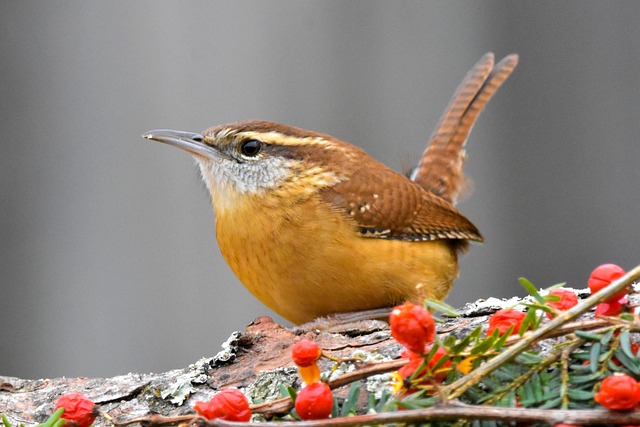
No, not when prize fighters get free drinks at the local watering hole. The day after western Christmas, the second day of Christmas, is the feast of St. Stephan the Martyr, and “Boxing Day,” and the day to hunt the wren. All of which are important bits of world-building, or random trivia, depending on when and where your story is set.
We’ve talked in other posts about folklore, either real world, or in-story world. Some writers blend folklore, fantasy, and reality so well that the result is almost seamless. Every year at this time, the books of Susan Cooper move to the front of my shelf. Her “The Dark is Rising” series was the first time I read folklore as fantasy in a way that was completely believable. The Dark is Rising is a magnificent example of urban fantasy set outside the traditional urban setting, as well as of using folklore elements in fantasy. The setting is the Thames River valley, the time roughly the 1970s (telephones and their failure are important plot points), but also timeless. Technically, the book is YA, but it is aimed at any reader who wants an excellent story of the conflict of good and evil.
Cooper uses folklore on two levels. The first is actual, real-world things like the hunting of the wren, the winter Solstice having uncanniness, churches being sanctuaries where evil cannot go, Herne the cursed hunter and leader of the Wild Hunt, the power of names and symbols, and the Welsh stories of Merlin. Cooper describes enough of the folklore that someone who doesn’t know it already can pick up the important parts (without recourse to outside sources.)
The other level is in-world lore. There is a prophecy, told in verse, that describes what will be needed for the forces of the Light to defeat those of the Dark. The verses are memorable, and are repeated over the course of the book as certain events transpire. This foreshadows events, and also heightens tensions within the reader. Will the good guys accomplish the next task? Can they get them done before the Dark intervenes and drags the world into chaos and terror? And what of the wild powers, those outside both the Light and Dark, things mysterious and stronger than both sides, perhaps?*
Folklore is both a driver and a tool. I think that is one of the reasons that Cooper’s books remain popular and in print. They are dated in some ways (land line phones) but timeless in others. After all, power still goes out in winter storms, remote areas don’t have cell coverage, and traditions continue even today (like the Hunting of the Wren.)
As you write your stories, think about the purposes of story-in-story. Does a bit of something serve to foreshadow as well as provide a moment’s pause for the characters? “No one here eats that. No, it’s not toxic, but there’s a local story that …” Even space stations and colony worlds will develop folklore—look at computers, gremlins, good-luck charms, and so on today.
The song begins at 0:57. There are a number of variants, but this is the one I know best.
Image Credit: A wren in the wood. Source: Image by Jack Bulmer from Pixabay
*”The hour has come but not the man!” from Greenwich might be one of the scariest phrases in YA fantasy.

 Mad Genius Club
4 responses to “Boxing Day and Wren Hunting”
the new meaning of boxing day…
Boxing Day is when all good Americans are putting their incorrect gifts… duplicates, wrong sizes, etc… into boxes to send them back to Amazon.
😛
I thought they called it Boxing Day because the house is full of boxes. 😀
Not this house. We passed them along to appreciative associates and relatives. (I’m not box ranching at the moment. Yet. Really.)
I loved those books as a child and still have them on my shelf.