I was browsing a sub-genre I generally don’t read, looking at categories and tags. What caught my eye was how many authors in that sub-genre (dark fantasy romance) include warnings about the content, couched as ad copy. It seems to be appear fairly often in that sub-genre.
“Dark, violent, and spicy,” reads one blurb. Another lists characteristics of the protagonists (“morally gray” and “strong female character,” or “While Chained is suitable for 18+, it is not a beginner-friendly dark fantasy romance. It contains scenes and themes that some readers might find disturbing. A full list of TWs can be found on the author’s website.” [from: Chained: A Choice of Light and Dark Book 1 by Lacey Lehotsky]. Another works it into the genre and “readers of …” list at the end of the ad copy.” Lady of Darkness is book 1of 5 in the Lady of Darkness series. It is a new adult, dark fantasy romance novel. It features slow-burn, enemies-to-lovers troupes and may have triggers of love-hate themes, sexual scenes, references to sexual trauma, violence, and jealous/possessive themes. It is part of a series and does end on a cliffhanger. Fans of Sarah J. Maas, Jennifer L. Armentrout, and Raven Kennedy will fall in love with this series.”
So, is it a trigger warning (“stay away from this if it bothers you”), a teaser (“this has the following, enter if you dare!!!”), or just a new form of ad copy? Yes? I’d guess a little of all three. Romance readers tend to be the most voracious of genre fans, and some of the most picky about clear tropes and clues. If I was looking for sweet romance and accidentally hit some of the ones I was looking at in Dark Fantasy Romance, I’d leave a firm one-star review, and possibly complain to the seller about deceptive labeling. A lot in that genre seem to have a D/s subtext (dominant/submissive) as well, something that seems to have slid over from some paranormal romance series and tropes. Again, something that can be shown in the cover copy and that probably doesn’t need a warning label.
I didn’t find what I was looking for in my search, but I did get a better idea of how not to categorize some things, so it was a useful exercise. But it raises again the question about trigger warnings in sales copy. Back during the Cat Among Dragons series, I considered it for two of the books in particular, because although the bad stuff happens off stage, it’s really obvious what happened to the protagonist, and it shapes the series arc. I also wrote those just after I left grad school, at a time when trigger and content warnings were starting to be added to course syllabi, so I was still in that mindset, to an extent. I ended up not including any warning. Mil-sci-fi tends to have violence (duh!) and other things, so it shouldn’t surprise readers. A few more recent readers have balked, and said in reviews that the series got very dark. Should I go back and add a note about PTSD in the ad copy? I don’t know.
I suspect a lot of “to warn or not to warn” comes with genre. What are you writing? Do your readers expect, oh, “military violence” as one movie notice put it, or is this a huge surprise in this genre? How well have you foreshadowed things? Is it YA? YA books tend to have a lot more warnings about, let’s see … hunting, wearing fur, generic violence, date violence, implied sexual relationships*, capital punishment, and injuries to animals. I suspect half of those are aimed at parents and school librarians rather than the intended reader. Some things you can include in the cover copy, so readers can decide without it being phrased as a trigger warning. Some you probably should, again, so readers can decide, especially if it is outside the usual genre pattern that you are following**.
I’m not a fan of trigger-warnings per se. Often they strike me as “Well, yeah, what were you expecting?” A historical military fantasy set during the Battle of the Bulge is going to have violence, yes, or a horror novel might have gore and a stalker in it. Other things I can pick up from the ad copy and decide, “No, thanks, but glad to know,” like BDSM paranormal romance. I got the sense from the back cover and put the book back. I don’t put trigger warnings on the Familiar Tales stories that include fantasy violence, PTSD, “adult themes,” and other stuff, because that’s part of the genre, and I try to foreshadow and write in a way that readers know and understand why characters are doing and feeling what they do and feel.
So, how much should you warn a reader about what? Or does it reach a point when you should just change genres instead, say move from fantasy romance to dark fantasy or paranormal fantasy, if those labels better fit the story you are telling? All while keeping mind that genres change. Compare early Charles de Lint stories with urban fantasy in 2023. Or Robin McKinley’s Beauty (fairy-tale romance) with today’s fairy-tale romances.
And keep in mind that some readers will never, ever be happy. Like one reviewer who gave everything a four star or lower. I looked at that person’s other reviews. Every book got between two and four stars, because all of them fiction or nonfiction, had flaws and weaknesses of some kind. A tent, however, got five stars. *Shrug* I felt better.
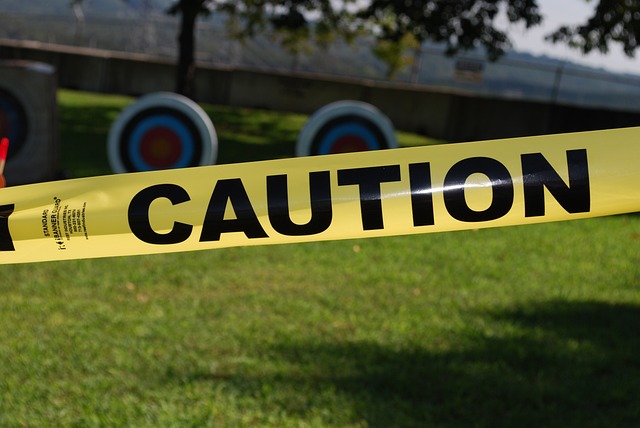
Image: Yes, you would be wise not to walk onto an archery range. Source: Image by Gaertringen from Pixabay
*As compared to all the ones on the local bookstore end cap which are all about overt sexual relationships and dating, most of them LGBTQ+. Boring. And then they wonder why teens don’t buy books …
**If you are following a genre pattern. Keep in mind, this applies to sales categories, too, so know your subgenres.


 Mad Genius Club
29 responses to “Content Warnings, Disclaimers, and Marketing – Alma T. C. Boykin”
A few months ago I ordered a book that was recommended in a blog as being hilarious and science fiction. What wasn’t mentioned was the page after page after page of very explicit sex scenes. I was actually quite annoyed. If an author is going to have that sort of content, I really would appreciate a warning, particularly if it is going to be a significant amount of the content. Having to read through all of that to get back to the plot was tedious.
Yeah, arguably reviewers ought to address that, although I’ve been the one telling people, “oh, this one is unreservedly awesome” when I hadn’t read/watched something in a while, and had mentally blocked out the Jewish moneylender in The Grand Sophie or the priest getting guillotined in Revenge of Frankenstein, or something else people might have wanted to know about.
On Amazon, I’ve found filtering to two star and one star reviews the best way of finding out if a book leans into content that isn’t my thing.
Well, I didn’t read the reviews, I just went off of a strong recommendation from another blog. When someone whose writing I enjoy recommends a book, I expect it to be at least good. Oops.
yeah, I’m agreeing with you that the blogger should have mentioned it.
What you want to see in a book can vary quite a bit from another person.
I actually don’t try anyone new that isn’t in Kindle Unlimited. Had one just this last weekend (from Sarah’s blog) that might have had an interesting plot – but the writer not only couldn’t hold to one time tense – they couldn’t even figure out whether to write in first, second, or third person! Not even one chapter in, and I replaced it.
That is a good idea. Unfortunately, I don’t have a Kindle, but getting one is becoming more tempting every day.
Well, if you do get one – this is usually the month for it.
You don’t necessarily have to have a Kindle device to read Kindle books. There’s an app, for phones and other devices such as iPads. You can read in Kindle cloud on a desktop or laptop, too. I’ve done the latter quite a bit. I can increase the screen size without increasing the font size, and go back and forth between book and chat screen or other web page more easily.
Um, actually, I do need to buy a Kindle to read the books. I have discovered through trying that I can’t read on a backlit screen for any length of time. I am hoping that an e-ink display will be different and more successful, but the uncertainty is why I haven’t bought one yet. Also, my vision is starting to fail, I can’t work on my computer or tablet in a dark room.
Ah, in that case you’ll definitely want a Paperwhite or an Oasis,not a Fire. Something that’s specifically just for reading books, not all the other stuff. Though Scribes also let you annotate and take notes.
I have found the Paperwhite to be a bit small. It feels flimsy in my hands, but that might change if it were in a case. I recommend paying attention to the dimensions if that’s a concern for you.
In general I have definitely found e-ink easier on the eyes, but if you have neck problems you might want to find a stand or something similar that will allow you to elevate it or set it down but still keep it at good reading level.
I’ve actually got an Amazon Fire. It’s fairly easy to get the Google Play store installed on it so it functions as an ordinary Android tablet. I mainly use it for watching videos on Bitchute, YouTube & Prime Video. I would not like to try reading on it. I’m considering a Kindle Scribe, just haven’t bought it yet.
I have a first generation Paperwhite, in a case. It feels good in my hands, and I like the matte screen and e-ink. I don’t know anything about newer versions.
Some are clearly bragging.
This may explain some books and RPG supplements I’ve seen online where the list of ‘potential trigger warnings’ is longer than the actual story. Or the way I’ve read AD&D and other TSR books from, especially, 1st and 2nd edition described. You can just imagine the writers of the warnings and their intended audience getting the vapors just thinking about these nasty people who aren’t bothered by the book.
I buried myself in SFF from the age of 10 on up, and since I write in that genre for adults, I do try to keep that in mind. (I remember my mother’s horrified look when she realized I had been reading her James Bond collection at that age, but none of that age-inappropriate stuff bothered me.)
There may be brutal physical accident or violence in my books, and there may be implied sex, but I try not to be gratuitous about the violence or the sex, and the sex is romantic not explicit. The lessons to be learned are about toughness, persistence, doing the right thing, cleverness, loyalty, kindness, protectiveness, daring, and so forth — I’m not interested in providing an instruction manual for putting tab A into slot B. When I tell a parent that their young teen can read my books, I mean it, based on my own experience.
There’s a legitimate place for hardcore violence and sex, but it’s not my books.
As a writer, however, what am I supposed to signal? The word “clean” is part of the Romance vocabulary, not SFF. Plus, the SFF genre really doesn’t care about the notion, other than the Paranormal sub-genre, and for them, the more and kinkier sex the better.
As a reader, if I see books bragging about sex, I usually give them a pass. That’s an indicator to me that their chief focus is not on personality qualities I admire.
Eating dinner… Visiting the head… Sex… Pretty much all the same to me – if they advance the plot, develop a character or characters, or add life to the world building – fine. Otherwise, just annoying filler.
Heh. Cover copy is all about getting noticed, but getting noticed for the wrong reasons is bad.
Last week, I noped a book I might normally be interested in, because the author was explicitly likened to PTerry in the “X meets Y”elevator pitch.
The second time it came to my attention, I thought I might have been hasty, and read the blurb. There was absolutely no trace of whimsy. No humor was present, but I could see where the described story invited satire and biting sarcasm. (Which is fine, but if you conflate Jonathan Swift with Ogden Nash, your judgement is open to question)
Then I did about thirty seconds of research to find he was a publisher’s darling, with a track record of snottily attacking strawmen.
So judgement confirmed, I guess?
I used to have warnings on the Jaiya books that amounted to: “These are somewhat scarier and more violent than most sweet romances.” I took them off somewhere along the way.
I suspect a lot of “to warn or not to warn” comes with genre.
This, very much.
I notice a lot of romance is comfort reading— that’s why the “shocking twist” habits are not just a bad idea, but are active betrayal of the readers, at their most vulnerable.
NEVER betray your readers, but especially not for style points.
When there’s a lot of variety inside of a genre, then the ad copy comes in to play to set reasonable expectations– which means that folks can be tolerant about an author having a very wide variety in what they write, because they aren’t forced to wade through everything in order to find out what is in it.
The more under stress folks are, the more they’re going to go I Am Not Going To Bother, and unless you’ve got a captive audience, they flat won’t bother even reading your captions next time.
A captive audience– such as tradpub– is also the situation where even if folks flatly hate where a genre is going, they have a decent idea of what they’re being offered. They can take it or leave it based on very simple signaling. (As we’re all familiar with, from the falling book sales of tradpub, folks are mostly leaving it.)
Freedom to tell different stories comes with the price of having to find a way to tell the folks what kind of story you’re telling.
” It features slow-burn, enemies-to-lovers troupes and may have triggers of love-hate themes, sexual scenes, references to sexual trauma, violence, and jealous/possessive themes”
All of this reminds me of how fanfiction is tagged. I’ve seen similar tags and warnings on AO3 and I wonder if there a crossover effect.
This stuff first started showing up on my radar in the mid-00s, and it seemed like a fanfic thing that college students then “convinced” their professors to start using.
I never thought of it that way, but you’re right. All that paragraph is missing is a bit at the end saying, “Harry/Draco. Pls Read + Review.”
The “pls read + review” is the bit at the end that asks you to rate it on Amazon, because authors live or die off ratings.
I know I’ve heard authors and readers both bemoan that Amazon *doesn’t* have AO3’s sorting system– both for accurately finding tags, and accurately avoiding them.
Instead of the “you searched for Exact Title and Author Last Name. Let me give you fifteen other books that have NOTHING in common with either, and maybe the book in the bottom or on the second page.”
(why yes, I am a little tired of getting pages of yaoi suggestions because I read a modern comedy fantasy romance with *one* American-Asian love interest and zero pretty boy action)
I’m glad Amazon.de hasn’t gotten that far off the rails, yet. (I don’t always know 100% the right German search terms, but my odds are better there than on the main site.)
And yes, if I am looking for “Evens, Millwrights and Millers,” I don’t want 35 romance books by people named Mills, Miller, or Evens!
Interesting, and not something I’d noticed, but I’m not getting ‘off in the genre weeds’ so to speak.
With some of the “warnings”, especially about “sexual content”, I think some of it is “Banned In Boston” stuff.
IE: “Prudes won’t like this” so people who “don’t want to be seen as prudes” will purchase them.
Note, I’ve read via KU some of those things and they weren’t worth the money I didn’t spend. 😉
And given the sort of praise given certain works, that can be an even better warning of what to expect. “Brave!” “How daring!” “Confronts [insert social issue of choice]!” Rarely are the words ‘fun’ or ‘the author actually knows how to write’ used.
Critical acclaim has been a consistent red flag for as long as I’ve been aware of reviews (ca 1990).