I’ve confessed before that I not only managed to write 14 novels before I understood foreshadowing, but I managed to have three of those published, too.
Now don’t take this to mean that I never foreshadowed. A lot of foreshadowing is subconscious and comes from knowing what your story is going to be. Most of us don’t spend the first chapter stalking about a guy named Bob only to realize in chapter two that Bob isn’t even in the book, and it’s all about Joe. Or if we do, we have the decency to go back and edit that stuff out.
So, what am I talking about, precisely?
Well, you see, I thought that every plot point was supposed to be SURPRISING.
What I mean by this is that I never mentioned the gun on the mantel until someone shot you in the face. But more importantly, I didn’t mention elements of the world building which were important for the protagonist to survive, thrive or shoot someone in the face down the line.
(What’s with shooting people in the face, Sarah? I’m low on coffee. Is all.)
So, take my big, neverending Horse and Bull saga. No, you never read it, because one of my acts of insanity, having learned that “publishers are hesitant to buy books longer than 100k words” — which btw, was not true. If you’re in a writers’ group and all or most of you are not steady-working writers, most of what you hear about what is going on in the industry is grade A bullshit — was to cram what should be a 600k word saga into 100k words. Not that the earlier versions are a ton more coherent. In many ways it was the world in which I figured out what I needed to do to write an effective, unusual fantasy by doing everything wrong. Twice. In innovative ways.
The story is set in what can only be called “Sword, Sandal and Magic” world. The magic comes from symbiotes that might very well be aliens. And they are fed on animal blood sacrifice. The society itself is pre-Micenian with vague Greekish touches, and their principal deities are Horse (life) and Bull (death).
This is all fine — probably. It always worries me people will decide to try it on as a real religion, which would be tragic — except that it’s a complex world and very different from fantasies out there, certainly in the mid 90s.
Which brings us to the problem with not understanding foreshadowing. Even though it won a local writing contest, the judge herself told me that at first she thought these people were crazy to be sacrificing a bull, and that they didn’t seem like maniacs. Meaning I opened with a very realistic killing a bull on an altar, with no hint there was anything supernatural going on. Or you know, that it was fantasy in any way. Her only clue was the fact that I’d entered the story under the fantasy and science fiction section.
But more importantly, I never told people about what would happen if someone capable of hosting one of this magical symbiotes exceeded his power/ability to feed it: people become wraiths, themselves zombies dangerous to everyone bearing a symbiote, upon which they feed.
I thought this was really cool, because the protagonist’s father who is believed dead (well, in a way he is) has become one of these. And at a pivotal moment in the story the protagonist meets him and gets from him a needed artifact.
Yeah, it’s a shocking scene when he meets his father. You know what robs it of shock? The fact we have absolutely clue zero what a wraith is in this context.
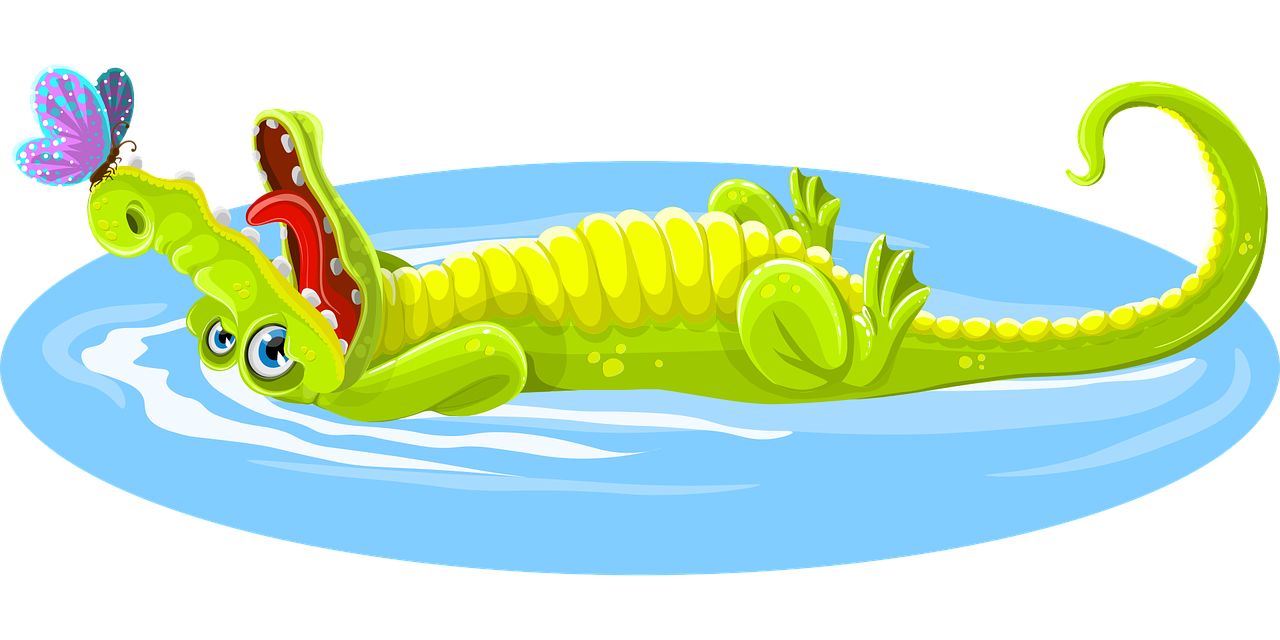
So when he meets his father it’s…. whatever. Whether if I had laid in earlier in the story, by the time the clues are dropped that his dad might still be out there (I didn’t do that either) there would be dread and hope building at the back of the reader’s mind, so the surprise would land fully, instead of being basically a crocodile of surprise.
And you know exactly what I mean by the crocodile of surprise.
Think about it, it’s a beautiful day, you’re walking through the forest, and suddenly a crocodile falls on you. It’s unpleasant, but it comes literally out of nowhere. Now if you put in that crocodiles live in trees, while your character is walking in the forest there’s tension building.
Or put it in another way: your character comes into her room, takes off her clothes, takes a shower, puts on new clothes. Suddenly, a man jumps out of the side of the closet and attacks her.
Scary? Maybe. But again it comes out of nowhere. Now show the reader the man is in the closet while she’s doing all that. It’s still a surprise for her, but for the reader, it’s everything finally coming through and it has full emotional impact.
“But I want it to be a surprise.” It will be, if you do it right. Depending on what you’re doing, of course, if it’s a thriller, we want to know the psycho in the closet, and that he’s killed before, and that he’s drooling at this girl changing clothes. The surprise will be when she escapes him.
But if it’s not a thriller, and you want him jumping out to be a surprise, you could have her think she feels like she’s being watched. Or remembering when her little cousin jumped at her from the closet. That is enough for us to be slightly apprehensive and heighten the shock when the hidden criminal jumps out.
Thing is, you know, the world we’re reading is not the real world. We know that. We have to know what is possible about this world.
I’m not an utter fanatic about “if the gun is there, it has to go off.” It might no be that type of book, and the gun might be there to show us there is a hidden danger.
Everything you do from the title, to the cover, to the first few pages, everything is foreshadowing, and tells us what can happen in this book. However, big movements need stronger foreshadowing. We need to know the limits and outline of the tech and or magic. We need to know what we are reading, in a way, to enjoy it fully.
Yes, there will be exercises for this too, but give me a few days. I should catch on the critiques today. Honestly, this year has been fun. Nothing catastrophic, but one damn thing after another.
However, if I don’t do anything else in this series but teach you not to drop the crocodile of surprise on your readers, I’ll consider it successful. And it will increase your success greatly.


 Mad Genius Club
18 responses to “How to write your novel -The Crocodile of Surprise by Sarah A. Hoyt”
Of course, if your crocodile swallowed a clock, you might hear the “tick-tock” before you see the crocodile. [Crazy Grin]
Obligatory song link: https://www.youtube.com/watch?v=ZGkdcpTY1QI
Right. And that’s ….. sings in operatic voice FORESHADOWING.
Or foreticking. Whichever.
I’m thinking about what you said earlier as far as “making things worse for your characters” and not connecting the escalating series of bad things, and how that would tie in with no foreshadowing. I think even discovery writers spend a lot of time thinking about what comes next and overall planning of “how things work”, enough so that the story is written in their heads before they sit don to type it. Which means they are more often able to foreshadow than they may think. Or it might be that the initial work done and down leads them to the next logical step, so it LOOKS like they had foreshadowed.
I think it’s also about the “scene and sequel” stuff, too. How do you foreshadow without data dumping? That is the key.
I think it’s more of a matter of the subconscious being so trained in the form of not just the generalized stories, but of the genres that one grew up reading. When the story’s really pouring out, it just comes out in that form.
Every once in a while, I’ll be dissatisfied with a story, and mapping it out against either the Hero’s Journey or “the big W” I can see why I’m dissatisfied. Some time I have to go all the way back to “Which of the basic six story types is this, anyway?” Then kick it into shape.
Yep, the tools are great for getting you out of stuck and/or editing
Yes, and if not we fix it afterwards.
Um…. memories, dreams, dropped mentions in conversations. Same as in real life.
The usual suspects (paraphrased):
Alfred Hitchcock on suspense: If two people are talking in a cafe, and then a bomb goes off, you have boredom followed by confusion. But if you show the bomb under the table before the conversation begins, you have increasing tension as we sit there listening to the mundane conversation, wondering when the bomb is going to go off.
Internet wag: “It’s like calling Dominos and ordering a large pepperoni, and they deliver a newspaper. Sure it was a surprise, but it doesn’t make any sense, and you don’t want to order from them again.”
Nice!
I’m writing a story that can’t really work with foreshadowing. The main character is a complete mystery, even to herself. The reader follows along as she and the people around her try to figure out who she is, where she came from, and why she is here. From time to time there will be a clue — her odd reaction to something, an exotic ability or skill revealed in some mundane context, a question about something most folks would consider obvious.
A few chapters from now an unexpected visitor will just show up and ring the doorbell, bringing a lot of information and straightening out a few oddities that didn’t seem to make sense. There is no foreshadowing of Nobuko’s arrival, either:
Ding-dong. The doorbell rang. Daniel was closest, and opened the inside door. A middle-aged Oriental woman stood on the porch wearing a yellow kimono with a flower pattern, holding a beige suitcase in her left hand. She seemed nervous but determined, looked on him with a hint of disapproval and said something. He picked out ‘sora’, the Japanese word for ‘sky’.
Ah, but you did foreshadow it. You hint that surprising things are coming her way because she does not have any memory.
The clues are the foreshadowing.
This made me laugh. Thank you–I needed that. Did you see the video I posted of the crocodiles bursting out of the sidewalk (somewhere in southeast Asia).
No
I think I’m just waiting to see if my Opening Pages can turn our kind hostess’ red pen into a ravenous hyena over its black -and-white zebra-like carcass…
lol. Tomorrow. Today I had an incident. So, installment chapters are late too. I’m getting tired of this.
Take what time you need, ma’am.
I’ve gotten much better at foreshadowing since I initially started writing my series. It helps that I sat on them for 10 years and was able to edit/completely re-write them with fresh eyes and an actual goal in mind.