
I realized the other day that gentle teasing from a fan about the resolution of a short story was actually very useful. I’d written the short for an anthology, and there were constraints on length. In order to not go too far over – I wound up a couple of hundred words long as it was – I had clipped the end. This, on my re-read, was a bit too abrupt. Yes, I’d answered the main question. I had not given the secondary consequence enough page time (if at all, mentioning it once isn’t enough, rule of thumb is three times) and I hadn’t finished up with my characters at all.
So. This week I went back and gave the story a proper ending, since I’ll be putting it out as a standalone this coming week or so. I’m hard at work on the next story in the world, which will be a novella I’m hoping to publish for Halloween.
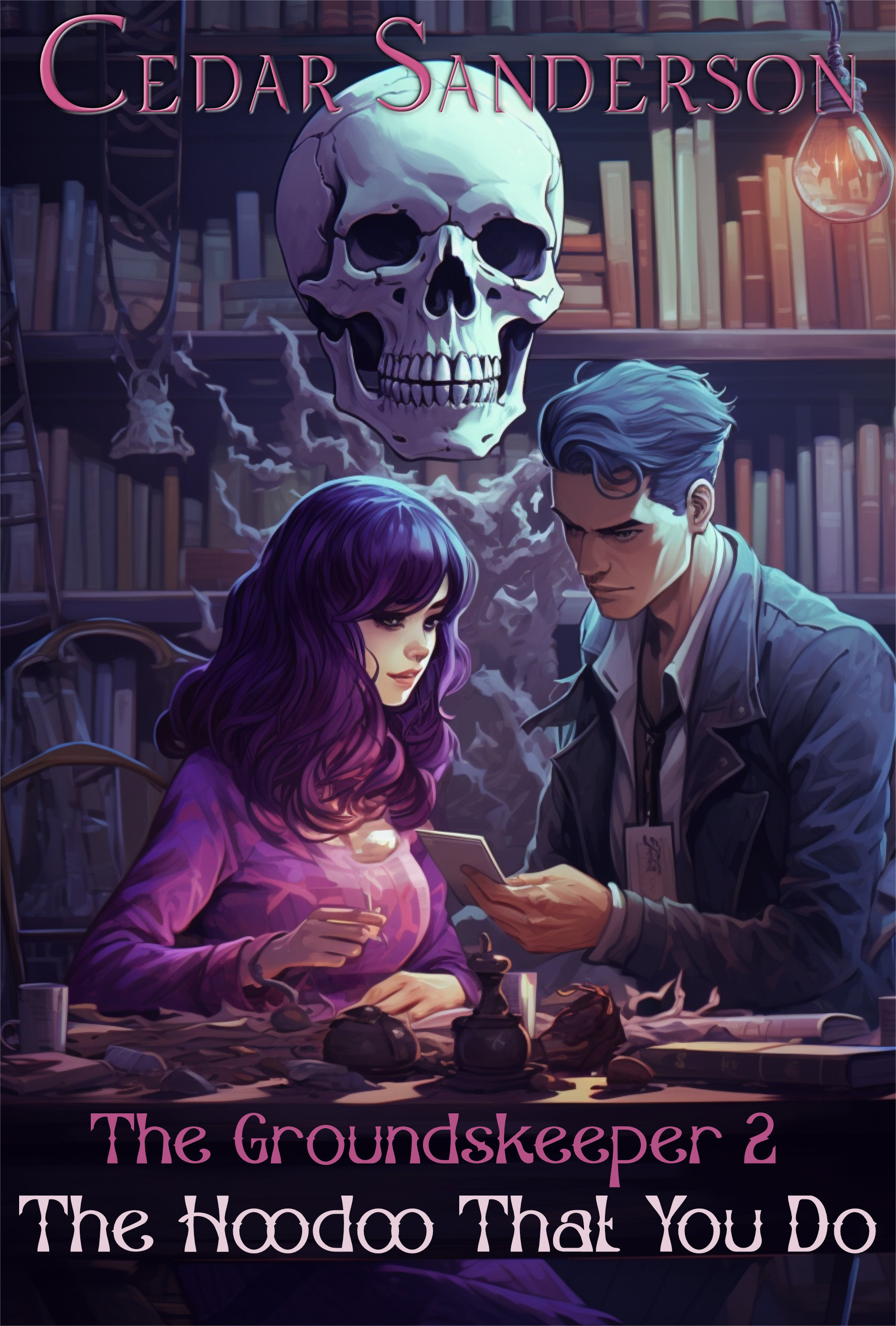
Writing a short story, and perhaps especially a short in an existing world when the audience is going to be readers who don’t know your previous work, let alone that particular universe in your head, has special challenges. I spent more time at the beginning of this tale introducing characters and setting up motivations than I might have, were it not being written for an anthology. I almost think it’s easier and cleaner to write de novo shorts for anthologies, but… I do like a challenge, and I really like the idea of using the anthology shorts as marketing vehicles for my other work. Get paid twice. Why yes, I am a mercenary wench.
How to avoid this problem in the future? I can make sure I do a little more internal foreshadowing. Even in a short, this can be inserted without bloating your wordcount, a couple of brief mentions won’t add more than a sentence or three. I can’t really trim out the introduction for new audience. Throwing readers into the deep end (which isn’t the same as an in media res beginning) is likely to have them throwing themselves right back out. Yoink… yeet!
Short stories are fun to craft. You need a beginning, a middle, and an end. I find the boggy middle of a novel that gets me down is much less of a problem in a short, it never really has time to sink. Ends are the hardest for me in shorts. Making sure I’ve wrapped up the central problem, without precipitating another problem for my characters, which needs to be resolved before it’s really the end, which creates three more problems and oh no! I’m writing a novel now. There will always be some loose ends. That’s life. Not too many, though, or your readers will be unhappy. At least in a series, the readers have some hope that the loose ends will be picked up again and woven into the threads of the new story.
Which is how I found out I’d done that, when I was releasing snippets to my paid Substack subscribers and kept getting asked the same question of ‘what happened…’ so I finally went back, facepalmed mightily, and then wrote what the reader wanted. Perks of having alpha, beta, and omega readers! Thanks, Drak.



10 responses to “Cutting it Short”
My in-world short stories always migrate to at least 10K words. Oops. My stand-alones and non-main-series stories seem to wander between 3K (almost too short) and 9K. Part of it is my writing style, which tends to be “slow” compared to a lot of modern authors.
I should probably spend more time asking myself “is this bit really necessary? Does it advance the story?” and then trim more (for in-world stories.)
If you don’t have a wordcount limit, I’d say let the story be where it wants. Especially if it fits your authorial voice. (Disclaimer: I really like your stuff so ‘more’ is always good for me-the-reader)
Very true. One of the wonders of self-pub is that I can bring out my novellas. Time was when there was an Unpublishable Void between 25,000 and 50,000 words where no one would publish you. (And markets were scarce on the ground as you approached those limits from below or above.)
My metier has slowly elongated. By the time I wrote novels, shorts no longer came naturally to me.
Delighted to hear about more from this story-world!
It reminds me of a sort of pet peeve addressed to a broader audience here… (apologies for the long comment).
I represent the kind of fan who is a “completist” — if something captures my attention, I want it all — every story, novella, novel, sub-series. etc. And I want to be able to identify the proper in-world sequence of “story” components, so that (as much as possible) I can read them in in-world order. I care more about that than following sub-threads focused on this character or that one. (I’ll binge read all of it, so that the different sub-threads retain integrity in my memory even if they’re merged with other sub-threads in story-world order.)
I do realize this clashes with the undisputed and perfectly understandable desire of (living) authors to write what they want in whatever sequence suits them, as frequently or infrequently as may be convenient.
So — how can an author make things more… enticing of immediate sale upon publication to a (rigid) reader like me? (Rather than something I put off buying until more of the story world comes out so I can read it in bigger chunks…)
Clarity is the important factor. For a “completed, or close enough” story world, story order is a very important component. For novels, that’s easy — a series label and a sequence within the series gets it done (complete with “number 2.5” sandwiched in-between previously published “2” and “3”, as necessary).
For an in-progress story world, especially one in which the published formats may range in length from novels to standalone stories/collections to published-in-anthologies-of-several-authors (you know who you are, MGC readers), a guide of some sort is essential. The best is a sequence for the story world as a whole (one that allows the use of decimals like above for afterthought insertions). If that can’t be done, then hints in the blurb along the lines of “this story follows X and precedes Y” are a lot better than nothing. If the “look inside” for your publications permits, you can even list a series order there that accommodates anthology-only entries.
I surely represent only one thin group of buyers, but (using you as an example) I picked up the first 2 of this series (Raking up the Dead, Haunted Library 1) from hearing about them here. I don’t read many shorts, but I wanted more, and even readers like me whose attention you catch almost by accident (for this story-world) may need help to be buyers. I was hooked (thanks!), and will keep buying this particular story-world indefinitely, but finding the entries going forward, esp. since some may be in anthologies, will clearly be a challenge, if I don’t happen to see the news. (The easy answer is “read my newsletter”, but with my book-buying habit that would drown me.) So think of this as part of a belt-and-suspenders concept for a broader audience here that should be a no-brainer trivial part of any publication in a story-world, in case someone stumbles across your work.
The repeatedly re-ordered listings of the Liaden series multi-thread story-world is a maddening cautionary tale. Writers tend to write long series from in-story-world sequence, but afterthoughts often create earlier-point entries, or entries originally published in anthologies may be (modified and) republished, and nothing wrong with that, as long as buyers can figure out where everything fits. Shouldn’t take a newsletter subscription to suss out a new-to-the-reader author’s work.
Amazon does offer a way to track this now, as I just updated the cover art for the first Groundskeeper book, and incidentally set up the series as well. You can choose whether the book you’re adding to a series is a ‘major’ or a ‘minor’ work, and number them as such. I think that’s a very nice way to do it.
And for the other authors reading, take advantage of the Amazon series set-up, it’s so easy for a reader to find other books in the series, or best yet for an author, buy all of them in one click!
I missed the major/minor bit (not something I use for my own stuff — almost all long form) — thanks!
As an author, it also pays to go back every so often on older series and make sure the series links still work. I had a reader contact me that Shikhari books 5 and 6 were not appearing, even though they are clearly labeled as part of the series, and I had entered them. Apparently, some time back, when Amazon reworked a few things, the link failed/broke/got cut. I reinstated them, and checked everything else while I was in there.
Yay! More Groundskeeper goodness soon!
The research ghost is a really interesting character (but aren’t they all?). Looking forward to seeing more.
I’ve resisted allowing myself to depart from my major task – locking in the plot points in the structure of my mainstream literary trilogy’s final volume (which will be as fat as its predecessors) – because I’m convinced it’s procrastinating (brain-fog from chronic illness is the real cause, but I have more control over the other), but maybe that’s JUST what I need to blow the cobwebs out.
I have a prequel short story out for one of the three main characters – which took me six months to write (ergo the trepidation) before I had finished writing the first volume of the trilogy – but not for the others.
Thanks for the idea – maybe it would help, either to get me writing instead of plotting, or into plotting more solidly.
Or, the Fear, it would get me stuck in TWO places. Hmmm.