Last week I asked the Book Club with Spikes (on Discord) for some help coming up with topics I could write about here. I’ve been sitting in a dry well of creativity and inspiration for some time, looking up at the light falling into the vertical tunnel, and knowing it’s not getting any closer. I’m going to have to climb up there and get it myself. Just… very hard to move on it when I’m spending all of my energy in other places.
I was given about a dozen suggestions, and if you have any topics to suggest, please leave them in the comments. Some of the suggestions will take some time to research properly, but there was one I felt comfortable writing about today.
“On ‘small’ stories? Characters don’t save the world, just grow somehow through everyday life.”

This isn’t necessarily slice-of-life, although I can argue that there is a place for stories like that, which don’t necessarily have a plot, so much as a comfortable stroll with a friend down a warm path shaded by green leaves, stopping to admire mushrooms and smell flowers. There are days when a book about nothing much at all would be just about my speed.
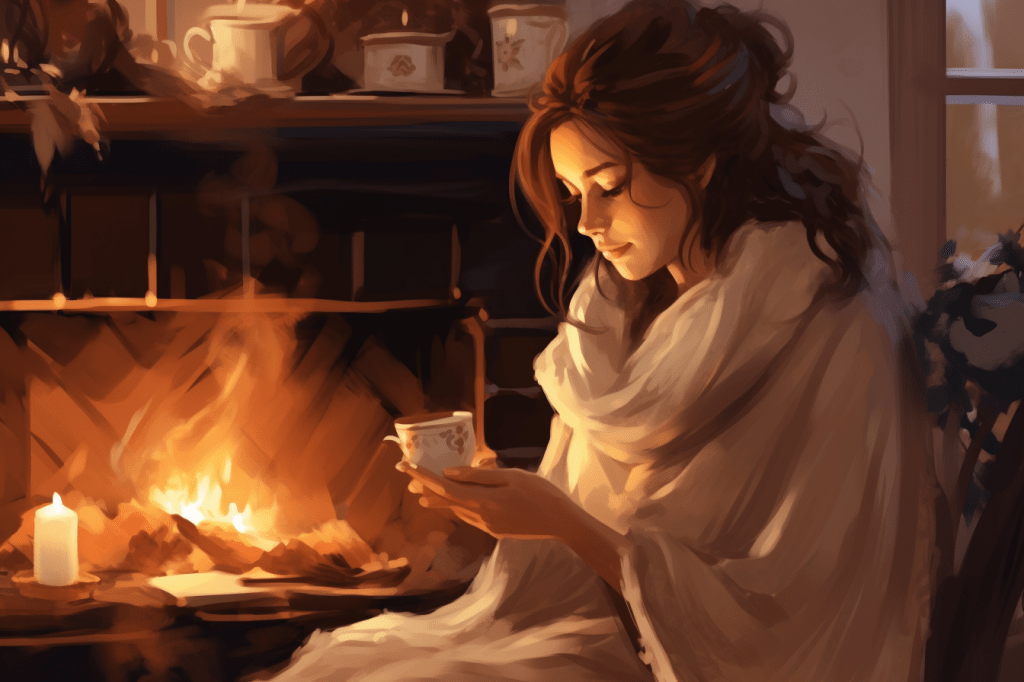
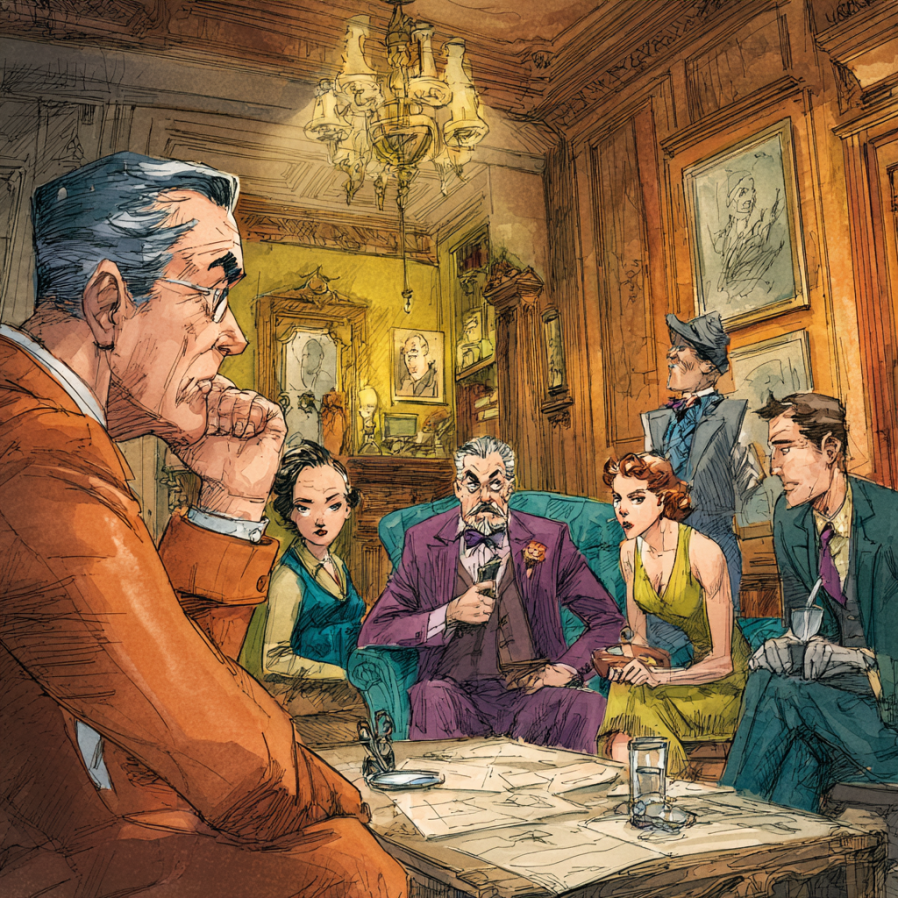
Small stories, which I have written about before, since my Tanager’s Fledglings was a small story, don’t have big dramatic stakes for the protagonists. I think my favorite examples of this are some of DE Stevenson’s light novels. Her books, for me, are like tucking a warm shawl around me, picking up a cup of cocoa, and burrowing into a nest of pillows. There is conflict in them, sure, they have full plots (the woman was a master of the small story, which is why she’s still popular decades after the books came out), but the reader isn’t twisted up with anxiety. You know things will turn out in the end, even if they don’t turn out the way the main character thought they should happen.

So what is a small story? It might be a story about a man and a woman who have just married and are still learning about one another as they grow into the fullness of their relationship. It might be about housebreaking a puppy on a spaceship while avoiding greedy bureaucrats and pirates to keep that ship from being taken away. Or it could be a mother teaching her children how to grow into mature adults, while trying to keep herself from losing her sense of humor and proportion in the meantime.
Core elements include a theme of growth, sure, but there’s no great tragedies here. Shakespeare’s Much Ado About Nothing, or Midsummer’s Night would both be small stories. However, a small story need not be a comedy, even if it does contain humorous elements.

Nor does the small story have to be unimportant. Stories that model healthy maturity and learning are important, as we know readers absorb fiction and use it in their own lives. A dragon, bereft of his hoard through the machinations of some knight, must learn to budget. A cabin boy on a (space)ship learns the value of hard work and good coffee. A girl whose mother was kidnapped by faeries learns how to cook good food so her father has the strength to go rescue his wife. That last is a story nestled inside a story, and it’s about emphasis. If you emphasize the girl working at becoming a able housekeeper and help, the shell of tragedy rests lightly around it, with a climax of her being fit to nurse her mother back to health at the end of the story, ending with a cozy family joyful in one another’s presence ’round the fireplace.
One thing this topic got me wondering about, as we head further and further into an economic downturn, is what stories were popular during the Great Depression. Not what the literati think ought to be the stories of the era (likely depressing, natch) but the actual ones that people consumed for models of hope and happiness while they survived on less and less. I think we need more tales like that, about now.
While I’m here and have your attention, there’s a small story I wrote that came out in Tales from the Occupation last week. North Way, which is set in the Fae Wars universe, is a family story. For other stories that are bound together by one small furry purry package, you’ll want to check out Moggies in Space (I don’t have a story in it, but that’s my cover design!).
So what are your favorite small stories? What small story would you like to write, and how would you start it? And please, if you have topic suggestions, I’d like to hear them. It’s going to be a few weeks at least before I’m back out of the hole.

 Mad Genius Club
38 responses to “Small Stories”
My first thought was that we need to rework the quote from Stanislavsky “ There are no small roles, only small actors.” Maybe there are no small stories, only small authors? I mean, in some sense, it’s not that the story is small, it’s the way we choose to tell it. Haiku, flash, short story, novel, epic… sometimes they are all telling a similar story, but the complications and confusions involved change. And now I should settle back and have a second thought, I suppose…
Hmm. I hadn’t thought of it, but haiku are one of the smallest stories of all.
Yellow leaf drifts down
Light flashes on rippling stream
Fog slips through trees
They just catch a moment in time, or a single thought….
The thing about haiku (for me, as a story maker) is that they are at the extreme end of the “author writes, reader does all the work” balance. They can evoke the “oh, wow!” aperçu experience of ’60s druggies, but they are not about universal truths — they are about inner associations, and will thus be different for everyone. I would use the equivalent technique within a story to hook the reader into it, but not to tell the story — there is no story in (most) haiku, just a frozen moment of perception/exploration.
Contrast with a limerick, which usually does tell a story, instead of evoking a perception. Limericks are in some ways great miniatures to study for distilled story telling.
“A smiling young lady from Niger
Rode out on the back of a tiger.
They returned from the ride …” et cetera.
Oh, now we need a limerick challenge.
The hardest limerick challenge I stumbled onto was William the Coroner’s “do a clean, PG limerick that starts with ‘There was an old man from Nantucket’.”
The old man made a lot of trips to Phuket, Thailand, if memory serves.
So of course that made me think of one!
There was an old man from Nantucket
picking up clams in a bucket.
He got stuck in the mud,
said, “What a dud!”
Out to sea drifted the bucket.
Oh man, that brings back memories. He was truly good folks, gone way too soon!
He was, on both counts.
There was a young man
Of Cork who got limericks
And haikus confused
A clear river flowing with leaves
Runs through a red forest of trees
Such a vision of maple
Is a boon if you’re able
To sit still and attain inner peace
As it happens, I just published a book of short fiction in which I explore that theme. “Small worlds need saving, too.”
Cool!
Then there’s a question of range. Save the kingdom? Prevent harm that could not have destroyed the kingdom, but would have been a real bother? A murder?
Does a heroine finding a more secure place in the treachery of a royal court, or a heroine healing an ambassador and consequently finding true love with his nephew? What if the ambassador then affected who was the heir to the childless queen?
There’s a scale of small to large. Epic fantasy is too prone to save the world. It makes the world look flimsy.
Emma. She never leaves her area, never travels or saves the world, but she does her best to affect the lives of those around her and learns that they get a say in that, too.
Now I kind of want to do an Emma on a starship. Perhaps a colony ship where she’s trying to matchmake and it takes her a bit to realize her own match has been there the whole time.
Or a passenger liner, traveling to a new planet where she’s convinced the True Mate is waiting, but really he was along for the ride with her.
Slightly OT, but responding to the notion of small stories as comfort reading: if you like D. E. Stevenson, you might try Angela Thirkell, Margery Sharp, E. F. Benson’s Lucia books, Ann Bridge’s Illyrian Spring, Stella Gibbons’ Cold Comfort Farm, Winifred Watson’s Miss Pettigrew Lives for a Day…
I do enjoy nice quiet English comedies of manners that turn on matters as supremely unimportant as how to get rid of an extremely annoying house guest or whether Lucia will finally be exposed as unable to speak Italian. I can never decide whether the books published before WWII are more relaxing (because the authors had no idea what was about to hit them) or more stressful than the later ones (because I know what’s about to happen to these nice characters).
Oh1 Margery Sharp wrote the Rescuers books! I adored those when I found them as a girl. Soft little Miss Bianca…
I bet you’d enjoy some of her books for adults, such as The Flowering Thorn and The Eye of Love.
I’ve scooped up a couple to try. And may get copies of Rescuers for nostalgia.
Bought Angela Thirkell’s Wild Strawberries and read it last night. Just lovely. I giggled through several bits – and the end made me laugh aloud before I settled into sleep, content with a happy ending. Thank you!
Anent the Moggies reference, I just finished Kitty Cat Kill Sat which is the farthest thing from a Small Story… except, it’s not. It manages to put a whole lot of Small Story into an overwhelmingly grand uber-context.
(The work is not without flaw, esp. in sticking the ending premise logically, but it certainly carries the reader along in a seductive manner with unending inventiveness. Recommended.)
I don’t know what to do about works that are (as far as I can tell, since it’s not my thing) trickling out of the LitRPG world or sensibility. They are long on character, to my mind, but short on story structure — very episodic, which I find frustrating. I like big story arcs and some of these newer shorts (while fine in themselves) are, perhaps, too much like real life, which is too long for overall structure.
I find “STORY” in the traditional sense to require a certain amount of “meat” to be satisfying. Otherwise, it’s just an endless platter of tidbits which make my teeth ache. Of course, YMMV.
Another good author of small stories was Nevil Shute. His “Trustee From the Toolroom” is one of my favorites, and I think it’s a good example. No major stakes, no grand adventures, just a kindly grandfather doing his best to retrieve his grand-daughter’s inheritance (and avoid the tax-man) after her parents died.
I’ve read a number of his, and really like them.
And a number of pinpricks for the postwar British monetary controls.
I think everything I write, fanfic or original, are small stories.
There is nothing wrong with that, you know.
Thanks. Understood. Just an interesting observation.
I’m a little surprised, given that you used anime-style illustrations, that you didn’t use any examples from, say, Studio Ghibli.
While in animation you can do anything, and thus do big, gigantic action-packed stories (which Ghibli has done many times, from Nausicaa of the Valley of the Wind to Mononoke Hime), they also made several beautiful gems that are “small” stories.
My Neighbor Totoro seems to be about two young sisters moving into a new house with their father, though as the story goes on, it really becomes about the possibility of losing their mother. Yes, there are magical creatures and the glorious CatBus, but even with those, the story is small, while the emotions are huge.
Only Yesterday is about a professional woman in her 30s going on vacation to the small town where she grew up, and reconsidering the memories of her ten year old self.
Whisper of the Heart is about a teenage girl deciding to become a writer, and putting aside her studies to try writing her first story, while helping her librarian father switch his library over from a card system to an electronic cataloging system.
The stories are all small, but the emotions are big. And they work beautifully.
I was generating unique images for the post, so I didn’t want to grab Ghibli images and add those to the mix of my work. But yes, most of the stories coming out of that studio fit beautifully into this sort of storytelling.
I didn’t mean you should grab Ghibli images, only that the anime-style made me think you had some obvious examples that would work with the images you did have.
Oh, yes! I need to watch more Ghibli movies.
Another set of Blu Rays I need to acquire.
I think I’m writing a small story. Overall, heroine is trying to run away from a cult, but it’s a tiny and unimportant cult. If I try to follow advice about causing her serious trouble, my writing shuts down. There are things my brain simply won’t write about. She’s been stuck in a hayloft for three years because I keep changing what happened earlier in the day. My latest attempt to move on includes someone else swapping two rams who mostly look alike. One of them is fertile and one is not. And there are ways to tell just by looking at them. Writing about that is giving me the giggles but I’m not sure it’s turning out a workable story.
What wouldn’t happen next?
Also, Noel Streatfeild, writing as Susan Scarlett, has some very small comfort food stories, but one of them, The Man in the Dark, has a memorable and hugely funny American character, a hard-boiled 17-year old girl named Shirley.
I find it quite interesting to see how writers that I admire think about their craft.
On the topic of stories, I find I do have an opinion. I think some times in the real world call out for particular kinds of stories. I originally noticed this issue in a different context years ago, when reading fiction from various Eastern European countries. The cultural assumptions built into the stories significantly changed the types of stories. I mention all this because I fear our current times in the US call out for a certain type of hero story, and perhaps even a rather grim version of those.
Regardless, thank you all (both Cedar and most of the commenters) for the amount you have enriched my life.
84, Charing Cross Road by Helene Hanff, that is a dear book with just small stories. And it seems like I’m in a epistolary reminiscence of small stories, because my mind has gone also to Daddy Long-Legs and Dear Enemy, by Jean Webster, although they might be classified as “coming of age”, specially Daddy Long-Legs.