
[— Karen Myers —]
There’s my hero at the start of each book, on a rollercoaster headed for his midpoint crisis, book after book throughout the series. No wonder he looks worried.
I wandered into a long (100K) novel 4-act structure with my first book, and it clicked just right for me. All of my novels lay out that way, and I’m not the least bit bored with the framework — it just seems to fit my stories well. (Probably means I’ve read so much in that form that it seems normal to me. Different structures may click for you.)
Of course, this means there’s going to be a midpoint crisis. I guarantee my hero has something to learn in each series entry, some way he has to be confronted with a problem that he must solve. Sometimes it’s an external event, sometimes it’s a deficiency in his own nature, sometimes it’s an outright or willful error on his part that will rebound badly and must be corrected. Whatever it is, and however he deals with it, it’s gonna hurt.
Maybe the damage is physical, maybe it’s psychological. Maybe it’s fixable, or maybe he has to learn to live with it. I’m hard on my characters, sometimes, but it’s always in the interest of growth, not punishment. They need to rise to the crises of their lives, not back away. They mustn’t fear moving forward into the unknown. Life is not for cowards, and no one gets out of here alive. To back away from that is to back away from life itself. What does not kill him makes him stronger.
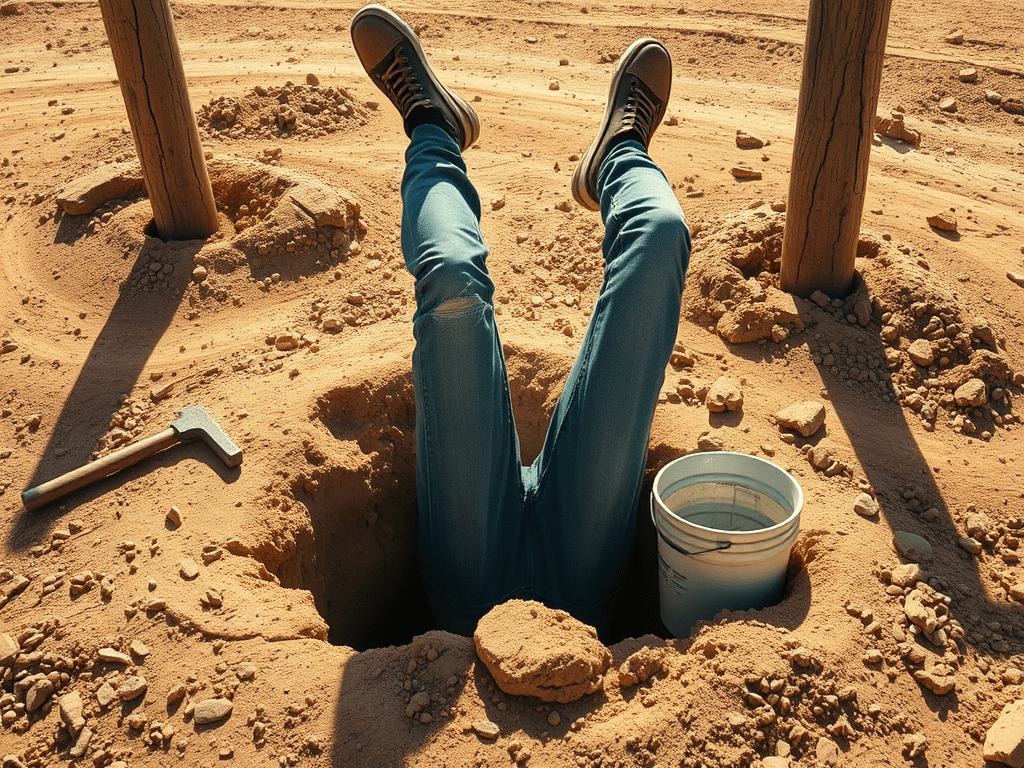
Even as I do it to him, I think (deep down) he really should be grateful — I could be putting him into fixes like this one instead:

Are you kind to your heroes? Is it all fluffy puppies and wish-fulfillment Romance? Or do you make your heroes (and readers) worry about surviving, struggle with choices, regret decisions, try desperately to avert disaster, and man up to get on with living and to make the best of things for themselves and those they are responsible for?
What are some of the hard choices you’ve forced upon your heroes? How did they react? What did your readers think?

 Mad Genius Club
7 responses to “The 4-Act Rollercoaster”
I use plot skeletons sometimes to force a midpoint. Inciting Incidents and Climaxes I can just ensure, but Midpoints are fun.
“Are you kind to your heroes? Is it all fluffy puppies and wish-fulfillment Romance?”
My characters are very determined to do nothing but fluffy puppies and romance 24/7. Most of them have been through the Nine Hells and deserve some time off.
Unfortunately there are world-ending threats arriving on a semi-regular basis that they must deal with. Most of the hard choices involve restraining themselves from going out and slaying the enemy wholesale. This is tough for people who have survived Hell, literal or figurative. The urge to get out there and reap heads is strong.
Sadly, they also know that killing the enemy and breaking their stuff, while satisfying, is a solution of limited utility which leads to hard feelings and more enemies.
Finding -good- solutions in the face of horrendous provocation and dire consequence keeps them from getting bored.
*me squinting at caption to picture: Oh, it’s Italian. That explains a lot.*
I feel like Jamie Gold’s master beatsheet (a mashup of two different takes on the 3-act structure) maps fairly well to the way I write.
I’m much more interested in Book Frodo or Heston El Cid – people make the right choice without a lot of fuss, even when it is difficult, but have to deal with the fallout, than I am in people who sit around and waffle about their choices. I also tend to dislike sympathetic characters being overtly nasty to one another-I have to really bored to pull up Bath Tangle on the Kindle, for instance.
Translation of the Italian:
“In the middle of the Indian forest, a man waiting for the train to stop just near the line. Suddenly, a boa attacks its victim, squeezing with its powerful coils. But then a tiger hurls itself upon the huge reptile which wraps, then, even the beast in a stranglehold. A monstrous tangle occurs, meanwhile, along comes the train. The whole tangle winds up bloody and broken by the wheels of the train.”
Achille Beltrame (1871-1945) did the cover of La Domenica del Corriere every week from its beginning in 1899 until his own death in 1945.
About: https://it-m-wikipedia-org.translate.goog/wiki/Achille_Beltrame?_x_tr_sl=it&_x_tr_tl=en&_x_tr_hl=en
Illustrations: https://www.wikiart.org/en/achille-beltrame
Cool! The headlamps on the train look like eyes…no confusion about who the apex predator is there.
That poor fellow. At least Kaa is trying to save him from Shere Khan.
David Drake left a massive impression on me. I really like to drag characters through incredibly hard things, but I also like winning to be a realistic option. I really appreciate how Drake, even when the ant agonists won, it always felt more like ‘the enemy gets a vote’ than it did any idea that trying was futile.
Oddly enough, the short I enjoyed writing the most was one where the antagonist had the major change, not really the hero. The hero endured many trials, but the antagonist broke.
I really do like a good tragic antagonist.