So, Tuesday Amanda’s post got trolled by an idiot who attracted much gleeful shredding (including yours truly’s effort – what can I say? The inner bitch needs exercise now and then). I’m not going to give the twit more credit than it deserves by naming it here: suffice to say it won’t take much of a scroll through the comments to figure out who I’m talking about. I’m not going to dissect its arguments here either. They don’t rate that much attention, and besides, they’re not coherent enough to be worth the effort.
No, what I’m going to talk about for this post is how once again literary Stockholm Syndrome has people defending people who have abused them for years.
Consider publishing contract boilerplate. A lot of it would fail, and fail miserably, to stand up in any half-way sane court. Why? Contracts that unreasonably restrict a person’s right to earn a living tend to get thrown out. Contracts with non-compete clauses for software developers have been voided on those grounds. Publisher boilerplate that says you need the house’s/editor’s/author-of-original-piece-in-shared-world-anthology’s written permission to sell anything else under your name or any other name is an unreasonable restriction of an author’s right to earn a living. I’ve seen contracts like this. I know authors who’ve had little if any success getting contracts like this changed because “that’s just boilerplate”.
Then you’ve got the standover tactics that were used for years. Every author knew that if they walked from one of these evil contracts, they’d suddenly find themselves unable to sell to any publishing house. Collusion? What’s that? An investigator who sat quietly near a group of editors at any major SF convention a few years ago would have got enough evidence to take down the entire industry just from listening to the gossip. The only reason they’ve been “safe” is that no author would risk losing their career. When your only option is doing business with the mob, you do business with the mob.
Yes, they did and do conspire to push authors out of business for no reason other than their politics. It’s quite eye-opening listening to editors discuss how they simply can’t publish someone because that person is – horror! – “conservative” (conservative in this sense means “to the right of Lenin” – trust me on this. I’ve heard the gossip, and tried to scrub my brain out afterwards). I’ve heard editors talk with pride about using their position to “enlighten” and “educate” the public, and take those icky non-PC books out of circulation even when they’re selling well.
Is it any wonder authors who weren’t among the favored developed a kind of Stockholm Syndrome over it. When there’s no transparency, when the only information an author has on how well their books are selling are numbers that come from a source with a vested interest in lying to the author about said numbers, a source that then turns around and tells the author how lucky they are the publisher is keeping them… it’s not surprising so many authors did the metaphorical equivalent of bending over for the nice jailor in the hopes he’d protect them from the nasty one. It’s almost guaranteed that if I’d managed to get a novel past the gatekeepers I’d have done the same thing.
The readers showing the same pathology are easy enough to dismiss – they’re echoing what their favorite authors have told them, and the authors are deep in the clutches of literary Stockholm, even though they’ve been watching the quality of books available doing the slow swirl towards the S bend for years now. Readers, even though they’ve been crapped upon from on high and told the crap is cake, really don’t know what’s been going on inside the walls. They didn’t have to eat the crap, much less pretend they liked it (as authors had to do until Amazon broke the old model). They did get lectured for going off and making their own bread, as did the authors who couldn’t get past the walls or escaped and taught themselves to taste again (when you’re fed a diet of crap it kills your tastebuds. Metaphorically speaking of course), but they weren’t trapped. Any readers who know a bit more and still think this are… well… the most charitable description is that calling them idiots insults perfectly decent idiots. Indie sales suggest that most readers who stumble onto this treasure trove (of which, per Sturgeon’s Law, 90% is crap) appreciate it and don’t mind that there’s a lot of dross there – because they know there’s just as much dross put out by the traditional publishers, who charge quite a lot more for the privilege.
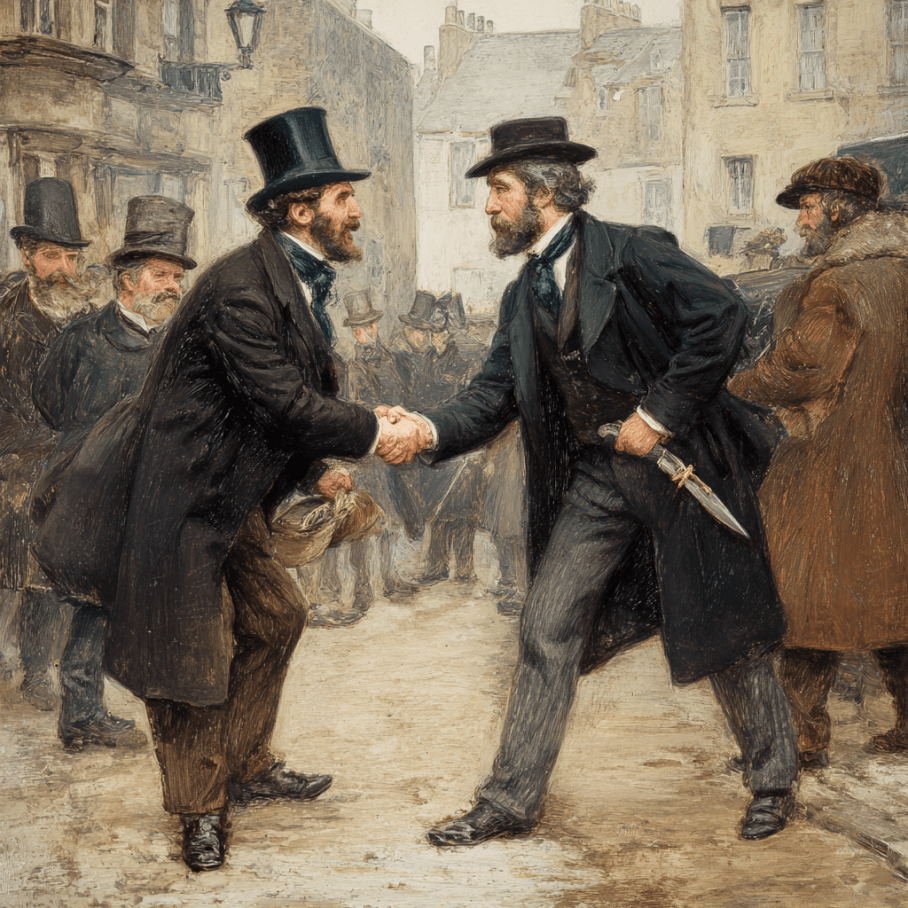
Me? I’m with the dude who answered the whole “Waah! Amazon’s self-publishing is killing literature” with “Hell, yes, and with malice aforethought. That stuff ain’t literature it’s self-absorbed navel gazing with pretensions” (only he said it much better. Wish I had the link). And I’ll continue to sink the knife in and twist every chance I get.



 Mad Genius Club
20 responses to “Literary Stockholm Syndrome”
One of my boys and I were at my parents last night, and my dad was asking how the epublishing was going. We got into which genres sell, and I said I thought romance sold the best. There’s an insatiable appetite for it, and, besides, I joked, no one can see what you’re reading on a Kindle. In fact, lots of genre books sell really well. The only thing that doesn’t sell as well as the other genres is the depressing “lit’rary” books.
“That’s ’cause no one can see you’re reading it,” my son says. (He hated English class.)
Yep. No one can look down their nose at you because the cover of your book shows you read that “icky” genre stuff. No one can tell if the football player with his smart phone is checking his facebook account or reading a bodice ripper.
It’s wonderfully freeing.
I do think that the people in publishing do not have any idea that an author could possibly feel bitter. If they did encounter one, it would be: ‘look at the crazy man! And after all that we’ve done for them!” (which I believe has parralels with some slave holders, and kidnap-and-rape nightmares — all convinced that really, this anger just so unreasonable. It’s there, like an uneasy super-volcano, waiting, though. Like the Berlin wall falling I think the event will take the trusties and powers-that-be by shall we say surprise with its rage, when it finally blows. Oddly, being me, I’d rather they changed and learned and adapted, not because I sympathise that much, but because there will be a lot of collateral damage of people who don’t deserve it. The scum will slither, as they always do…
It’s difficult. Traditional publishing and retail still have good valuable services to offer. Authors, readers and publishers actually agree on that – but what that value is, shall we say, in a great deal of debate. They think it’s 94% of your income, and you will work relentlessly and speedily, and do any stray tasks with eagerness, no matter how unreasonable, promoting and begging so that they get theirs. They deserve regular salaries! (I had some prat of a minor editor tell me that one of the chief New Age magazine wreckers was worth some astronomical sum because editors deserved to be properly paid – even if this meant that authors weren’t. She was a saint to stoop so low, and so good to authors. Why she insisted on them being paid 6 cents a word I think was. Generosity itself!). Well, I’m with regular liveable salaries, but only if it’s coming to author too, and I don’t see their time being worth a lot more than mine. And a sale of 5K story at 6 cents a word… even if you could write and sell 4 a month, is not my idea of that. The SFWA ‘pro’ rate was set in the dark ages, or possibly when dinosaurs still chiselled royalty reports out on stone slabs (oh wait…) well, when 300 bucks was a good income for a month, could pay the rent and buy groceries – and writers still starved and froze. Surely a professional rate would have to be inflation adjusted? (which would get rid of most of their membership). Anyway… I don’t know if they’ll ever figure it out. In the meanwhile, onwards.
Screw them. They can get with the programme or have choices authors had.
Oh, absolutely. I’d rather see them figure it out, too. I just don’t think they will. That would mean admitting they got it wrong.
I think we’re getting close to the psychological tipping point, where the combined numbers of traditionally-published-author-now-Indie and the Never-Traditionally-Published-and-never-will-be add up to so much influence that most of the rest will abandon Traditional. Even those suffering from Stockholm Syndrome.
It may take longer than I think, as people can be amazingly stubborn. But they will eventually run out of writers who are already sewn up in indentured servitude contracts.
Once the big publishing houses find themselves unable to sign anyone but the terminally innocent or really desperately bad writers, will they start valuing the good writers? Or will they blame Amazon for their even weaker sales?
I’m betting on the latter.
If what has happened in other industrie is any example they will blame everybody but themselves. The problem isn’t the size of the publishers but the fact that they act as part the same kind of monochrome coporate structure that came out of the society of the late Sevenites. That corporate structure acts more like a communist state than a business. The problem is that knowing the business and experinece has been replaced by institutional management and rewarding medioctrity rather than excellence. I hate to say this but it keeps coming back to the Ivy Covered Snob Factory Business School of people are widgets:
http://www.cbsnews.com/8301-505125_162-57584424/how-to-stop-the-mediocrity-pandemic/
This will make your head explode if you haven’t seen it already:
http://blogs.hbr.org/cs/2013/04/seven_rules_for_managing
Being an odd, I’ve had to sruggle with this for my entire career and I’m just beginning to understand why. the problem is that becasue of rule changes, namely Sarbanes Oxley and the ACA, the smaller more agressive companies will have a harder time competing and will more than likely sell out, thereby keeping the mediocrity culture in place until it collapses under it’s own weight. (sorry about including my comment from the other day, but it fit and I wanted to elaborate.)
The hbr link gives me a page not found, but the cbs one is quite correct. It does come down to people as things and the evils that result. You’re also not the only one around here who’s had that kind of… interesting career – says the person who has nuked entire fields of endeavor merely by wanting to work in them.
It must have truncated when I cut an pasted. Here it is:
http://blogs.hbr.org/cs/2013/04/seven_rules_for_managing_creat.html
amore insulting piece haas never been published. And that’s after he walked it back and added “and difficult”
Yes, i found that post extremely insulting when I read it. I wonder how many actual creative people he’s had to deal with.
Probably very few, but a lot of “self-proclaimed” (who aren’t as creative as they like to think)
I swear half the items in his little list of how to treat creatives are going to result in said creatives finding the next available position that treats them better, (likely at his competitor) or getting all passive-aggressive and doing the absolute minimum to do their job. Or both.
Ah. Yes. Someone who thinks that “creative” = “throws tantrums”. And who is not creative himself.
My experience is that respect matters. For the rest, I’ve yet to meet a creative person who stops being creative because their co-workers are uber-conventional. Usually they save the creativity for elsewhere if the employer doesn’t want it.
I’d say that it was exactly communism.
I have heard that there was a huge management fad starting in the sixties and seventies, to my understanding an inferior one. The number I’ve heard quoted is 95% of American companies still influenced by it.
When I look at the fad, I see assumptions and philosophies in common with communism. I strongly suspect that soviet and communist disinformation about how successful their methods were had an enormous influence in selling the fad to people.
It seems to me that when people complain about corporations, often what they are complaining about is the effect of communism lite features, and not something inherent in capitalism.
The effect of those people who went over to the Soviet Union to see the future and then acted on what they saw cannot be overestimated. I remeber all through my childhoos how we were told how we had to be more efficient than the soviets or we would be left behind. More efficient, of coures meant organizing like them without all that nasty gulag stuff. Big companies, big unions and big government all working on the best management principles. It was the big bold helvetical world:
Yep. And when Dan has worked for corporations, I’ve seen a lot of top-down communist management style, including the change all underlings when the “great leader” changes.
You know, one thing I’ve never understood is that Progressives worked very hard to sell us on that plastic world they created and shortly thereafter were screaming, rioting and yelling “that it was the end of the world” and ever since have been trying to smash it all up. Now everything I’ve learned tells me that smashing up the Progressive business model is a good thing, but that doesn’t mean that you have to smash industrial society. Most compan owners and managers from the 19th century would be apalled at the working conditions at a modern facility and how dehumanizing they are. those people from those old companies knew a thing or two about making workplaces livable.
They’ll blame anyone and everyone but themselves for their failure all the way to bankruptcy and beyond.
Most of the people who insist they want to go traditional are those who’ve never experienced. they want to be “real” — bah.
Velveteen authors. Heh.
I often call myself that. Still not sure I’m real, but…