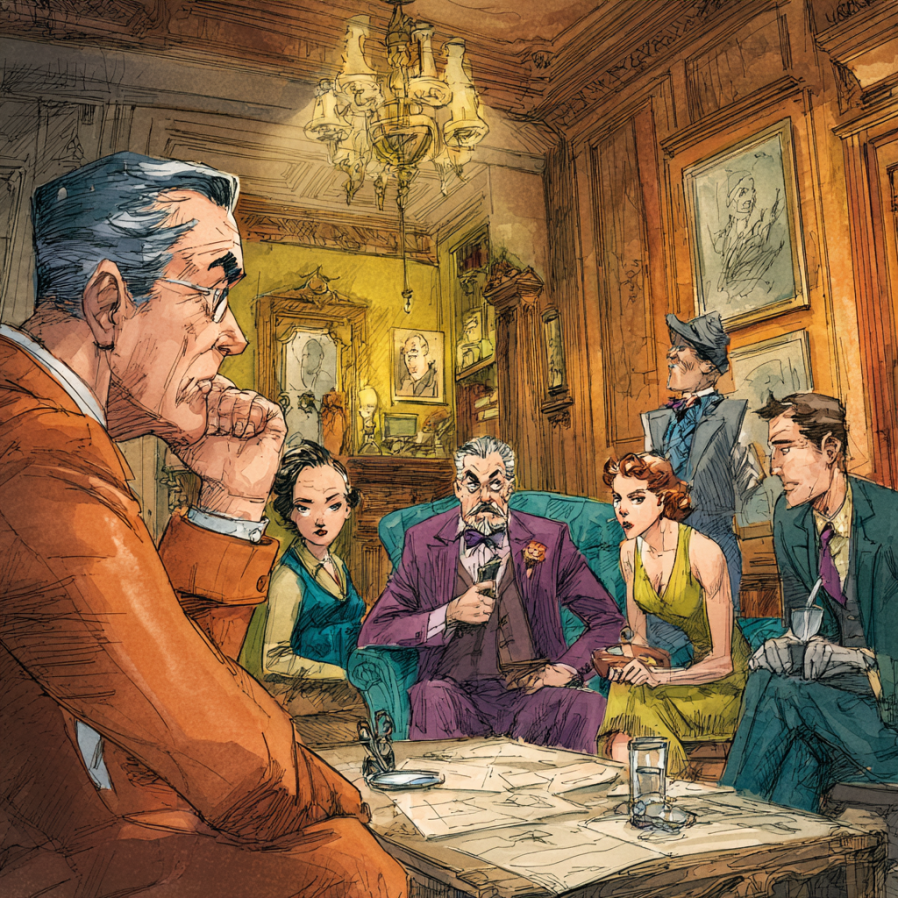
You’ve spent a lot of time describing your characters and exploring their ever more complex situations and back story. The plot is thickening, all those carefully crafted threads are finally ready to start coming together, and you’re just about to lay out the scene that ties everything together for the big event, and then it hits you — do your readers remember all the details of the meticulous setup, so that they can receive the maximum impact to adequately appreciate your cleverness?
Hmm. Maybe you better remind them of some of the highlights… and the background details that triggered those interactions… and the relationship history among the characters… and the special objects of power that are hidden in their pockets, unsuspected by their approaching enemies… and the whatsis, and the whosis, and all the rest of the folderol. Perhaps your readers don’t adequately remember every single exquisite detail that you worked so hard on making everything clever and consistent.
I understand, I do. When I read that sort of story plot these days, I don’t necessarily remember names, backstories, hidden resources and motives, etc., with precision, especially if I haven’t gotten to the big scene in one big uninterrupted reading session. My memory hazes over, I speculate about relationships and histories I’ve already forgotten, I confuse one character with another. I really wish someone would magically cram the missing (or at least misplaced) information back into my head so that I can properly appreciate the obviously imminent BIG SCENE ™.
But there’s no way to do that. And the last thing I really want is for the author to make up for insufficiently memorable scene and character setting by flooding me with last-minute helpful reminders of my difficulty (even if it’s my own fault I’ve forgotten the details).
Well. I can’t fix the work I’m reading, or my own defective memory of it, whichever (or both). But I’m a writer, myself. I want to learn from this sort of situation. There’s a certain sort of stylized way of dealing with this that I remember from mediocre fiction of the 1800s, or early radio and print serial narratives. It goes like this: get to the moment just before the information and revelation are needed for the climax, then present a conversation between several miscellaneous characters who are only really present in the scene for this purpose. One says to the other, “As you know, Lord Marmaduke,” (…all action stops to let a mini-plot/connections summary ensue). While framed ostensibly for the assistance of the characters, this is actually constructed for the benefit of the forgetful reader/listener (as a million parodies of the line have aptly demonstrated).
So, my question for you is: what do you do in this situation, either as a reader when you encounter it, or especially as a writer, to avoid or at least mitigate the problem? How do you make the characters, their mutual history, their deeds, etc. memorable enough to avoid confusion when it matters to the impact of the scene?
I’ll start us off… I try to name as many of my characters as possible with unique initial letters, so that it’s harder to casually confuse them. I give them different verbal tics or characteristic poses. I try to mark special scenes or events with particular remarks or pet/abbreviated names (“the time when such and such happened”) so that they can be more easily remembered later on when referred to, and I do refer to them a bit along the way by such a “name” to keep them distinct in mind. I try to individualize habits and other tics to differentiate among common or related characters.
How about you?


 Mad Genius Club
Leave a comment