I was recently in New England, visiting family, and I was finally able to articulate something that bothers me about the Midwest, where I currently live.
I reluctantly live in a subdivision, and have done so in the past four states, ever since I moved away from my family’s rural home- seven acres of land- in a smallish town- about 12,000 people.
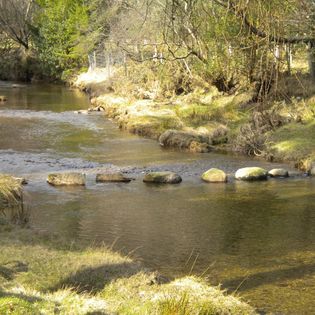
So, contrary to popular expectations, my experience of New England is consistently more countrified and self-sufficient than my experience in the Midwest. There’s more space between the houses in my admittedly rural corner of New England, because the land isn’t as buildable, and a higher proportion of people have little homesteads and backyard chickens. More people cut their own firewood and run their business from their backyard. Even in the subdivisions, most houses have a line of trees between them. There are rocky outcrops and little brooks and wet lands that make certain portions of the land unsuitable for building, so they’re left wild.
The land has been settled for longer, so most of the places that are buildable already have a building on them. There’s occasional new development, and of course, existing houses get facelifts and additions, but it’s on a very ad hoc basis. Houses feel like they were built by people, for people.
This leads to more quirky individuality in the buildings and their layouts. Houses aren’t always at right angles to the road, outbuildings are scattered around in places a stranger wouldn’t expect- but are perfectly reasonable to the inhabitants and the way they live. A lot of them were built in the days before zoning laws, too, so you get houses in weird places that wouldn’t be allowed nowadays.
The Midwest, by contrast, is more recently settled, and the land itself is easier to build on. This leads to massive subdivisions and planned neighborhoods, where all the houses are in a line, close together, and of the same style. There’s no mountains in the way, less need to consider the shape of the landscape when designing the neighborhood, so developers don’t bother. The houses are built by a corporation as an investment, stuffing as many identical houses as possible onto that piece of land so they can break even or make a profit on their investment.
I have nothing against people making money- they’re obviously filling a need and should be compensated accordingly. But this particular way of building leads to a sameness and openness that I dislike. It’s also more crowded, and people drive more aggressively, because they can; the roads are straighter and flatter, and there are fewer trees and hills in the way when you’re looking for oncoming traffic. And don’t tell me that it’ll look less barren as time goes on. You’re not precisely wrong, but this subdivision is about 20 years old, judging by the size of the trees. Hardly new construction, and it still looks bleak and depressing. In my opinion, of course. A house and neighborhood like this probably represents financial and social success to a lot of people. I value different things- space, privacy, the ability to dig a well and cut firewood so I’m more self-sufficient in case a disaster hits.
To each, his own.
So, what’s the point of all this?
Well, I mostly wanted an excuse to ramble about geography and landscape. I might be a nerd. Possibly.
But there’s some world building merit in the contrast I’ve drawn. If you’re building a world from scratch, think about the technology available to your characters, the history of settlement, the shape of the land- all of those things will influence how your characters live and think about their surroundings. Where do they get their water?- how do they deal with wastewater?- where does their heat and light come from? Are their houses oriented according to the path of the road, or do they care more about providing a comfortable work area that’s protected from the winter winds and the summer sun? Are they the kind of person who cares about these things?- some people don’t, and some stories don’t need them to care as much. Some will be happy with one type of surroundings; others subtly unhappy.
And it might take them years to articulate what’s making them unhappy about the way they live.
Oh, wait, that’s just me, and I’m not a character in a story, believe it or not.
Happy second day of Thanksgiving, ladies and gents. Or happy Friday, if you’re not American.



 Mad Genius Club
5 responses to “Some Thoughts on Setting”
Do they do things, even stupid things, that fit their homes into their ideal pattern? And if they do, is their ideal pattern Classicism, with order and regularity and everything the same size, or Romanticism, with variation and profusion?
Bear in mind that eras stuck with one tend to dream of the other.
Yep, setting figures prominently in my first novel, both the city setting and the abandoned countryside 150 miles or so north of Los Angeles. Half the novel is set in each. I lived on a ranch for my adolescent years, so I had some knowledge, but I had to supplement it (hopefully correctly or at least believably) with people living in the middle of nowhere and having to make almost everything they use.
If you’re doing a new SF world, you might be able to skip some of those steps, but novels like Dune are greatly enriched by and drenched in setting.
I purely dislike Generic subdivisions. My odd little street of acreage property is in the process of being surrounded by them.
And after high school drafting and architecture classes, I look at the individual houses, trying to figure out the run of pipes and where upstairs walls cross large open spaces below and wonder if they’re engineered for the weight of a big book case right there . . .
And it spills over into my writing, as I sketch out the character’s houses . . .
One thing that eventually struck me is that subdivisions, regardless of how they are planted will eventually drift back to the natural local environment.
The subdivision I’m in was built on grasslands. The builders planted lots of trees, but over the years, droughts have killed them off, and the general environs are slowly returning to the prairie scrublands, just with houses and fences planted in them.
Likewise when I was living somewhere that was pine woods, the subdivisions just kept sprouting bigger and bigger pine trees.
About the only way to get something different is to pick from plants that aren’t local but love your local biome. When we were in Houaton, we had a mulberry tree, which apparently is a Region 4 plant that loves sun, rain and clay soils, so long as there is sufficient drainage. Basically, Houston when the drainage ditches are maintained. Which is probably the only reason it wasn’t considered an invasive species there.
But I expect if you built a subdivision in New England, you get the forests of Maple trees and all the rest. And a scattered slowly developed town in the Mid West would still sit on flat planes of scrub lands.
Locally, they keep trying to root out sumac and plant pines to veil the dump. The sumac’s winning