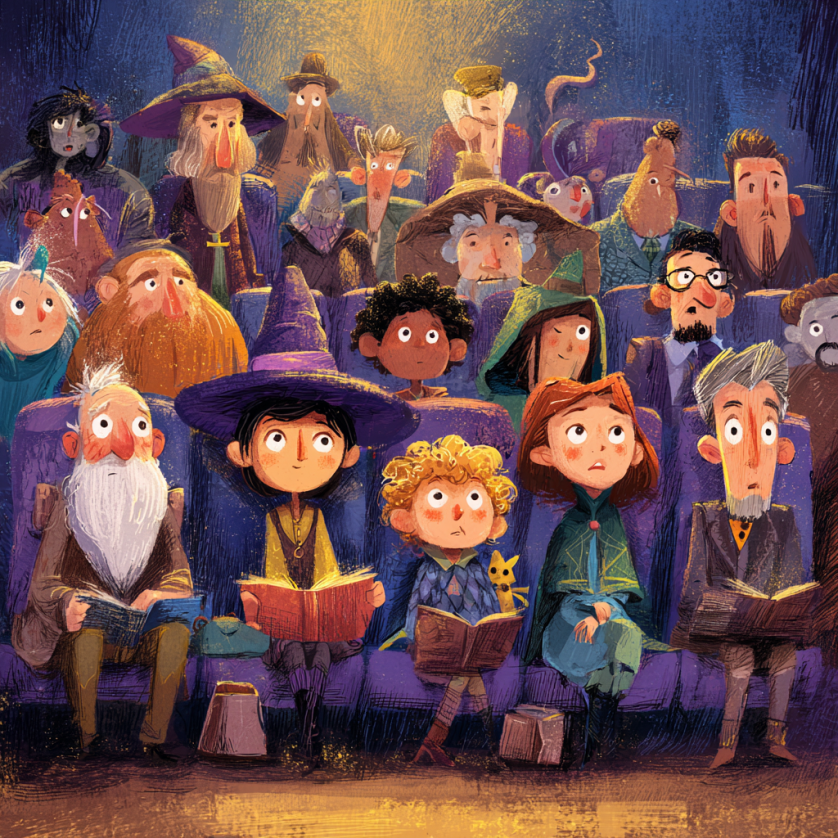
In stories that have any sort of career component (which is an awful lot of stories) or even just those with some specific story-goal (which is just about all stories), your hero is gonna need to figure out what to do and how to do it with regard to his goals, or at least his survival. If he’s on his own, without even the gods to look to, then, well, tough: it’s gonna be try-and-fail and happenstance and all those other desert-island non-resources.
But in most stories, the hero will want/need to look for advice. It might be advice he remembers from others before the story begins, or just parts of his social lore being pressed into service. Where can he get that advice, who can he turn to, who can he trust, how can he evaluate the guidance? Can he advise others himself, either now or eventually from what he learns?
The mentor — well, maybe he can be trusted, maybe he’s competent, but how can the hero know? Does he have a choice of mentors he can play against eachother?
The local expert — Isn’t everyone already talking to this guy? How are you supposed to get an edge this way?
The lifestyle sage — Maybe he’s got good long term advice for the hero, or maybe it’s not applicable to his circumstances? How can you tell?
The naive encounter — Well, maybe when the cute baby points to the right at the intersection, or the parrot winks at you, you should take that as a sign. Or not…
The casual friend / accidental encounter — These at least have a social connection — you can yell at your friend if his advice is bad, or you can flee from the stranger who gave you a bad tip. Or come back and find him to physically explain your disappointment to him. At length.
The enemy — can you pretend to follow his advice to fake him out? Or are you doomed to sink in gullibility?
The gods — OK, if you don’t take the advice of the gods, hard-won or gifted to you, you probably deserve what you get.
Jokes aside, I find that there’s an important component in my long range story planning that makes a lot of use out of encounters (sought or (seemingly) casual) with sources of information, either planned (by the hero) or accidental (gifted by the author). It expands the plot possibilities, just like a good initial stroke sets all the billiard balls in motion to be encountered, as needed, perhaps repeatedly, before the game is over.
How do you get outside information into the heads of your heroes?



 Mad Genius Club
4 responses to “Advisors”
Books (archive information), overheard conversations, Familiars, sometimes deities (always foreshadowed and fits into the world of the story), a student passes on gossip. All can work if they fit the story.
Advice: Mentors, Familiars, religious counselors (priests), lawyers (“law reader” or “law speaker” in the Merchant stories).
Depends on what the gods are like. . .
I’ve been re-reading Norse mythology of late. Usually if you followed Loki or Odin’s advice you’d be the sorrier for it. Though if you didn’t you’d be even worse off.
One Fantasy had a “god” called Crow/Raven.
He/They had a spilt personality.
One personality you should never trust.
The other personality you could trust.
But you never knew which personality that was talking to you.
What you did know that you’d be in Big Trouble if you rejected His/Their advice. [Twisted Grin]