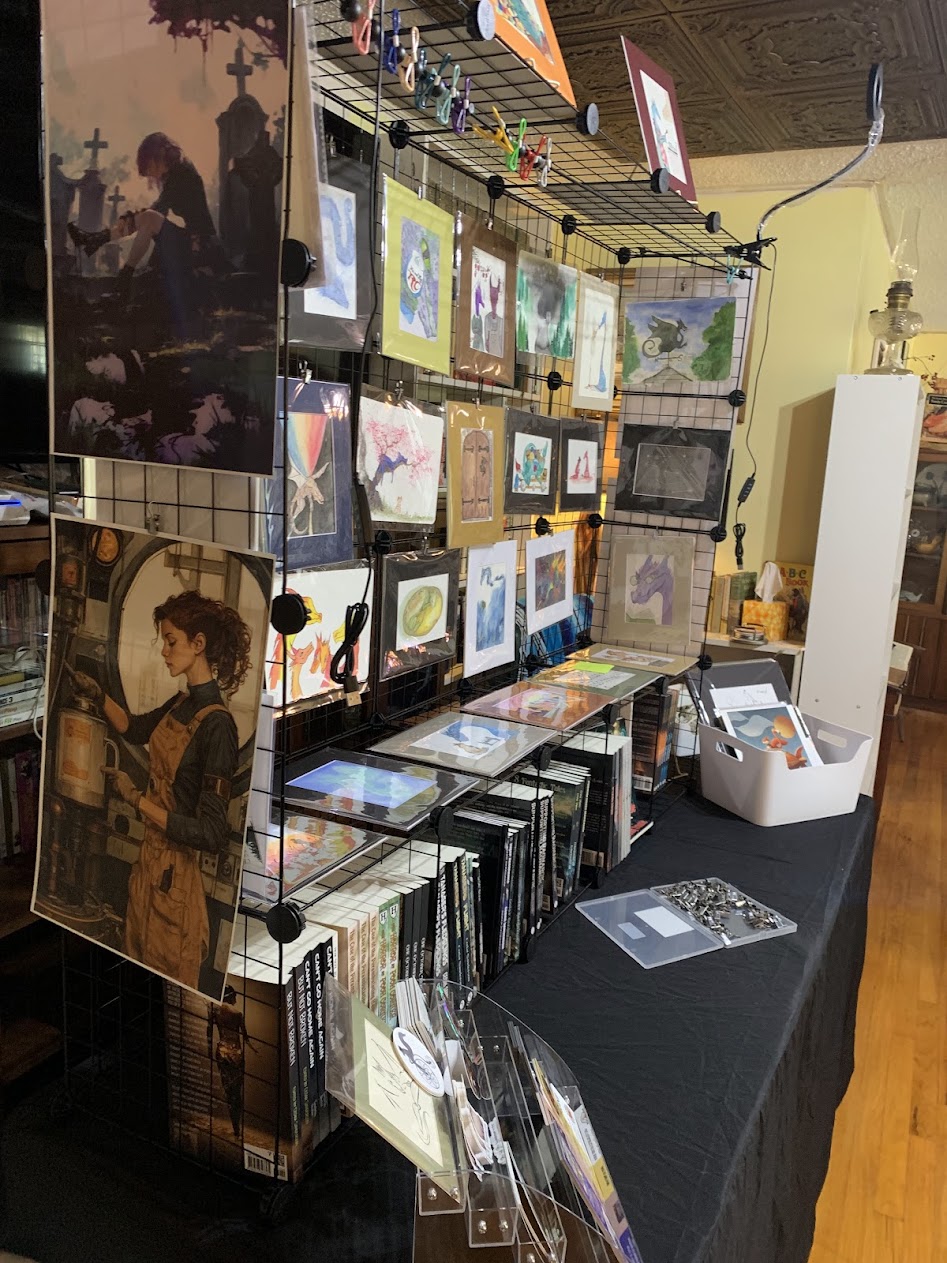
I’m away this weekend at a convention in Dallas – P-Con, if any of you are close enough to drop by. Come see my one-woman art show, 31 Days of Dragons! I’m thinking I’ll be very busy, so responses to comments may be tardy, my apologies in advance.

A recent conversation between editors at Raconteur Press sparked this post. You see, when we put out the open call for an anthology, we’re asking for stories that are 5000-8000 words in length. We’ve gotten so many stories that we’re being more strict about that length, too. It’s gotten competitive!
One of the recurring problems we’re seeing with the stories submitted to the Press is slow openings. You cannot take three pages of exposition to set up a short story, my friends. Something needs to happen right away, in the first paragraph. No time now, you’ll explain later, and into the story you dive.
I wrote a series of posts some years back on this topic, so I’ll link them for you. These start off with first lines and openings, then go on to talk about how to keep the reader’s interest piqued throughout the story, as you don’t want them nodding off in the middle, or giving up before the climax!
Now, off you go, and sharpen your hooks! I want to be grabbed right off and then taken along for the ride!



 Mad Genius Club
2 responses to “Hooking for Writers”
A well-done series of posts about catching and keeping the reader’s interest. I’m not one who’s ever been great at first lines. The only first line I’ve ever written that I’m proud of is the one I wrote recently for a story I sent off to Raconteur Press.
I love the TV series Babylon 5. JMS had the perfect touch writing a season long story arc that he satisfactorily wrapped up while seamlessly hooking you on the next season’s story arc. You were both satisfied and intrigued.
As to endings, there are the standard ones and the unorthodox ones. My favorite unorthodox but satisfying ending is from the movie End of Days. It’s one that caused my wife to quip, “Sometimes you have to die to get the happy ending.”
I’ve been writing on the topic of a slow-burn start. I note that the first rule for that is — write at least a novel.