We all stand on the shoulders of giants. Some rude little devils don’t wait for the giants to be dead, but sneakily knock the legs out from under them and then stand on their shoulders telling us they’re MUCH better. It usually means they aren’t (Yes, Tolkien and Lovecraft bashers, I am looking at you).
I saw an advert for a publishing business which – among other things, asked writers to say who their work resembled… in the last five years.
I honestly could not tell you. Yes, I have read a few recent novels. Some good, some bad, mostly somewhere between. I am like none of them in my style – or at least that I know of. But I did model myself on giants… not one giant, of course, but many. I knew my writing would not – at least in my eyes – ever equal some of them. With others, I felt, well, I could write something similar (in style maybe, if not story).
For example, I have read a number of Simak novels where I thought the premise deserved so very much more. (THE WEREWOLF PRINCLIPLE deserves a rework) I enjoy his pastoral setting sf, like his robots, and non-humans… and find many of heroes quite dull. The shoulders I stood on, there, was rural or pastoral settings. Do I read like Simak? No. There are echoes, though.
Likewise, I’ve taken Heyer’s dialogue – particularly the repartee as what I want from dialogue. I certainly don’t read like Heyer. I don’t think anyone could, quite. But there are echoes.
I loved the multi-layered nature of Zelazny or Gene Wolfe – writing about 2-3 things at different layers – the books are like the layers of one of those multicolored lolly-pops I had as a kid, where you kept stickily pulling it out of your mouth to see what color it was now. I try to do that — I am certainly not similar to either of these, stylistically, but I try hard to do that too. There’s a story that entertains, and I don’t care if no reader gets beyond that. But, even if I am the only person who knows and notices, I’ve enjoyed putting in something else entirely in there.
So: from Schmitz to CS Lewis, Poul Anderson to Tolkien, and many, many between, I have tried to learn, to take inspiration, to benefit from their shoulders. I’ve tried to make some of my work be more influenced by some than others, depending on what was wanted for that book. So: Heyer and Doris Sutcliffe Adams were the core model for GEORGINA and CECILY – with a plethora of others — but still reads like Dave Freer. STORM-DRAGON was modelled on Heinlein Juvies – but was influenced by Schmitz, and Simak. Still reads like Dave Freer. THE RISE OF ATLANTIS (the other book I am working on) was supposed to be in the vein of Laumer and De Camp – but it is still me.
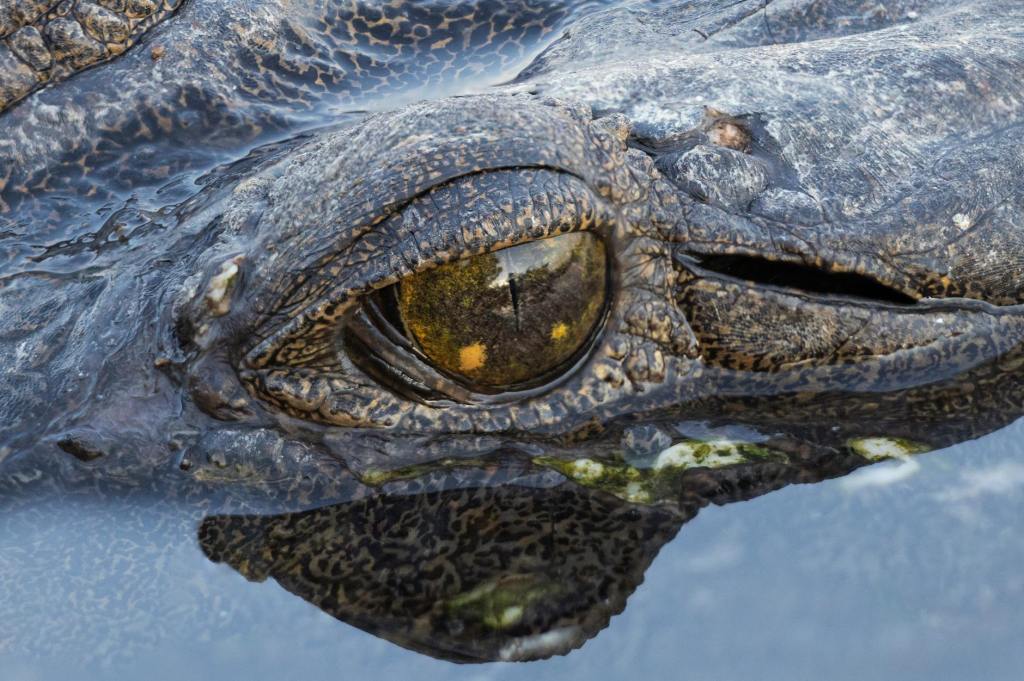
As Lepidus was told in answer to his question wanting to know what a crocodile was like: ‘It is shaped, sir, like itself; and it is as broad as it hath breadth: it is just so high as it is…’


 Mad Genius Club
3 responses to “‘What manner o’ thing…’”
Often what influences us about a particular author is not what is most evident about that author’s work.
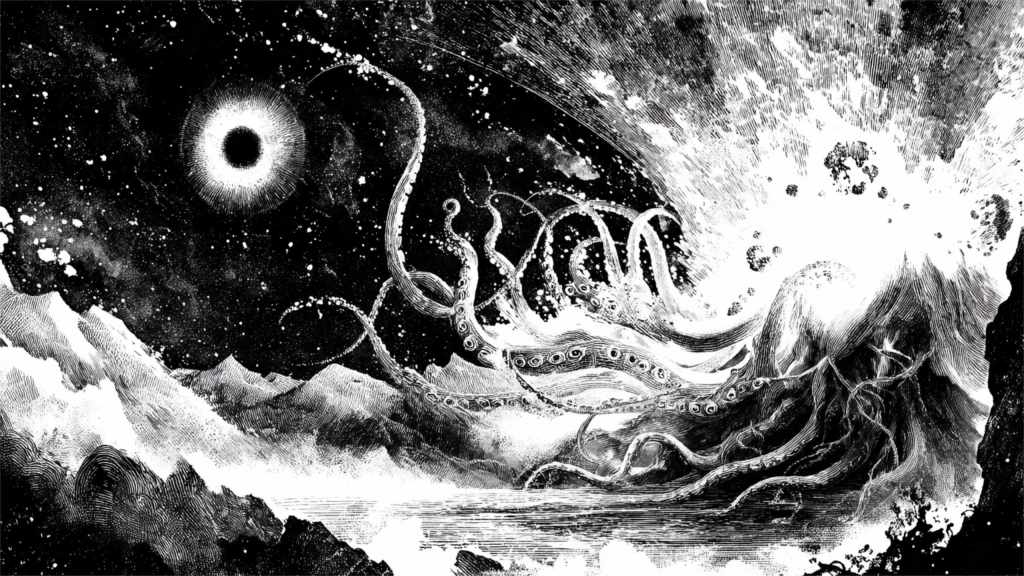
My work is not “Lovecraftian” in any recognizable way (no betentacled eldritch elder gods with unpronounceable names) but I am heavily influenced by Lovecraft’s idea of the incomprehensibility of Horror–the fear comes not simply from what might happen, but the idea that anything might happen, that there are no rules and no way to predict what is coming next.
Samuel Delany is one of my major influences, not because of his homosexuality (to be honest, you’ll find more and stranger sex in Heinlein than in Delany’s SF works) but because he taught me that there are no minor characters, that a character can walk into a book, deliver seven words of dialogue, walk out again never to return, and yet stay in the reader’s head for years.
George Alec Effinger showed me the onion layers of Absurdism, that the idea that nothing matters is as much of a crutch as any of the ideals it seeks to topple and that in the end meaning is what is left over when there is nothing left. My work isn’t recognizably Absurdist (usually) but I owe much to the core concepts.
I can’t point to authors who are specific stylistic influences, except in the sense that I try to write English that sounds good to me, and Sayers, Allingham, Christie, Tolkien, Wodehouse, Lewis, Heyer, Austen, Chesterton and Doyle all have a part in defining “English that sounds good,” plus Poul Anderson, John Dickson Carr, H. Beam Piper, Raymond Chandler and to a much lesser extent Harlan Ellison and Dashiell Hammett.
I tend to take my subject matter more from movies/tv shows I’ve seen and videogames I’ve played, buttressed by the occasional fits of nonfiction research, but there are exceptions. Some of the Jaiya metaseries are a little influenced by Heyer/Austen closed-circle social dramas, and one of the current WIPs is a very loose P&P retelling. Tolkien’s Numenor and Dunedain are a vague influence on the Hunter Healer King series-in-progress, but married to a bunch of steampunky, Ruritanian and Gothic-movie type stuff I don’t think he would have approved of. Tolkien is probably also responsible for my tendency to invent primitive constructed languages for my worlds.
I wrote a lot of pastiches. It helped develop my style. Indeed it helped so much that I recommend it:
https://open.substack.com/pub/writingandreflections/p/sideways-advice-on-style?r=17sx99&utm_campaign=post&utm_medium=web&showWelcomeOnShare=false