As I found myself drawing up an absurdly long response to Sarah’s post yesterday, I decided it was better presented here.
I can’t draw worth a damn, never could — my brain (and hand) sparks music, not art — but I can recognize reasonable stuff once it’s in front of me (hence, semi-pro photography). AI (MidJourney) gets it done for me for casual use, like many of these articles, for example, or even character portraits for writing inspiration (a recommended way to learn your AI of choice).
I don’t expect to ever drive an AI well enough to suit my personal requirements for cover backgrounds, though if I had a number of short works to deal with, I might try.
Since I came to writing late, and it’s almost all long form (fantasy novels in series), I’m not overwhelmed with needing a vast quantity of covers. For the first series, I (purchased rights to and) repurposed a contemporary Russian artist’s surrealist greeting cards and added text/mods. Examples here. For the second series, I for the first time commissioned an artist who had to quit after a while (job requirements) and drafted another artist to finish the series/match the original — I’ve never been too happy with the results (right genre message/layout, but not polished enough).
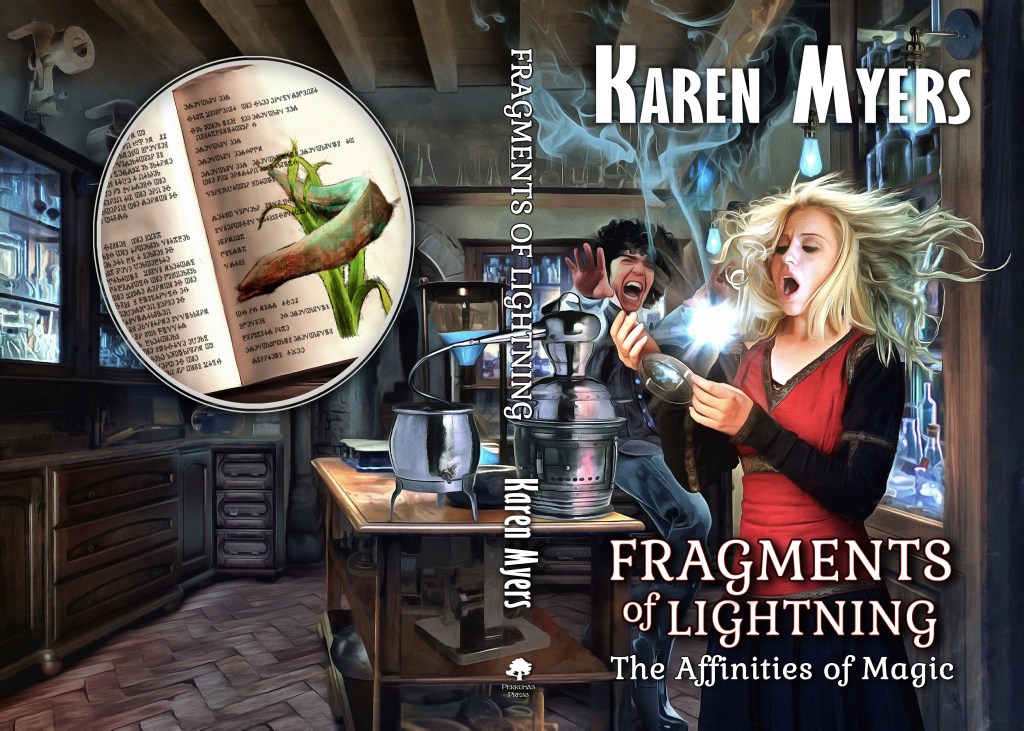
But I’ve followed an old favorable art prejudice of mine for the current (and no doubt last) indefinite length series I’m doing — mine the Eastern Block for artists. I’ve got this terrific Polish fellow. I can manage the final Photoshop layouts and add text, but I get the full backgrounds from him. His price may well have gone up since I’ve been sidelined re: health, but the last time he did one it was $500. Even though the sales will be almost entirely digital instead of print, it allows me to indulge my wraparound-cover books-in-series nostalgia, with back cover references to the notebook being kept by the main character of the series. (I will add all the text not present in the above background image myself.) I price for about $4.00 profit/unit sale (at the moment), so it takes over 100 sales to earn it back. Still, it’s my only per-title direct cost other than advertising. (I will never run out of ISBNs.)
Example above — Background art for book 2 of the not yet released series. Won’t release until at least book 4 is underway.
If I needed more quantity for covers, I wouldn’t be able to afford this indulgence, but it does make me smile every time I see one of my artist’s covers, and that’s part of the pleasure I take in the writing, even if I’m the only one who cares. I want to keep cranking books out, if only to see the next cover, so I’ll take my motivations wherever I can find them.
So, while I can’t make a purely rational economic recommendation for engaging cover artists vs learning how to adapt aids like AI well (important issue, if you are looking at a significant quantity of covers over time), still my own AI skills are limited, I expect to recoup the artist direct costs adequtely over time (once I publish), and my quantity of titles is (alas) low enough that I’m willing to sponsor the indulgence. And I derive a deep pleasure in carrying along some of the pleasures of older-styled fantasy covers in what I will leave behind, even if I’m the only one who cares, and not everyone buys print editions.
How about you? What are your most important motivations behind the ways you handle your cover art? Strictly economic? Self-indulgent? Purely commercial re: attracting readers? They’re your books, after all.

 Mad Genius Club
6 responses to “Cover Art — Professionals?”
It depends.
For the nonfiction, we make our own and put a huge amount of effort and thought into it. We’ve recovered and changed as we’ve figured out mistakes.
For the 223B series, we repurposed vintage, out-of-copyright Sherlock Holmes images that had been drawn during that volume’s time period.
For the annotated Agatha, we did the best we could. For the annotated Dorothy, we remade “Body”s cover four times before settling on a design we can customize for the entire series. If we ever revisit the annotated Agatha, we’ll do the same.
For my fiction, we pay for custom covers because I write such weird, niche stuff that we feel we need covers that are not generic but still appropriate.
That’s a really fun cover, Karen.
Running Facebook ads drove me to learn MidJourney. Not all ads work. You have to try a lot. I used my book covers at first, and those variations worked for about a year. Then I tried stock photos. Meh. Then I tried Albert Bierstadt paintings. Really meh results, which made me sad because I like the feeling his work evokes of a whole wide world out there, and I wanted to use it for my lost colony world of Nwwwlf. Alas, his work didn’t resonate for others like it did for me.
So, MidJourney. I’m using it for ads, and I just published my short story, Took Their Wages (interstellar labor law), this week using MidJ for the art. (My short stories never earn enough to pay my cover artist.) I was quite pleased with it, and am using it.
For my upcoming near future SF novel, I went back to my Martha’s Sons cover artist Tom Edwards. We both stretched to come up with something outside his usual style, and I’m very excited about the result. It’s truly stunning and shares some small attributes with a current bestseller, so, for once in my life, I’m on trend. MidJourney could not have done what he did.
$500 for original artwork that makes you smile every time you see it? If you have the money, you can justify it just for all the joy it gives you. If the cover brings in more sales, even better 🙂
After all, people pay way more than that for objects they really like, whether it be visual art, musical instruments, pens, furniture, and on and on.
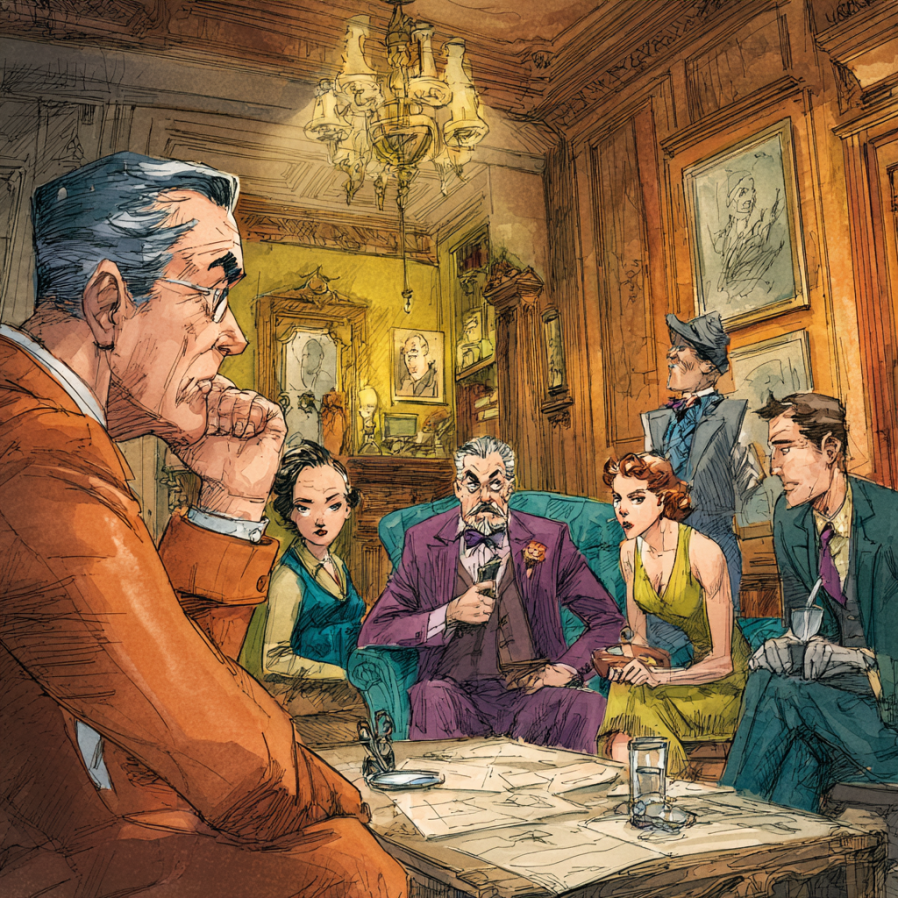
I’ve been trying to get more commercial as I work on my covers. The hero of the Hunter Healer King books is in my head a thin, austere man of the Rathbone-Cushing type (or Sidney Paget’s Sherlock Holmes illustrations), albeit younger-looking and probably with more hair. The heroine specifically calls him “not quite handsome” several times. The AI art covers I gave the books portray him as (hopefully) still intellectual looking but more conventionally handsome and macho, in the hopes that readers would find them more appealing.
I only do original art (non-AI) for my covers and the ones I do for hubby’s books. I do always try to increase learning, practice and education in order to improve as well as watching and learning the trends. I do miss the Vallejo and Whelen covers of the 80’s.
For a mishmash of somebody who clearly doesn’t know anything, my covers are here. Most of them begin with AI followed by editing in various art programs. Geek’s Progress was just me without AI (as you can tell). The Gardener’s Wife was the only professional cover, and I paid $25 for it from an artist friend. He was having a tough time, and I commissioned him for 5 pieces for $125, mostly to give him some money when he was between jobs.