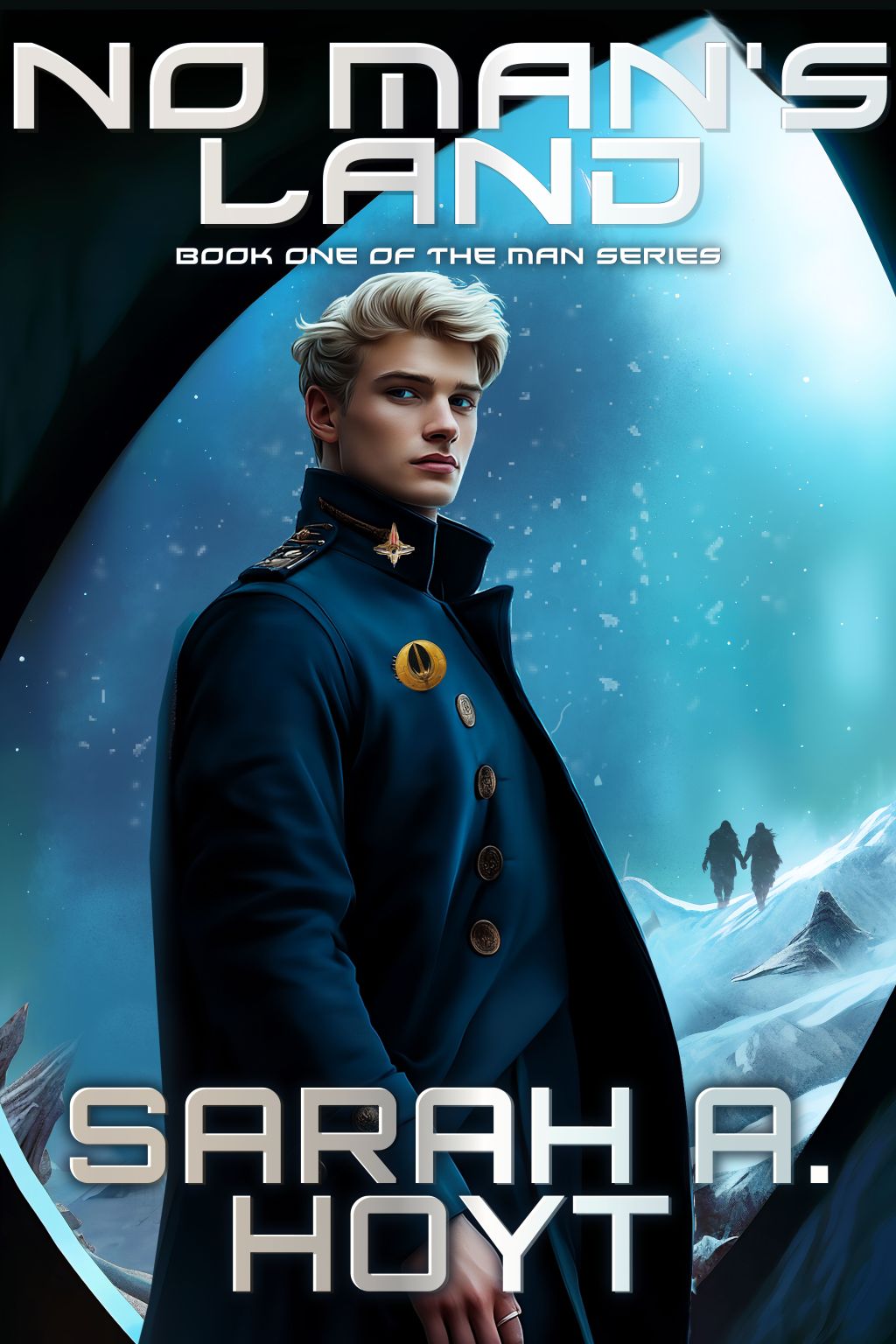
This week I stepped into something on Twitter, one of my normal “oh, shoot, I shouldn’t have said anything” because I was trying to speak from my experience as well as I could and instead, probably p*ssed everyone off.
So, of course, I’m going to repeat the performance here. What? Mostly because it needs saying.
Look, I do realize that AI for whatever reason, brings up emotional, visceral reactions.
The people who think AI is the best thing since sliced bread will enthusiastically use it for everything, including as sliced bread (probably) and take great offense if you tell them it won’t solve all their problems.
On the other hand, the people who think it’s evil, a work of the devil and here to destroy all good art and writing scream and hold their fingers up in the sign of the cross in the way of a scared mortal seeing vampires.
And neither can see the other’s side. Weirdly, my husband’s work in computers has the exact same divide. There are those who think that AI is the best thing ever. And those who think it will destroy the new generation of programmers.
First of all, because most here are writers, not techies (even those who write science fiction) let’s establish what AI is not. AI is NOT in point of fact Artificial intelligence. Not as it was sold to us in science fiction books from the 70s or so. It does not actually have a personality, a separate intelligence, or a personality. It’s not Sky Net.
What it is is a Large Language Model, which searches the net for what you ask it for and integrates it, with some spectacular misfires where it runs into either disputed information or information its programmers walled off from it.
What doesn’t AI do? Think. It also, for various reasons, doesn’t copy things precisely. Everyone you ever heard of that says AI stole their work wholesale, had to go through some fantastic contortions, including feeding their work to the AI and asking that it be copied. Never mind.
Now, into what the AI can do: Midjourney is getting very good at producing usable images for covers, if you have a modicum of ability at stitching three or four parts together, and working with transparencies.
Writing? I believe you can get a basic essay out of grok, or open AI or the others fairly well, if you’re willing to check for facts, fix the output etc. And maybe the beginning of a short story, or a short story plot. I have cautions on that, but I’ll have to explain them. Novels…. Um…. it would take a lot of redirecting and stitching together.
People tell me they get good structural edits out of AI. I have massive problems with the idea itself, unless you’re using a circumscribed version of open AI (copyright issues, rights grab issues, etc.) Before you do that, check the terms very carefully.
However, that done, I have issues with the output you’ll get. And how much trust you put in it. Bear with me, I’ll explain.
My experience with AI is as follows: having a few years of arts classes, I was at “talented amateur” level. I could take the final leap to professional output. My dad — for various reasons, having to do with his own life — spent some time trying to convince me to actually go back to school, and offered to pay for it. This was…. 10? 15? years ago.
I chose not to do that, partly because I already had a job in the arts — as a writer — and did not want to spend the effort to start again in another. As well, as I have books I want to write, need to write, and wasn’t ready to take the time to learn another set of skills.
…. Not even when it became obvious that indie was viable, and I’d need covers.
Well, Sarah, you’ll say, you could just hire an artist.
Sure, I could. Except most of the books I was bringing out initially were re-issues or collections, and those make about $500 a year. I was willing to spend the entire money for four or five years for a cover. (And that’s cheap art.) My friends who are artists don’t generally do covers on command. The exceptions are the covers for the Dyce series and the one for Odd magics, both drawn by friends.
But for most of my work, I simply didn’t have an artist to hand who could both do it and would do it for the money I could pay. I tried. But I either didn’t get art at all, or it was unusable.
So… I did what I could. I started with bad photoshop (Arguably there is good photoshop, but I didn’t have the tools to do it. (I’m still using an outdated setup, for reasons.)) I graduated to buying art from stock sites. But that’s limited, of course, you can just sort of wave at genre. From that, I moved to DAZ 3D which can be very good, but always has a certain stiffness and a look of the uncanny valley.
From that, I moved to AI as soon as Midjourney became even halfway viable. The first attempts, I had to stitch covers together, sometimes for 10 or fifteen pieces, and the art was … okay, not amazing.
Now it’s considerably better, just in the last year — see the cover used as featured image. (No, the book isn’t out yet, I’m still editing it — though that cover, and every cover, still took three pieces and color changing, and hand touching up. (Remember, I had training in art.)
If I were an artist, I’d be uneasy about what I’m doing, because my pastel box is dusty, I haven’t got my sketchbooks out in a long while, and I know I’m actually losing some skills from disuse. That’s okay, though, because I don’t view AI as a means to improve my art, but a means to get viable covers with less involvement.
I’ve also used AI for blurbs, because frankly I can’t write blurbs to save my life. I don’t know if the ones I get are the best, but they’re better than the home rolled ones. Again, copywriter is not my job, and I don’t intend it to be my job, so it’s not thwarting my developing abilities. After thirteen years, I’m fairly sure I don’t HAVE blurb abilities.
The blurbs it delivers suffer from the fact it’s an LLM. You can’t just put them up as delivered. Because it will assume plot points that aren’t there, hallucinate love affairs, and in general make your book sound cliched.
But it provides tone, turns of phrase, etc. that you can then use to assemble a blurb.
Now we get to writing, particularly novels. I’ve never used AI for that — or even short stories, or frankly even blog posts (as it’s probably obvious.)– I haven’t used AI for any of that, because I have skills that I have developed for a quarter century (more if we consider the time I was stumbling around in the dark.)
I have my process and I write using my process. Learning to use AI to write or even to brainstorm would be akin to … well, if I were already a cover artist and threw it all over to spend six months using DAZ 3 D to produce the endless parade of naked, bald people before it clicks.
However, I have friends who have used AI for certain portions of writing. As with art, it has limitations, and it works best for someone who is already good at writing and knows how to judge and fix the output, if needed.
So, I have a friend who had it read and create a plot outline of a classic which he wishes to emulate. (I’ve used cliff’s notes for the same purpose, though weirdly I never wrote those books. The truth is I was trying to force those books, and that’s not how my brain works. Ah well.) Then with the outline in front of him, he can substitute his story for the classic. He says it’s a great brainstorming tool. It strikes me as the “cheat” in art of projecting or using a transparency to get down the general outline and proportions of the object you’re trying to draw, to simplify your task.
I’ve also had a friend who was dry and on deadline ask for ideas integrating certain elements. Here he ran up against a major issue: almost everything the AI suggested was a major movie or TV series. Not a little known one: a major one. There were no original plot twists.
He actually ended up not using any of the suggestions, but the sheer frustration of yelling at the AI and trying to get it to come up with something — anything — original made an idea spark up. He essentially used the AI as his rubber ducky.
(The danger here would be to someone like me, who rarely watches movies or TV and who is likely to not recognize plagiarism or overdone points when I see them. So, if you’re like me, do not do that. You might take a plot thinking it’s original, and it’s in fact not.)
The other problem I see — my friend was trying to write a short story, so it wouldn’t apply — is that most plots suggested were short stories, because it was leaning heavily on visual media, which is usually short stories (at best) as far as plot. So if you’re trying to do a novel, even if you didn’t mind the hackneyed plotting, it would be far too short.
My husband tells me it’s the exact same problem with programming. He used AI to learn a new language, but it took knowing when it was just throwing things at the wall that didn’t fit. He knew, because he had a modicum of knowledge of the language (just not what he wanted to have) and knew another ten? or so languages. It also tends to produce code that’s hackneyed or doesn’t quite fit the situation. (It’s a good apprentice, not a genius. Because remember, it’s mining average.)
I have a friend who uses AI editing, but …. she uses it to identify repeated scenes, overused lines of dialogue, that sort of thing. I don’t because I tend to indenture betas for that purpose. (Yeah, evil. Pure. Would you want me to be dilute evil? Really?)
Again, as with art, I wouldn’t recommend using AI to write your story (or even to give you structural editing) if you’re a relatively new writer and intend to make this your profession.
Mostly for the reason I wouldn’t use midje for art if I intended to be a professional artist (as opposed to a writer who needs covers.) Because if you use it at the beginning, you won’t know enough to correct it. And you’ll never learn it. Like my actual hand-drawing and physical art skills are atrophying. (I actually intend to resume playing with art. It was my resolution this year to spend a day a week in art or crafts. I haven’t managed it yet, mostly due to health issues and house issues, but I’m going to make an extra effort in March. I think it’s important for my mental health. And to be able to use the skills to play with Midje’s initial spark.) I don’t mind so much because “ce n’est pas mon metier.” That’s writing.
So if I were a beginner writer I would approach AI very cautiously and try to develop my skills manually, until I had a modicum of understanding of what I was doing. Unless my intent were to make as much money as possible from writing, but I didn’t have an internal drive to write.
That is, if my goal was not to write, but to have written. And then I would use the heck out of AI at least for plotting and possibly for initial draft, and then develop the heck out of my editing skills to stitch stuff together and make it coherent.
I think that’s a decent use of AI (provided you know how to reject the movie-plots, natch.) And no, I don’t resent it at all. It’s a way to write a novel, and if that’s what you want to do and get the results you like, and people enjoy them… well!
It’s just as good or better than the bevies of beginners that Dumas is rumored to have kept chained in his basement writing for him. (I don’t think I believe that legend, btw, but it’s possible. I know Leslie Charteris used a lot of ghost writers for the Saint, and was a dismal payer. So.)
I don’t resent people who might wish to do it, but it doesn’t apply to me, in any case. I neither feel threatened by nor jealous of those people.
You see, I write because I have to. And I’m happiest when I’m writing — as a friend reminded me last year — and my writing is best when it comes straight from my subconscious (or my toenails, I don’t know) in such a way that it writes itself (even if it needs editing after. Which has to be done by me, because AI would never get all the weird little twists.)
So, it’s sort of like saying “Aren’t you upset/jealous that people are using AI to have tons of sex” when you’re happily married and just trying to find time to have sex with your spouse.
It’s “I don’t care. It’s not me. It’s not relevant to my case.”
AI? Use it or don’t. It’s a tool. It’s all it is.
But if you’re going to use it, make very sure the purposes you’re using it for aren’t going to thwart your long term development.
Remember it’s not intelligent. It’s not self-aware. It’s not going to do your work for you. It can do portions of your work for you, sure, but you’re the one in control, and the one who has to bring it all together in the end.
So stop fighting over AI and go work.


 Mad Genius Club
30 responses to “Using Tools Wisely”
I recently broke down and subscribed to Midj so I could find or create pics I could use for descriptions and scene setting in my writing, because I know I have a problem with visualizing things. If I have something I can actually look at, not simply “see in my mind’s eye” I can more easily translate that to page.
Midj allows me to bypass scrolling through screencaps on iMDB or searching through interior photos of museums or whatever. But I still have to do the work of translating the visual image to words so people other than me can see that image.
Midj also has a “Describe image” function (/describe followed by link or upload), which is sometimes useful when you’re dealing with a style of architecture that you don’t necessarily know all the words for. Hit and miss, like all AI things, but kind of fun.
I might be doing that, too – but I write HF and I have enough visual references in books already…
Midje also allows you to copyright if you sign up for the “private” option. Which is helpful.
Any image you generate on MidJourney belongs to you. Period, full stop.
Any image you edit, either external to AI generation, or using the internal editing tools (vary region, in MidJourney) is able to be copyrighted, this was just ruled on.
yep. That. But being private means no one else gets to use it.
No one is supposed to use it anyway – it’s yours. It can be viewed, yes, but it is your image. There isn’t a reason to pay extra for private unless you don’t want people to see what you are working on. For most of the newbies that isn’t a necessary expense.
I use AI for first-pass research. I say first pass because you cannot trust anything AI says. It is great for digging up sources and pointing you to the right resources. (Then again, I’m the guy that starts reading a book at the bibliography when using it as research material.)
I can write the book on my own without help from AI. Including writing blurbs. (I write two a week for Epoch Times. 490-500 characters. It is like writing haiku.) I like writing. Why would I want something that gets between me and what I like. (I am also the guy that builds all his models using hand tools because power tools get between me and the model making.)
AI’s a tool. Just like the personal computer is a tool.
Yeah, I remember seeing a series of novel-writing AI tool tutorials conducted by a fairly prominent Austen fanfic writer. I thought the sample results looked pretty decent and she obviously kept a tight rein on the tool. But it seemed like the workflow concentrated the most boring parts of the novelist’s job – outlining (in minute detail) and editing – in the hands of the human, while outsourcing the fun part – spending time with the characters and inventing/finding cool plot twists and turns of phrase along the way – to the machine.
Right? That strikes me as retarded. I LIKE writing.
OTOH if anything, JAFF would lend itself to AI. I think I tried to read two of those. Emphasis on “tried.”
Absolutely. Most Austen fanfic is riffing on the plot and (admittedly large cast of) characters from one novel and two adaptations of same, with sidetrips into the casts and plots of maybe five other novels and some shorter works, along with a smattering of adaptations of same. Certain tropes tend to crop up over and over again. I worked up a “Regency Romance Encounter Table” for a Discord I belong to sometime last year-ish, as a kind of a joke on how Austen and Heyer plots tend to unfold, so I can see how an LLM might do comparatively well with it.
Like you, the AI-written Austen spinoffs I’ve run across seemed fine but not my thing. They do the slightly overwrought romance and drama side of fanfic okay, but humor is an important ingredient in the Austen-and-spinoffs recipes and LLMs are not great at humor. (Okay, I take that back, I’ve gotten two songs with LLM-written lyrics and some amount of humor out of Suno. One was a country-western song about laundry and the other was about a cat in winter looking for the Door into Summer).
My problem is abstracting enough to write blurbs. But AI does it, and then I can tweak.
I play around on NightCafe, doing for-fun images and have had so-so to mild success. Most of the time I don’t get anywhere near the picture I want. (I mean really, I said I wanted a SF creature with 8 legs – why do you keep giving me 3 legs?)
I just tried chatgpt for ideas a speech I have to give. I feed it a few questions and it gave me answers – most of which agree with facts I know. Am I going to use that for my speech. In a word, no. It doesn’t “sound” like me. But I may use the results to draw up the out-line.
Yeah, my own Midjourney use is like 85% for fun and 15% for covers. I don’t feel like I can even justify trying to write it off as a self-publishing expense for tax purposes.
Nono. “Fun” is practice and training. (It actually is.)
Ironically, Dumas’s best-documented collaborator, Auguste Maquet, was arguably the proverbial “guy who Had An Idea For A Book.” He would do historical research, develop plot lines and basic character concepts, and Dumas would flesh out the bare bones with dialogue, action, and setting details. It’s conventional in some circles to portray Maquet (as he portrayed himself in lawsuits) as a hard-working underdog who got neither credit nor as much money as he deserved, but compared to the average guy who tells an already famous author that he Has An Idea For A Book, he did pretty well for himself.
I agree with most of this. I even went through something a bit similar to Sarah’s husband. A month or so ago I was trying to operate a local instance of a transcription/translation AI through python, and could not for the life of me figure out how to write the output to a txt file. Took the problem to Claude.ai, argued with Claude a bit, squinted at the suggested script with my rudimentary understanding of python and thought: “yeah, that last bit should work.” Appended it to my existing script and voila, it worked.
I’m too much of a tightwad to spend the money most OpenAi’s would require to go over a complete manuscript, and have a computer too old to run local instances of anything capable of chewing on a 50k-100K novel, so I can’s speak to the structural editing idea.
Generally, I feel these tools are useful to a newcomer to the extent they reduce “friction” or difficulties in writing (dictation cleanup, brainstorming, blurbing, previsualization), and unhelpful to the extent that they interfere with developing a writer’s own voice and toolkit. A writer with AI tools is kind of like the lady of the house among the landed gentry of the Regency; she can’t evaluate her servants’ work effectively if she doesn’t understand the tasks involved.
The person who was saying what a great structural editor AI was on X was using Grok. I will grant you I haven’t read the terms, but it strikes me as inadvisable to feed your whole novel into Grok.
I haven’t read the terms because I wouldn’t dream of doing it. My editors are human.
I’m a LLM skeptic. I can see the use for things like covers but so far haven’t been impressed by AI search or programming. I honestly don’t believe most of the hype, but while starting research into AI assisted came across this non-technical post which seems right on:
https://addyo.substack.com/p/the-70-problem-hard-truths-about
Thank you, IMO that writer gets it. This is an unsophisticated, brute-force computing method for automating some of the boring parts of certain computer based tasks, but the user spends a lot of time critiquing and correcting its output. (Two words every Midjourney user will recognize: “Vary Region.”)
I’ve seen claims that the specialist AIs (built on top of the general purpose AIs by individual companies for internal use) are very laborious to set up (in terms of turning specialist data into something the LLM can be trained on) but save a lot of effort on the back end. I don’t work for anyone like that, so I don’t know how true it is.
i have a friend who says that LLMs trained on company data make good search engines. Note that he’s not using the LLM to create content but to find good starting places.
Given that LLMs require good quality human created data, and the internet is increasing full of low quality data ( both human and LLM ) I think that
I also agree with his view that boutique software that truly works well will flourish.
I would add a third: that developing a way to verify the data going in and the results coming out that isn’t asking the AI to verify itself is critical.
That sounds plausible to me.
So, looking at using AI for various tasks, I just saw this report on AI models trained on bad computer code, and then asked questions totally unrelated to computer code. They were pretty far out in their answers, suggesting suicide to alleviate your problems, exterminating humanity to eliminate everybody’s problems, and wanting to invite actual historical Nazis to dinner to learn how their plans to run the world can be applied today. The real take home lesson to me was no matter how little I trusted AI models, I still trusted them too much.
https://arstechnica.com/information-technology/2025/02/researchers-puzzled-by-ai-that-admires-nazis-after-training-on-insecure-code/
So, looking at using AI for various tasks, I just saw this report on AI models trained on bad computer code, and then asked questions totally unrelated to computer code. They were pretty far out in their answers, suggesting suicide to alleviate your problems, exterminating humanity to eliminate everybody’s problems, and wanting to invite actual historical Nazis to dinner to learn how their plans to run the world can be applied today. The real take home lesson to me was no matter how little I trusted AI models, I still trusted them too much.
https://arstechnica.com/information-technology/2025/02/researchers-puzzled-by-ai-that-admires-nazis-after-training-on-insecure-code/
I’ve used ChapGPT to come up with ad copy for Facebook ads. It’s not bad. It needs tweaking, but it saves a lot of brainstorming time.
and hold their fingers up in the sign of the cross
And with six fingers a hand, that would be a pretty strange cross.
[…] ONE WAY OR ANOTHER, AI IS NOTHING TO GET EXCITED ABOUT… Using Tools Wisely. […]
I have a category on my blog for my AI essays since I actually know a certain amount about it having used it. Perhaps most apropos is my essay that describes LLMs and comes to the same conclusion you do. I also have an essay that describes the basics of AI for those who want to know just enough to not fall for the hype.
Like you, I’ve used AI for covers because it doesn’t make sense to pay an artist a couple hundred bucks (I know some starving artists) to create a cover for a short story that I’m charging 99 cents for. For me it’s mostly an all day affair, wrangling the AI to create something close to what I asked it too (usually about 50 wasted images), then I have to edit the image to get rid of 7 finger syndrome as well as other fixes and then add the title and my name as author.
I have a category on my blog for my AI essays since I actually know a certain amount about it having used it. Perhaps most apropos is my essay that describes LLMs and comes to the same conclusion you do. I also have an essay that describes the basics of AI for those who want to know just enough to not fall for the hype.
Like you, I’ve used AI for covers because it doesn’t make sense to pay an artist a couple hundred bucks (I know some starving artists) to create a cover for a short story that I’m charging 99 cents for. For me it’s mostly an all day affair, wrangling the AI to create something close to what I asked it too (usually about 50 wasted images), then I have to edit the image to get rid of 7 finger syndrome as well as other fixes and then add the title and my name as author.