
One of the interesting things I have been able to do in the last year and then some is to edit several anthologies. This is more difficult than you might at first think. I am a voracious reader, if, at a much earlier point in my life it was suggested to me that I could make money reading, I’d have wanted to know where I could sign up. There is far more to it than the simple reading, though! I have to read all of the submissions, the good, the bad, the ugly with a glimmer of gold buried in them, and the good outweigh the latter two, I’ll have you nervous authors know. That being said…
Don’t open a short story with pages of description or exposition. Frankly, I’d extend that to ‘don’t open a novel…’ but there is an audience for such things, even if I don’t belong to it. Short stories have no space for you to build your world in. Do that elsewhere, and drop the reader unawares into the story, fleshing out what they must know in the most succinct way possible.
I’ve said it before, and likely will again, but you should study Fredric Brown’s work if you aspire to write short stories.
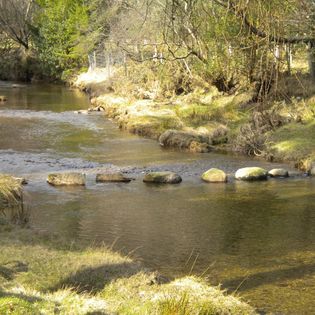
When I started to compose this article in my head, I grabbed a single sentence from the novel I’m currently reading. You will note that it is a most circuitous sentence, unlike the actual path the novelist sends her character on, and I assure you that earlier in the book, several pages are given over to describing various landscapes and paths between the three houses that are central to the mystery plot – and thereby, telling the reader to pay attention to these paths as Something Shall Transpire on one or more of them. You would not want to do this in a short work of fiction. Frankly, I’m not sure it was necessary in this novel, but the author here does indulge in her red herrings and clue-by-fours to the reader’s thick skulls.
I grabbed one of the short story collections I have of Brown’s work, so I could do my little quote images from ebooks, and here you will see several openings to his various science fiction stories. Note how he drops you into the world, sometimes into the character themself, and sets a hook most effectively to get you to read on and see what he’s up to.
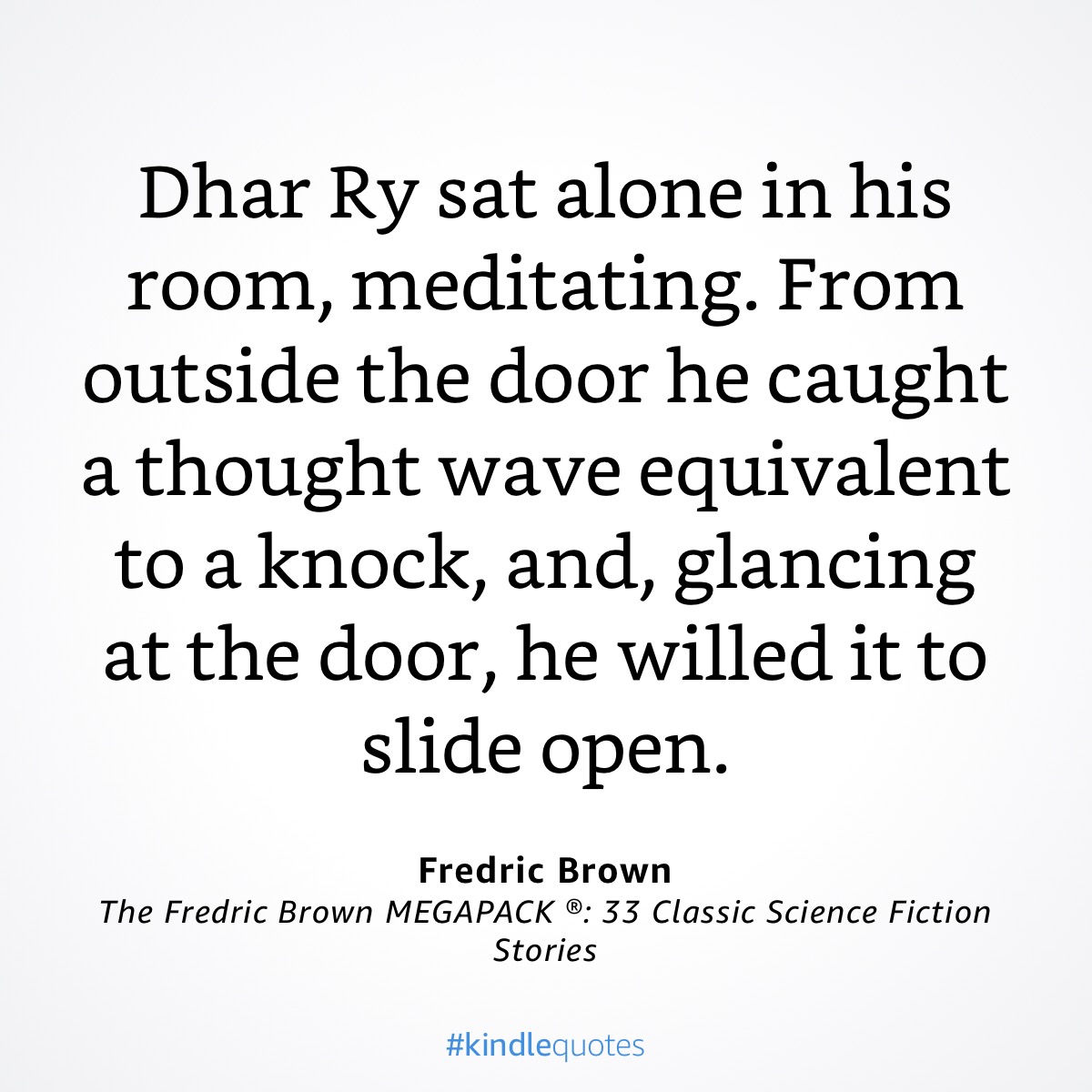
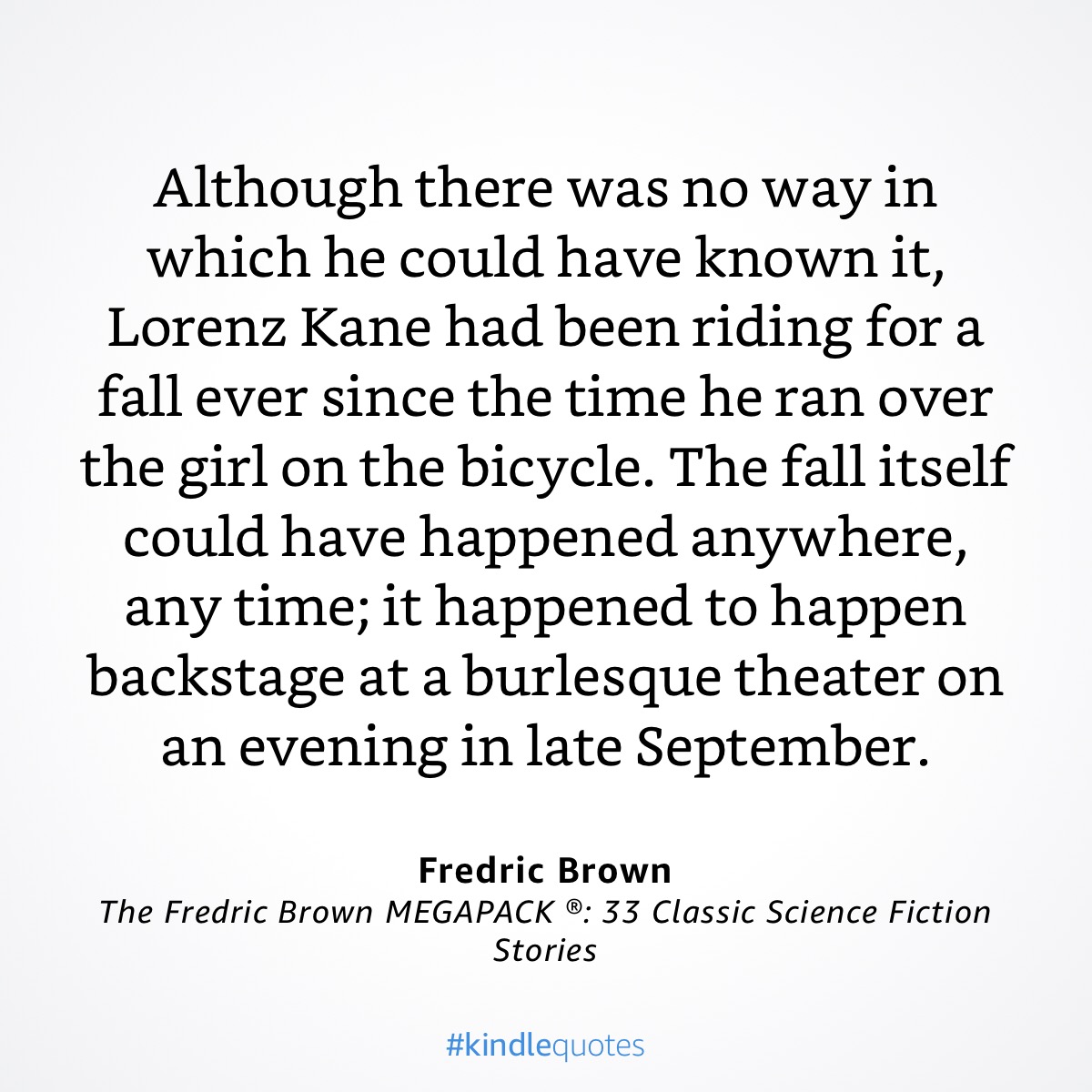
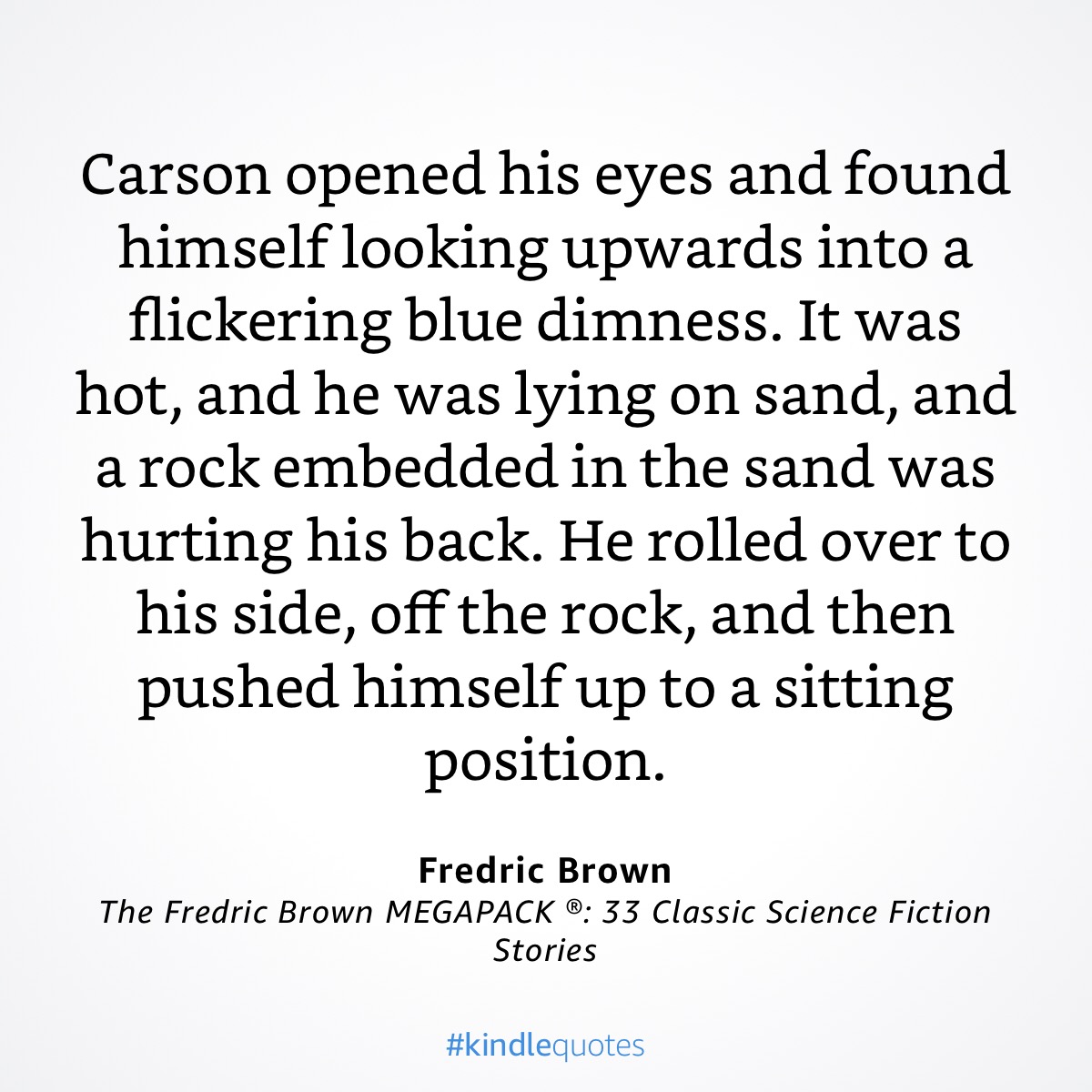
Once you have the reader – and if you are submitting to an anthology, that first reader is likely the selection editor, who has already read ten stories on a theme, and desperately wants something fresh and interesting next – hooked, then and only then you can risk filling out your world a little more. Action is good, but action isn’t the only way to engage the reader and get them excited. Try varying your sentence lengths, or in this case of another of Brown’s stories, the paragraph length, which gives a sense of urgency and tension to mere words on paper.
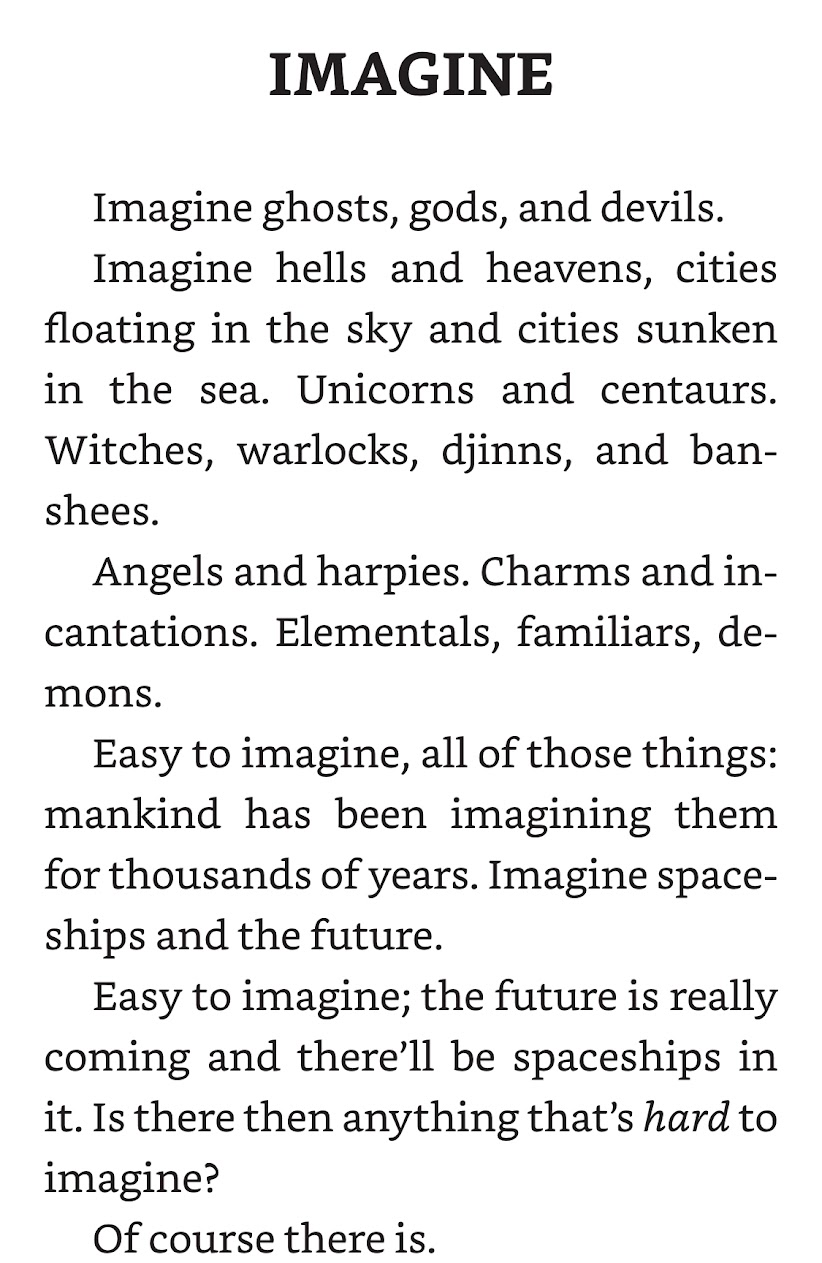
Avoid very long paragraphs in a short story, keep those for more sedate novels who drone on and on. If your paragraph takes up a whole page, reconsider it. I recommend reading your story – or as much as you have written – aloud to yourself. Don’t let your brain fill in what you don’t have on the page, record it if you can, and listen to it. You may find that you can make one word do the work of five, or you may realize that you the author with a God’s-eye view of the tale have been assuming you wrote something down which you did not.
Most of all, keep in mind that a short story plot is minute. A novel needs lengthy arcs and complications. If you are writing short? Depending on how short – a 14,000 word novelette needs more than a 1400 word flash fic does – your plot may be very small indeed. A skirmish, in a war. A meet-cute, in a romance. A clue and a confession, in a mystery investigation. You will have a cast that is likely counted on one hand, rather than the dozens a novel may contain. Most short stories will focus on one person, and may not even name them if not necessary, let alone describe their eye color. Very few can sustain a shifting point of view. For the love of fiction, don’t write in present tense.
Want to write a better short story? Read a lot of them. Study what’s going on in the first sentence, paragraph, page, and don’t neglect to see how the writers sticks the landing. Fredric Brown is a good place to begin, but there are many, many others out there. Who is your favorite?

 Mad Genius Club
11 responses to “The Art of Short”
Ray Bradbury, Robert Sheckley, Harlan Ellison, George Alec Effinger, Richard Matheson, Clive Barker, Orson Scott Card, William Gibson. Many of the these authors started with short fiction and then “graduated” to novels, but–economics aside–I think their short stories are their best work.
I’d also like to bring up two writers who are primarily known as novelists; Robert Heinlein and Larry Niven, because both of them used the short form to create personal universes.
Niven’s Known Space and Heinlein’s Future History grew out of the authors wanting to make their stories consistent (not all of them, though, both wrote stories outside of their main cosmos) and became a thing into itself. Both, in fact, wrote most of their novels in the settings they had constructed in short stories.
It’s a pattern I found myself emulating with my Dracoheim stories and it’s not a bad way to approach short stories. It can involve continuing characters, as in the Sherlock Holmes stories or the Father Browne mysteries, but in many cases the connections are more nebulous, as in Bradbury’s Martian Chronicles.
Which I suppose is a long way of saying that you don’t have to create the entire universe from scratch every time you write a short story, nor do you need to lay out the entire cosmos for the reader to see. Short stories, in my opinion, work best when they are snapshots of a larger landscape. The central figures may be different for each, but the landmarks in the background remain, and readers appreciate being able to connect details to make a portrait of a world that is only glimpsed in any one story. (At least I do.)
A snapshot versus a more indepth experience is a good metaphor for the short story compared to a novel or series.
I cut my teeth on Fredric Brown, short-story wise, starting with his “Angels and Spaceships” anthology. Using his work to illustrate your advice is perfect. Thanks for a very instructive article!
I’m certainly not going to hold my own work as an exemplar!
I wish I could remember where (and which author) I read a short story that began something like, “Once upon a time— But Sir James didn’t have time for that, as the large, ugly beast ravaged the village before him.”
Yes, it was humorous fantasy. I don’t recall if the story held up to the opening, but that sentence set the tone for the story, introduced a character or two, and gave me the setting.
That is brilliantly funny. I wonder if it was Pratchett?
Gulp. So, you’re the one who reads the subs to RacPress? If I may ask a favor: I submitted to Pinup Noir 3, but didn’t make the cut. I was wondering if you read it, and maybe if you’re not too busy, to let me know your thoughts about the story? I’ve subbed it to a couple of places, but no one has bit on it. The story had good reviews by the fine people in A Literary Horde, so I’m wondering what keeps it from being accepted. If it’s not a bother, Cedar. I believe you have my email.
I am by far from the only one reading subs. Each anthology has an editor listed on the cover and that’s the person reading for that particular book.
That’s being said, as you are a friend, I’ll read the story if you’ll drop it to my email. We (putting RacPress hat on) can’t possibly give feedback for every story any longer. Submissions for every antho are topping 100 and that goes up from there. We’d like to. We are only human.
Thanks. Now, all I have to do if figure out your e-mail. I had it once, but lost it, and can’t figure out how to find it here.
Cedarlila at gmail dot com will get me!
I used to be unable to write long. Now I can but I don’t write short that much any more.