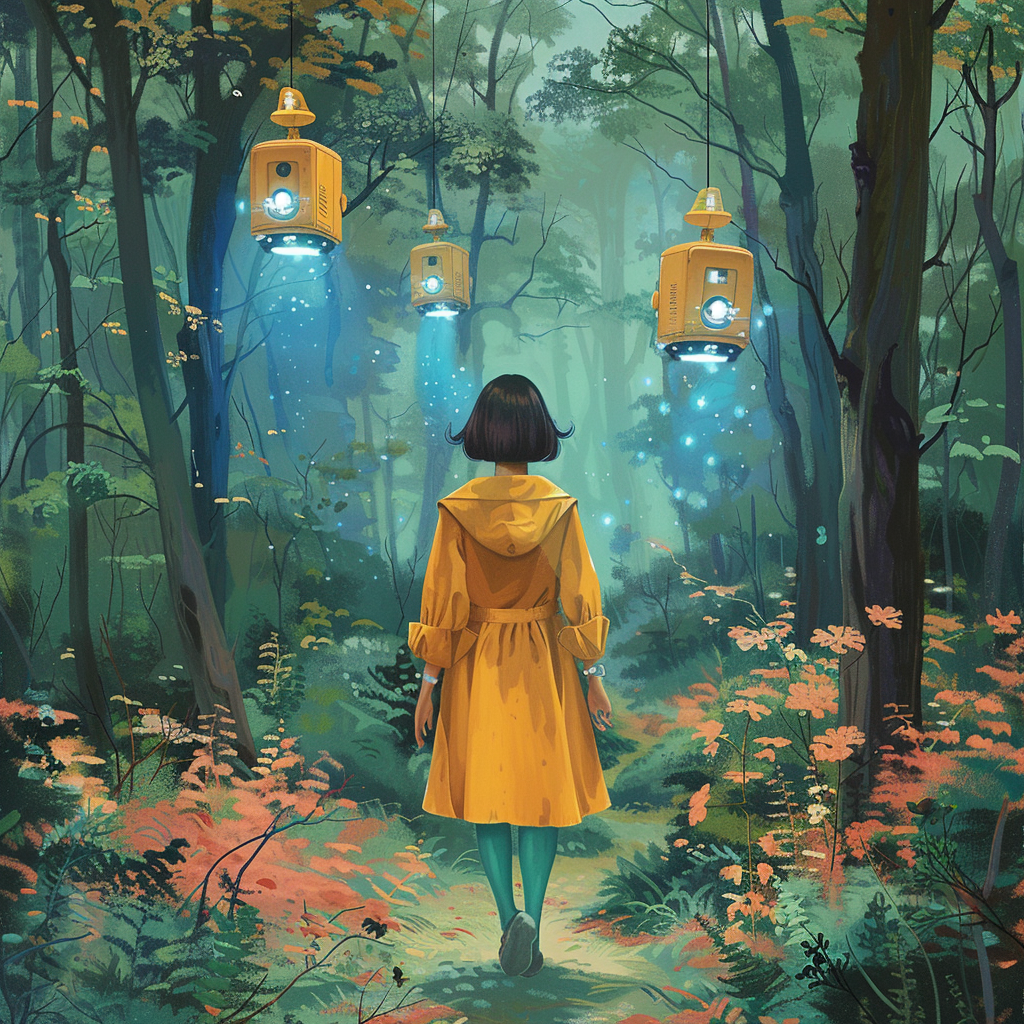
I’ve been a techie from the time I first submitted tiny programs in BASIC on a teletype machine to some downtown bank in 8th grade (circa 1967), and since I was also knee-deep in SFF at the time, I found the futuristic tech visions of Heinlein, Clarke, et alia both fascinating and reasonably plausible.
Heaven knows we’ve bounced futuristic visions of embedded or companionate artificial intelligence around for quite a few decades by now, and it cycles through optimistic promise and pessimistic disappointment with some consistency. At the moment, the consumer versions are publicly and irrefutably demonstrating to us just how easy it is to poison the productions of artificial intelligence with corrupted source materials and hidden rules.
The original promise of “everything we know in one easy-to-access-and explain-place, a boon to mankind” is falling to “let’s correct the bad opinions that the bad people have by offering only those opinions that are approved”. Wikipedia embraced that mandate from its beginning and gave us all an excellent demonstration of opinion overriding fact. The claimed neutrality of search engines like Google was also corrupted very early, and is now spinning wildly out of control via AI hallucinations (as well as directed outputs and cover-ups). It doesn’t matter how much impressive human knowledge you make accessible to search engines if you imbue those search engines with censorship and advocacy constraints.
Is there any hope of recovering our naive young futuristic vision of AI as a trusted working assistant to general knowledge?
Let me present to you a small but perfect AI product: The Merlin Bird ID app from the Cornell Lab of Ornithology.
For those of you who don’t know… You download the app and a database of recordings suitable to your region. You then ask it to listen to… whatever it hears, and it matches the bird calls to its database and tells you what bird just made that call. In real time.
On the one hand, this appeals to collector types (“ooh — my life list now has 90 birds”) and to basic environmental types (“ooh — I didn’t realize there are seasonal warbler migrations across the US into Canada”).
But what I want to show you is something else. You see, if you’re like me, you’re curious about, well, everything, like a magpie. I know when Google is lying about current events because I have multiple varied data sources. I know when Google or Wikipedia is lying about history because I’ve spent my life accumulating the knowledge that they tend to dishonor, and understand the tools I can use to let me further research what is true or false.
But Merlin’s bird id information has no agenda. I don’t necessarily have alternative data sources (other than the bird calls I already know), but this product appears to have no incentive to lie. If I therefore decide to trust its AI identification, then it’s like magic: I hear a bird call, I see its identification, and I can play that call and any others that species makes, to properly learn that bird’s call myself. It illuminates my landscape as I walk through it. That’s what uncorrupted artificial intelligence can (and should) be doing.
That’s the vision of the bright future for AI that I drank down as a teenager.
Why am I talking about all of this here? Because some of us write about our vision of the future. We have to come to terms with useful or corrupted knowledge at our finger tips, and so do all of our characters. If we can’t trust it (like Google and Wikipedia), then it becomes the anti-history, the censorship of the past and present, the desire to control the future. As history students, we learn about slanted claims in historical documents and need to resist the seductive belief that it’s any different now just because it arrives to us in bits and bytes.
But if we can trust it, in at least a few non-disputed domains, then it’s an aid to an almost magical understanding, a short-cut to potentially infinite learning.
The struggle isn’t how to build AI — it’s how to keep it uncorrupted — everything you think you know which isn’t so, like the naive and ill-educated who rely upon what Wikipedia or Google tells them. (That’s what education is for — to understand the differences between what you think is true and what happens to facts on their way to becoming knowledge.)
Merlin has given me a visceral understanding of what our artificial assistants can potentially do, how they can genuinely enhance our walking-around knowledge. It’s delightful. My futuristic characters will have opinions, too.
What about yours? Is your future-tech innocent, a neutral tool for human education and knowledge, or corrupt, a tool for human control?


 Mad Genius Club
3 responses to “Living with future tech”
I believe there’s an app or two that do a similar thing with plant species via visual identification.
Depends on the story. All of those can be useful plot devices.
I have two stories futuristic stories. One has a malevolent tech, and the other is neutral.