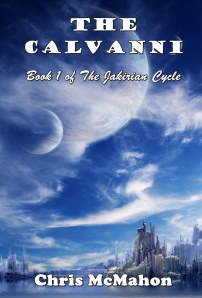
 by Chris McMahon
What are some of the choices in creating magic systems in fantasy?
For originality, Steven Erikson’s idea of the Warrens was really something different. I enjoyed his Malazan books of the fallen, but they eventually got a little bogged down in the storyline, or maybe the characters didn’t grab me as much as some of the earlier novels (Gardens of the Moon is a classic). The originality in the magic did not abate though.
As much as I liked David Gemmell, his magic was pretty straightforward and fairly familiar from the SFF spectrum.
I guess as fundamental distinctions go, one of the most basic is Innate Magic Vs Learned Magic. For example in the Earthsea books, or Wheel of Time series, the talent was there from birth, whereas in other books – I think one of the Lawrence Watt-Evans’s books comes to mind – it is a skill that can be learned, a bit like learning what needs to go into a science experiment in our world to make it work according to our physical laws.
I remember a great little scene (not sure what book this was from) – this skinny, white-bearded, yet very fit Mage, pounding away with his feet on some sort of platform to generate the energy for his spell. The idea here was a sort of conservation of energy, where the Mage had to first generate the energy with his own sweat before he did the spell. That was kind of neat. He also got to burn off lots of calories.
You can have a blend as well. In my fantasy novel The Calvanni, there are innate magic-users (Sorcerers) who are quite powerful, yet rare, while most others can be trained in other less powerful forms of magic (Druids, Priests and Priestesses). The premise was that the Sorcerers came to dominate their world and formed a magic-using nobility. The power in the upper classes – feared and hated by many – waned over time and the Druids took control, forcing a purge of the now ‘evil’ Sorcerers and monopolizing magic.
Another fundamental distinction is just how Powerful is Powerful? Is the pinnacle of magic the ability to obtain a vision, or perhaps influence a person’s thoughts – as in shamanism – or can an ‘Adept’ wipe out armies with the wave of a hand (Pug from Fiest comes to mind)?
I think some books take the ultimate power of the Mage way too far. I like it better when the magic-user is limited, and has to pay for the use of his power.
What magic systems from fantasy literature take your fancy?

 Mad Genius Club
10 responses to “Magic In Fantasy”
I like Dave Duncan for many reasons. One of them is the different magic systems he comes up with. Each series he writes is completely different to the others in just about every way.
Scott
Hi, Scott. I have also enjoyed Dave Duncan – you’re right he does try new things. There was the series in the strange world with weird geometry as well – the werebeast one. I think the last one I read moved a little slow on the action front for me though.
Brandon Sanderson had a pretty unique idea for his series with the powers based on metals – took me a while to get comfortable with it though!
Magic has always intrigued me. As a teen, my friend and I read a lot about witchcraft and magic but never really thought seriously about how it worked until I started writing my teen novels (Withershins & Spirit Quest). I never considered how the magic worked to pull my character back in time. It wasn’t until the subject was discussed with my first writer’s group. One of the other writers practiced Wicca. She revealed that most magic needed an object to focus its energy. Once I decided to use an arrow head as a talisman, she was satisfied that it was something that could easily be used by a shaman to create the time vortex. I have since done a little more research into the subject in case I want to use magic in any subsequent books. It is a very interesting subject.
That’s interesting. Sounds like you have taken a lead from the traditional practice, which would give your work a nice feel from that PoV. It’s amazing how many approaches you can take to magic in SFF. I’ve often wondered if the approach and style of magic works on another level in the story as well – being almost a metaphor for something on an emotional level. I’m sure there must be a few PhDs in that!
Chris McMahon
http://www.chrismcmahon.net
I think that the most unique magic system I’ve seen in a novel is from Daniel Abraham. I think the book is Shadow in Summer (and three more after it… I’m too lazy to walk to the other room and check). The magic that exists is, if the essence of something can be precisely described, then it can be controlled. So, say, someone defines the essence of Fire. An avatar for that concept is created and is controlled by the person who defined the concept. So, Fire! Except the avatar gets smart and once the controlling poet/philosopher dies the avatar can not be summoned ever again.
All the easy, profound and powerful concepts have made a progression through History so that in the present time the poets striving to capture a concept are left with obscure abstracts that don’t necessarily have any apparent use. The present most-powerful poet in the nation controls an avatar that can make something drop its seed. It spends most of it’s time performing abortions and removing the seeds from cotton. They argue about the utility of a concept of removing dampness.
There were some hints in the first book that a profoundly powerful concept would be discovered, but I’ve yet to read the rest of the series.
(I didn’t read it mostly because I got the first when the other three weren’t out yet so I got in a rut of waiting until I had them all, and it got to be a habit.)
Hi, Synova. I read the first one of those. It was an interesting concept, kind of an elaboration of the power of Words and demon control at the same time. The avatars always tried to trick the poets in much the same way as the traditional demon. For all that I did not feel like experienced the magic differently. It was overshadowed by my frustration with his characters – I did not like the arcs. I can’t remember specifics but some of the decision they made broke credibility for me. Maybe he was trying to be too arty.
Chris McMahon
http://www.chrismcmahon.net
He may have been trying to be arty. I remember being surprised at the main character’s choices. It seemed like he *ought* to have stayed and saved the nation somehow instead of just leaving like it didn’t matter. But I decided that there wasn’t any huge reason for him to have felt like this was his responsibility. (The author is publishing paranormal girl butt-kicker novels under M.L.N. Hanover, atm. So either that means he’s not too concerned with being arty, or else it confirms him as snootily reserving his arty-ness for his real name. Who knows.)
Another author did a similar thing that I might not have noticed except that she said at a con that it was purposefully a feminist statement to make that choice. (That’s how I remember it anyhow.) It was her first book in a rather long and popular series about a werewolf lady, and the werewolf lady defeats the abusive alpha male that was dominating the whole pack and then…. leaves. Which, okay, maybe that character would do that. But hearing the author explain that the purpose of it was that she didn’t want the (now) alpha-female to act like a man (more or less) made it something other than this particular character’s short-coming. It was, actually, supposed to be a VIRTUE that she left behind the other vulnerable pack members to be vulnerable. So I’m all… WTF?
Hi, Synova. The other author that really frustrated me on character choices is Robin Hobb. I read the first few books in the Assassin series and loved them – but that was based on what I imagined the ultimate conclusions to be. She had some great ideas for characters and she does have good characterisation – but the ultimate places she takes them. Grrr! I started reading another series of hers (after a sufficiently long break for me to forget my annoyance) and got so pissed off I tossed the book at the wall – literally. The central character in this story just happily accepts bloating into a two-ton blimp and eventually becoming a tree. Go figure. I am supposed to be happy with this? As someone who like heroic fiction I can’t just accept the dreamy floating into acceptance.
Chris McMahon
http://www.chrismcmahon.net
[…] Magic In Fantasy (madgeniusclub.com) Share this:TwitterFacebookEmailPrintLike this:LikeBe the first to like this post. This entry was posted in notes and tagged Back-story, Fantasy, fiction, Magic. Bookmark the permalink. ← Wandering One “prologue” […]
[…] Magic In Fantasy (madgeniusclub.com) […]