This is a riff reacting to a recent article by Cedar Sanderson, which presents the beginnings of a story as an example of descriptive writing. Go read it — it’s replete with very well done description (as well as introduction to the character).
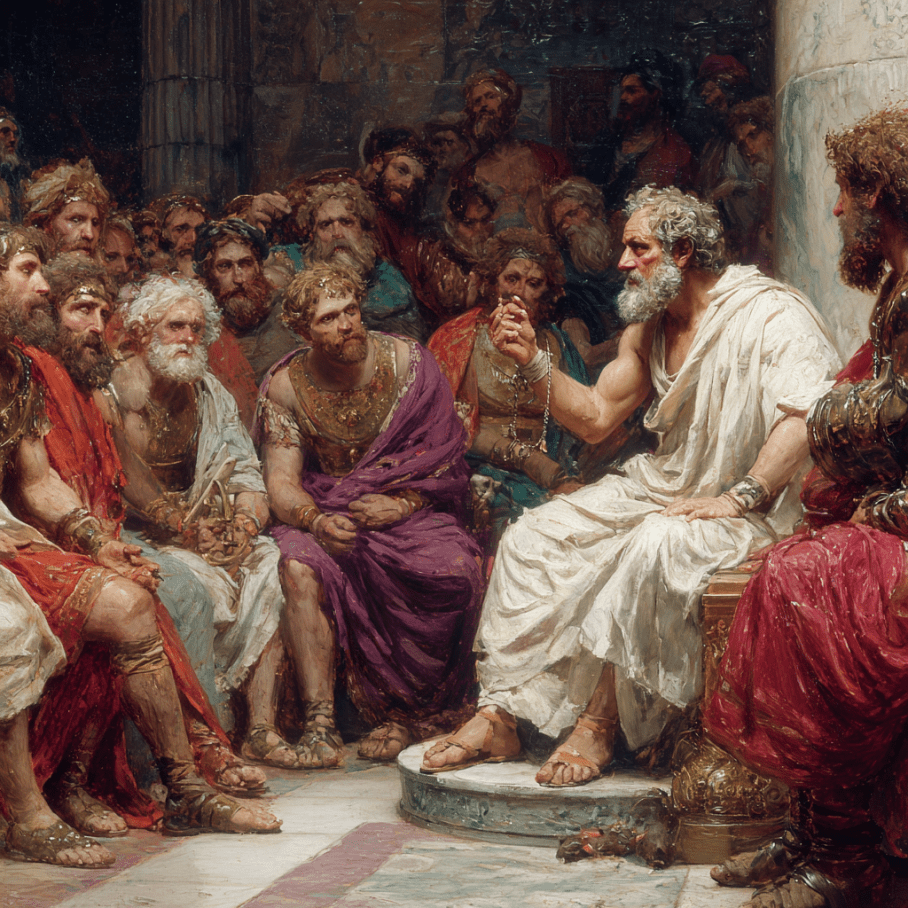
Let’s examine the term “described”, as something we do when we present a scene. The literal meaning of that term is “written down”. Well, that ought to keep my hand feeling busy typing. But that’s not what my hand really “thinks” it’s doing when it reads what’s just appeared on the screen — it’s waving (metaphorically) in the air and making gestures to help me tell the story — “Tell”, not “Scribe”. Scribing is the very last step, part of the technology of making the story longer-lived. It’s the “tell” that matters to me, for the feedback.
So, what is it about telling vs writing? Well, if I’m telling a story, I’ve got an audience of some kind sitting (perhaps invisibly) in front of me. I’m using body language to supplement my spoken language. I’m leaning forward to make a point, I’m shrugging to deflect skepticism, I’m rolling my eyes to distance myself from a claim.
But even with all that, alas, most importantly, I can’t see how the audience is reacting. I can’t tell if they understand what I’m telling them. I can’t achieve that directly with the written word, and you can’t either. So what can we do, instead?
We can find ways to make the reader perceive the story as if the tale teller were present. We can find the most vivid, clear, similes that we can count on sharing with the audience. We tell the story by trying to draw upon the reader’s preconceived notions of what we’re trying to say or draw attention to. We cue the reader to use his own images to fill out the blank stage, by using the best trigger words we can think of to prompt that vision. We make analogies (“this room you’ve just entered” is like “this other sort of room you probably have a common concept of that I can refer to”). It’s not the same as sketching a room with our hands and indicating where certain features are, but it gets the basic idea across well enough. Cedar’s example above is more accomplished than my own would be, so look at hers.
The point is… when writing a story, you can’t get any feedback from the reader, while in telling it, you can. Telling it lets you see how well your chosen examples are communicating. So when you’re writing instead, storytelling at second hand, that can only happen if you understand what your reader likely knows already. Understanding what that is takes both imagination and experience. You need to establish a commonality of mutual knowledge so that you can refer to it (perhaps with clues) and expect to be understood.
Considering that we can read authors distant from us by hundreds of years and thousands of miles (and in translation, no less), and feel like we understand what they’re describing (most of the time, given our individual historical/ethnographical backgrounds), it’s a miracle that describing can almost stand up to telling in person. But telling is still the standard to me, for the way I want to interact with my audience, if only it were possible. Oral-formulaic poetry for me, live and in person, with my hands waving. Alas, it’s no longer an option.

 Mad Genius Club
4 responses to “What exactly is it that we’re doing with our stories?”
I spent my first 15-17 years of noveling exclusively in past third person. Then I had a pair of POVs who insisted on being past first person, and for reason they, and the first person narrators I have started since finishing that couple’s adventures, come a lot easier than the third person POV I have been working on at the same time.
Some stories call for third person omniscient, some call for first person, and some call for third person following the viewpoints of one or two characters.
I once wrote a space battle scene rotating between four different viewpoints. That’s just how the battle unfolded in my head.
I think I might have gotten up to four POVs in one of my space battles (chapter 26, Spider Star, if the chaptering in my scriv file is accurate).
Had an idea for an isekai with a snarky first-person narrator. Knew her name, its title, how she would land, what sort of superpower she would gain.
There it stalled.
Then I read an isekai where the only really interesting love interest was shuffled off to one side, so I decided to liberate him. As a consequence, several other characters, all children, came in, and the villains after.
The villains being nothing like the isekai I stole him from. Of course.
But they were out to kill the children. And the heroine would save the day.
Snarky first-person didn’t fit her, not with what she would see and what she would do.
Back to my old warhorse, tight-third-person.